
Tinderbox by Megan Dunn – 2017

TinderboxA memoir, and a book about writing a book, about the future of books, about women in books, about a movie of a book, about selling books – Tinderbox is all of these and is wonderful!  Dunn takes us through her experiences of trying to write a novel (based on Fahrenheit 451: “a searing feminist rewrite of Bradbury’s classic”) while living through a marriage breakup, and her time working for the Borders book chain, both in the UK and in New Zealand, which in turn is going down the economic gurgler.

Tinderbox is funny and sad – Dunn is in the doldrums most of the time, waiting for her marriage to end, for her job to disappear, for her novel to complete itself, for the end of the world as we know it: “Bradbury was prescient but not quite so prescient as to predict global warming, recycling and the imminent extinction of the bumble bee.”  She takes a job at Borders thinking it will help her writing, but the mass production and marketing of merchandise has the opposite effect: “I know what temperature books burn at. Half price.”

Dunn is well aware how much of a literary snob she is – she is happy watching Big Brother and America’s Next Top Model on TV, but when it comes to books she rails against the flooding of the book market with “cheap banality” – at one point sitting on the loo “She sighed, there were so many books in the world.  Too many” and used a page of Picoult’s My Sister’s Keeper as toilet paper.  She has it in for poor Picoult: “Jodi writes books the way other people bake muffins.”

Tinderbox is full of references to heat and fire: Dunn describes her laptop as “my tinderbox”, after serving a customer: “Clearly the girl with the dragon tattoo was smoking”, “My anger erupted into flames” etc, etc.  Dunn must have been delighted that Amazon’s e-book reader is branded a Kindle!  And she puts the beginning of the literary apocalypse with the arrival of the Kindle: but the apocalypse isn’t the “easy to imagine you would resist” Bradbury book burning, it is “A future where books [are] mass marketed and turned into multi-million dollar films and merchandise.”

Writing to a NaNoWriMo word-count-per-day deadline, and under the threat of closure of the Borders stores, Dunn becomes obsessed with Truffaut’s movie version of Fahrenheit 451.  Truffaut was the proposer of the auteur theory of filmmaking – that the director is the author of the ‘work’ – and Dunn sympathises with the problems Truffaut encountered during the making of Fahrenheit 451, and also ponders his treatment of women characters, as she does Bradbury’s “The Mildred in my head just didn’t sound that stupid.”  She also thinks about the serendipity of creation – Truffaut not getting his ideal cast, Bradbury darting up to the stacks of the UCLA Library for random quotes, and Dunn trolling through websites and online fora for bits to put in her novel: “Anything to help my word count.”

The mass NaNoWriMo experience makes Dunn lazy, knowing she should be “providing unique salient details that would bring the world of my novel to life. Unfortunately I couldn’t be bothered.”  And Tinderbox has some pretty clunky puns in it, she almost longingly wonders if “Maybe in the future it was also illegal to write.”  And when copyright problems loom for her adaptation of Bradbury’s novel, she opts instead to tell the story of her attempts to write it – “‘Yes, it is a bit meta,’ I reached up and touched my face, cheek burning. Time for another apology. ‘That’s the last thing we need,’ I said.”

In Tinderbox, Dunn, as we all do, struggles a bit to find the positive – “Yet I like to think I stand for freedom of speech. At least I stand in line for it.”  At one point she admires a poem by Matthew Arnold, “The poem described the withdrawal of religious faith but I believed in the power of literature and the tide had gone out on that too.”  She applauds the flattening line on the sale of e-books “They are, after all, still a bit shit.”  And it was fitting that I read Tinderbox in a Kindle app – and it was a bit shit, with lots of typos and layout errors.  But I loved it, and don’t believe we have all been reduced to “… grazing the written word”.  Tinderbox may not have ended up “a searing feminist rewrite of Bradbury’s classic”, but it is a flaming good read!

Posted in Book Review | 3 Comments

The Stakes by Ben Sanders – 2018

The Stakes“And it’s like: you know on kind of a formal level that there’s laws, but then when you’re actually on the street and see it through their eyes, you realise it’s just dog-eat-dog, same as everything else” – even the cops don’t have a clear line on right and wrong in Ben Sanders’ latest novel, The Stakes, and most of his characters are conflicted, confused and making their moves “So you feel the strange weight of the strange moment”.

Miles Keller is an NYPD detective currently under investigation for a shooting.  Keller has more at stake than the authorities finding out the shooting might not have been righteous; he has been ripping off bad guys for quite some time – since his wife left him over a brief affair with a confidential informant, Lucy Gates, who was also involved in the shooting.  And the victim of the shooting has a cousin, Bobby Deen.  Bobby is a failed actor who has ended up working for a crooked high-flyer Charles Stone, who launders his money through making movies.  Bobby usually makes sensible calls, but when Stone’s wife Nina sets out to rip off her husband and Bobby is sent to retrieve her, he starts getting brain fails when he is around the charismatic Nina.

Miles and Nina have a history – her latest heist not being her first – and Miles being the cop who helped her avoid going down for a previous outing.  When Nina catches a glimpse of Miles in New York, all the players are set on a collision course, with each having high stakes on the table – money, freedom, love, staying alive … Confused? … Well, you will be for most of this novel.  But just revel in the homage to Leonard’s narrative style; in enjoying the characters, who know how they’re coming across – “This would be a long exercise in deadpan, but it was hard sticking to a cool tempo, his heart rate up and his breath coming short”, and who often inwardly falter as they fail to come up with the final witty riposte.  The only character in The Stakes who isn’t at heart out to do ‘the right thing’, is Nina – she’s in it purely for the money: “… I’m always in charge … I’m just not used to people figuring it out”, but who she’s going to back to help her get the goods is an open question.

Sanders gets bits of Kiwiana into the story – Miles listens to his ex-wife’s audio-books, and Eleanor Catton’s The Luminaries is playing at one point; a ski mask in one of the heists is admired for being soft Merino; and illegal job coordinator, Wynn Stanton, recommends New Zealand as a tax haven where Miles can safeguard his money.  But the story is gloriously set in the New York of movies and TV crime shows – seemingly both foreign and completely familiar.  Sanders’ descriptions are often both amusing and evocative: “He climbed the shaking steps to their appointed Gulf-stream, into a cocoon of leather and that metal taste of bottled air, like a taste of the future – the morning-breath of androids”.  The Stakes is a wonderful trip into “Blood spatter and ballistics and all the moral angles of it”, ride it through to the end, where all the threads are laid out plain … sort of.  The novel starts and ends with guys thinking they’ve got things sorted, but also knowing the world doesn’t often deal a fair hand – and you always have to wonder what the women might be planning.  As Miles says to a guy he’s hi-jacked, and who is so quiet Miles wonder if he thinks he has already been killed: “That’d be strange wouldn’t it? Heaven and hell no different to where you were a moment ago.”

If you haven’t read Ben Sanders, do – he just gets better and better.

Posted in Uncategorized | Leave a comment

The Necessary Angel by C.K. Stead – 2017

A group of people in Paris in 2014/15, all literary, all quite objectionable, meander roundThe necessary angel each other, aloof from events around them.
Max Jackson is a Kiwi, although I doubt he would ever describe himself as such – the thought of his pairing with a New Zealand wife is the source of some amusement to him and his French wife, Louise.  Louise has banished Max to the lower floor of their house, while she and the children stay aloft – not surprising really, given his tendency to mansplain to women, and ponder that a woman’s breasts “… must be the broadly rounded kind, not pointy”.  She keeps in touch though – prowling around his floor when he’s not there, sniffing his sheets.  What is surprising is that Sylvie, a new colleague of Max’s at the Sorbonne Nouvelle where he lectures, would be attracted to him – he is particularly condescending towards her, but then Sylvie rather prefers him when “he recovers some of his authority”, just as what she likes most about her German lover, Bertholdt, is his “SS manner”.

Then there is Helen White, a young English student at the Sorbonne Nouvelle, who read an early poem of Max’s (who has long since stopped writing poetry) and liked it immensely – and who arrives at his office to say she is bipolar and she is going to get him to start writing poetry again: “Where was the youthful Max’s soul hiding? She would make it her project to find it, to bring it out”.  And Max, whilst enamoured of colleague Sylvie, seems to think it is quite acceptable to engage in a relationship with a vulnerable student, “He entertained himself by thinking of her as a muse.”  At the end of one of his lectures he does a bit of a rave about Nabokov, so maybe he thinks he is being faithful to the ‘literast’ tradition.

All the characters in this novel are bright and erudite, and quip away to each other.  Both Max and Louise are working on books, his is a small volume of literary criticism, hers a volume on Flaubert, the latter volume being destined for greatness: Louise is trying to spark a renaissance of word crafting and sculpting in literature, and a move away from the New Wave of authors who favour obscurity, thus leaving the reader room for creativity.  And this crafting of material is probably what this novel is about – how people’s lives can become overly constructed and lack spontaneity and engagement.  Helen is a devotee of Gurdjieff, who believed that ordinary lives were a ‘sleep’ and that one had to work at ‘wakefulness’, creating a soul along the way.  Sylvie meets another man towards the end of the novel, Lenny, and sees him as a project: “She was going to have to train him, teach him how to dress stylishly but less formally, and to stop perfuming himself.”  All the characters are using each other in some way for their own ends.  At one point, the ‘necessary angel’ of the title is used to describe both Helen and Sylvie in relation to Max, but also to describe the drugs that Helen relies on: “‘I like to be brilliant,’ she said, ‘but it’s better to be sane’.”

For the characters in The necessary angel, their world has become so removed behind words that French and world politics are just a backdrop.  Max scans the Guardian Weekly and the New Zealand Herald, “reads the world telling its own story, getting on with the ‘now’ of everything …”, reads of the growing gap between rich and poor, the heightening unrest around the globe, but: ”Nothing-to-be-Done, alas!”  The book is set in turbulent political times, there are scandals in French politics, right ascendancy, the Ebola crisis, ISIS public beheadings and the Charlie Hebdo attacks.  Max is separated from his world not only by his choice of work and social circle, he feels himself apart from his French associates, an unbridgeable language gap arising from his having learned French from written not heard words.  At the beginning of the novel there is an odd unnecessary note about most of the conversations being in French – when it is made very clear throughout the novel whether the characters are speaking French or English.  But maybe this note is to emphasise this additional barrier to engagement for Max?

Max and Sylvie are working together organising a small conference on World War One writers, as part of the centennial commemorations.  But even with this there is a feeling of fatigue, even before commemorations begin: “Let’s not be tired in advance”, advises Sylvie.  By the end of the novel, Max is calling the Great War Wobbly Wobbly One.  Sylvie puts this ennui and apathy down to our knowledge of the ‘Death of Everything’, the forecast end of the universe that was not a concept for previous artists and philosophers.  “In this society at this time almost everything was waste – works of art, music, reading and talking about novels and poems, and, perhaps especially, opera. Everything we do, she thought, was at the expense of the future and the poor.”  We do fleetingly glimpse ‘the poor’ in this novel – in the form of an “old harridan”, to whom Max thrusts 20 Euros to keep her off his property.

Much of the writing in The necessary angel is lovely. But some is quite flat: Louise. “Maybe the cat was just a cat – the one that in English ‘sat on the mat’” or odd: “He said it as if preparing her for the worse that was not to come.” And sometimes I don’t think Stead has quite captured the female voice:

“Her period had come and it was better that she did not have to tell him she was pregnant, which might have upset him. Pregnancy would have been an interesting experience – she had quite liked the idea; but they said it hurt a lot giving birth; and after that you would be stuck with a baby, like a big, noisy doll, getting bigger all the time, and before long walking and talking and probably telling you off – and perhaps even falling into the canal. No, she would be more careful from now on. Fucks for sure, but with care and a condom.”

There is reference in the novel to the power of the written word, not just the ability to trouble the “Christian–atheist mind”, but an accidental and dangerous power – a line is drawn between Houellebecq’s Submission and the Charlie Hebdo attack, and Houellebecq is described as having ‘taken refuge somewhere in rural France” after the attacks.  But, despite the characters’ vast knowledge in The necessary angel, there is a vacuum of commitment on all fronts, e.g. when Sylvie is asked about her religion: “‘Oh yes, I’m Catholic’, she said. And then, ‘Regrettably’.”  There is a piece of art central to the story, interestingly having familial not official proof of provenance, and the fate of this work, purposely kept private and not for public display, is how the novel ends.  It is a clever ending and oddly satisfying, but is of the ‘obscure, leaving the reader room for creativity’ type.  As a reader, I was not sure what ideas this novel left me with: That the Parisian literary world has become totally removed from the ‘real’ world?  That the postmodernist West is ill equipped to face current threats?  That reading might encourage empathy but literary criticism does the opposite?  Perhaps all of these.  Read The necessary angel and see what you think.


Posted in Book Review | 1 Comment

Gabriel’s Bay by Catherine Robertson – 2018

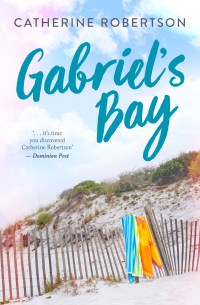
Gabriel's Bay

Gabriel’s Bay is full of stories, and stories within stories, with everything beautifully woven together.  Gabriel’s Bay is a small New Zealand coastal town with difficult access, economic problems and a small, varied population.  As we read, we get to know many of the inhabitants of the town, as well as new-comer Kerry (who has arrived from the UK to take up a job he secured via the Internet), and an overweight dog, King.  We are rewarded with a classic romance (featuring Kerry and solo Mum, Sidney); descriptions of many relationships, both marital and familial, some happy, some unhappy, and some disastrous; we enjoy the story of an ageing GP who is facing retirement, but who will be hard to replace, and his staunch receptionist who is on the case; and read a heart-breaking tale of child neglect; and worry about a group of friends who have grown up together, but who are starting to drift apart; and, we recognise small town politics and group dynamics when Kerry gets an idea of how to solve the lack of tourist trade in Gabriel’s Bay.  The narrative point of view moves between the characters, and the many voices are nuanced, convincing and often very funny.  Poor Bernard’s “to be fair”, “to be fair” – a bookish man who lives inside his head and fails to appreciate the world around him. The voice of little Madison: “… so Madison packed the book in her bag, and headed outside, being sure to close the front door quietly.  She walked towards the trees, looking forward to sitting down and reading about a world where everything worked out right.”  And the voice of Mac, the doctor’s receptionist who worries about her husband’s health and her own future.  And many, many more. The plotting is great, along with the stories there is a mystery unfolding, which is neatly resolved.  The only disappointing thing for me was that it finished – I had become so involved with the characters and their concerns that I was sad to leave Gabriel’s Bay.  Highly recommended.

Posted in Book Review | Leave a comment

Edge of Truth by Brynn Kelly – 2017

Edge of truthEdge of truth is another adrenaline roller coaster ride from Brynn Kelly, the author who brought us the fantastic mash-up of thriller/romance that was Deception Island.  Edge of truth is a story of international conspiracy and war-mongering, played out in the Horn of Africa.  Tess Newell is a well -known tele-journalist, unfortunately more known for a high-profile romance break-up than for her journalism.  But Tess has uncovered a huge story of corruption and conspiracy, and is desperate to get the story out before the world is plunged into a major conflict – but she has been captured by the conspirators.
Tess is being held in a dungeon in an unknown location, and is under threat of an online streamed execution.  Her captives have decided to spice up the execution by introducing a second victim, a French soldier, adding pathos to the killings, as well as drawing another country into the conflict.  What they didn’t count on was the French soldier being a legionnaire, Flynn, who appeared briefly in Deception Island as a confrère of one of the main characters, Rafe Angelito.  Flynn, like Rafe a hunk with a tragic back-story and trust issues, decides to help Tess get her story out, despite her wanting him to leave her once they escape – as she is horrified that others have died trying to help her.

Tess and Flynn ricochet from danger to more danger.  The size of the operation working against Tess means Flynn has to use all his training and instincts to keep them safe. And of course, along the way the physical attraction between the two builds – and that on top of the adrenaline rush from being in minefields, in the sights of heavy weaponry, and from not knowing who they can trust, all adds to a pretty giddy ride.  The two characters are a good match, with Tess being a good strong player, and the narrative point of view swaps between the two.  The heightened action allows you to just roll with the more unlikely scenarios, and also accept the slight repetitiveness of some of the dialogue.

Edge of truth is a great adventure read, the conspiracy, although pretty mind-blowing, is actually quite believable given how whacky our political world has become.  And the novel deals a lot with journalistic integrity, and also personal motivation, whatever your role in war might be – soldier, journalist, materiel supplier.  As with Deception Island, we learn a lot about the main characters and why they might have difficulties trusting those around them.  Rafe and his crew also make an appearance, as do some of Tess’ colleagues, so the plotting has a nice build of both action and cast.  And add to that the wonderful location of Harar, Ethiopia, and you have a luscious read.

I understand Kelly has another volume on the way, this one dealing with two of the secondary characters in this novel – yippee!

Posted in #yeahnoir, Book Review | Leave a comment

Murder on Broadway by John Rosanowski – 2017

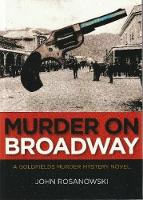
Murder on BroadwayMurder on Broadway is a rollicking wild West Coast goldfields tale of murder and mayhem.  When the obnoxious Reefton Police Sergeant Mackworth Snyder leaves Reefton in the hands of his new Constable Gordon Trembath, in the days leading up to the 1877/78 festive season, the reader just knows the hapless cop is going to have to deal with serious goings on.  Fortunately, Trembath has the “town idiot”, Abe, to watch his back, along with Abe’s friend, the town drunk, Little Jimmy.     The refrain “he said it would be quiet over Christmas” is used to good effect, as the plans for thievery, swindlery, sly-groggery and all sorts of other nefarious business are being made in Reefton and abroad.  The main target for most of this activity is the annual Reefton Boxing Day Race Meeting, and tensions rise as the reader becomes aware of various scams being set up.
Rosanowski’s plotting verges on the operatic, and is very satisfying.  His writing style is straightforward and is from a self-deprecating point of view:

“If his words were to be trusted, this show was going to be on a par with anything ever seen in London, Paris or Vienna.  He could also have said, “or Hokitika,” because that’s where they had been performing before Reefton.”

Murder on Broadway is a very blokey tale, told from a blokey perspective, and in the omniscient mode; the reader is sometimes asked to remember things, as they will become of relevance later in the story.  But for all that, the tale is quite nuanced, with young Trembath becoming aware that things are not always black and white, right or wrong – that just because people are in a position of trust doesn’t mean you should trust them, or just because everyone says someone is stupid or a waste of space, that they necessarily are.

The picture of the times is drawn as a slice of history that was part of the international wave of gold rushes: California, Ballarat, Otago, the West Coast.  And the narrative is flecked with mentions of real historical figures such as Bully Hayes.  And Abe’s friend Little Jimmy also features in Rosanowski’s novel Treachery Road, set 10 years earlier about the Maungatapu murders.

But knowing about historical figures or the history of the West Coast goldfields is not required to enjoy this book.  All the characters are given robust backgrounds, and you get the feel of the muddy turbulent mess of the bustling goldfields service towns, with their mix of hardworking people hoping for a break, petty scoundrels, total blackguards, and entertainers.  And you also get a feel of the surrounding bush, in a time when the now declining bush robins would flutter around you as you walked.  A very enjoyable read.


Posted in #yeahnoir, Historical | 3 Comments

Painted by Kirsten McKenzie – 2017

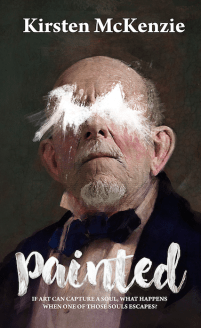
Painted is a creepy slow burn piece of horror writing, putting scenarios in your head that play out long after you have finished reading. Painted

At the start of the novel, you find out an artist has passed away and left specific instructions as to the disposal of his vast art collection – instructions which his lawyer has no intention of following. So, when an appraisal company is engaged and a young art appraiser, Anita, is the first of a team to arrive at the remote country pile, the reader already has amorphous concerns for her well-being.

Anita is haunted by a traumatic incident in her past, and is hyper-sensitive to male intentions. When the estate’s lawyer arrives to oversee her work, Anita is more concerned with his presence than with the odd happenings of which the reader is slowly becoming aware.  For the characters, the Gothic setting and winter storms make strange noises and moving objects easy to explain away.  And when they become aware of peculiar things happening to some of the paintings in the house, their first reaction is to accuse each other.

When more appraisers arrive, and people start to go missing, the action and the suspicions of the characters start to ramp up.  Meanwhile, the reader is trying to put all the pieces of the puzzle together, including the little they learn of past goings on in the house, information given by a neighbouring farmer.  Added to this are some disturbing developments in the house that are far from supernatural.

McKenzie plays with three familiar tropes: belief that an image of a person captures something of their essence, that the eyes are the windows to the soul – and the common rituals of ‘opening of the eyes’ of statuary, and the thought that some personal items can hold power over the owner.  These familiar elements make the supernatural plot of Painted feel graspable.  And as the reader has access to the goings on of both the natural and supernatural characters, the story is nicely filled in.  And the ending not expected at all.  A good spooky read.


Posted in Book Review | 1 Comment

Heloise by Mandy Hager – 2017

Heloise“Of all my frustrations with the Christian Church, besides its demonising of women, there are two that most confound me: the preoccupation with unquestioning obedience and the notion of original sin.”  So says one of Heloise’s early teachers – a Jew who was forced to convert and who along with her daughter had faced the worst that the patriarchal society of 12th Century France could inflict.  And Heloise’s exploration of the life and character of Heloise is unflinching in its descriptions of the endless abuse and disempowerment of women.

I grew up with a rosy image of the love story of Abelard and Heloise, both chaste and devoted to God, sitting alone in their separate communities and allowing their love to inspire each other through regular correspondence.  Mandy Hager throws that image over the battlements.  In its place is the sad tale of a woman thwarted by her times, and one who falls in love with an unstable, vainglorious, unpleasant man.  “Why does God allow women’s fate to lie in the hands of men whose first thought is not for the well-being of their lady or their child, but for themselves?  It seems Eve’s punishment for disobedience is to never be forgiven, despite all the Bible’s lofty claims.”

Heloise was the victim of male power from the outset, her mysterious father abandoning her to rural drudgery.  She is found and rescued by an uncle, a man we at first think might have escaped the blind prejudices of his times: “It is one thing to worship God’s instrument of delivery and quite another to forgive the sins of Eve.”  Growing up in Paris, Heloise takes every opportunity to nurture her brilliant mind, and inevitably she becomes aware of, and under the influence of, the brilliant scholar and teacher Peter Abelard.  The story once to two come together is one of endless misery, ecstasy and apparent mental illness.

The text is littered throughout with erudite quotes, amongst which are those from Abelard and Heloise themselves.  The parallels between Heloise and her longing for Abelard, and Penelope’s long wait for Ulysses is often remarked on: “She feels like Penelope trying to make contact with Ulysses, writing into a void”.  These, at times quite lengthy, quotes often interrupt the flow of the narrative – but in doing so they give a glimpse into Heloise’s intellectual depths.  Denied the freedom to act fully in her society, she mentally comments on it in cutting and insightful ways.

The only slight niggle I had with the novel was that Hager could have let the narrative make the points (which is does well) and have the characters voicing them less often: “How wrong that the Bible’s guidance is so often held hostage by men whose self-imposed power gives then licence to speak on women’s behalf.”  Although having said that, the frustrations of the time (and now) is portrayed well by the endless lamenting of women’s powerlessness and the corruption of the Church: “To Heloise it appears the Church’s stand against attachment and simony is more concerned with property and power slipping from its hands that with the purity of its leaders”.   The period in which the novel is set is awash with religious posturing – it was the time when celibacy was imposed, and openly flouted, if to do so was safe from retribution: “ … religion is regarded by the common people as true, by the wise as false, and by the rulers as useful”, a quote from Seneca that nicely sums it up.

As well as the mysteries at the heart of religion that Heloise ponders, are the mysteries in the hearts of women: “How strange the variances between the male and female of every creature God has made, she thinks, from voice and size, to countenance, to completely different ways with which to view the world”.  Reading the novel I puzzled over her devotion to a man purely because of his mind, when his behaviour was so reprehensible.  Even at the end, she includes her contributions to Abelard’s work as a measure of her worth – not her creating a haven for women in the Oratory of the Paraclete, or her teaching of many women, helping them rise above their helplessness by giving them the power of inquiry.

Heloise is a fine portrayal of a woman, and one who does not stand separate from but rather as an example of, other women of her times.  She so very nearly follows in her mother’s tragic footsteps, and she finds the light of intelligence and the thirst for knowledge in the women around her.  It is a story of the biggest mystery of them all – how half the world’s population ended up subjugated by the other half.  Putting Heloise in her place once again in the book, Abelard reminds her “There is not one meadow flower, Heloise, that does not work its way to air through dirt” – to which she adds to herself: “What he failed to mention was that if more dirt gets piled on top, the flower rots and dies.”  A wonderful and important read.


Posted in Historical | 3 Comments

Iceland by Dominic Hoey – 2017

IcelandThis is an absolutely riveting debut novel.  Told from alternating points of view of two young artists, one a musician and the other a painter, whose gifts are thwarted by drugs, violence and a corrupted world view.  Zlata is a singer/songwriter who comes from a loving and supportive family, Hamish is the artist – and tagger – who is from a dismal background and who is knee-deep in self-loathing.  The two spy each other across a crowded room and in another world their love may have managed redemption.   But in Auckland with a widening gap between the haves and have nots, where drugs are pushing the natural us/them tendencies to grotesque levels, and where artistic success is seen as a cop out – there is not all that much room for redemption.
The narrative of the novel not only alternates point of view, but also tense – Zlata speaks in the past tense and Hamish in the present – so there is a sense of looming tragedy throughout.  The descriptions of a warped sense of reality provided by drugs and alienation that leads to terrible acts, allow those acts to be at once understandable and reprehensible.  And this makes the reader – at least this one – both conflicted by and engaged with the characters.  Hamish’ world view has collapsed to almost nothing – everyone and everything he encounters is stink, he can’t accept the help of friends, and the tension in the novel is whether he is going to allow Zlata to soften his rigid outlook.

Zlata is not that different from Hamish, but she does have the sliver of a sliver of light within her, which makes her the stronger of the two characters.  All of their cohort are described fully, as is Auckland and the other physical environments in the book.  The pivotal event that sends the endless round of bad decision-making flying off course, is a terrible crime that is really just a fluke, emerging as it does from a routine of posturing, drugs and violence.

The writing in Iceland verges on the poetic, but doesn’t tip into pathos, the characters are robust enough to mostly deserve the bad things that happen to them.  Hamish’ self-pity only makes sense from within his world view: “There’s nothing as hopeless as being broke.  Everyone gets a say in your life.  You’re not allowed secrets, you can’t act on your impulses, you have to turn up when you’re told, stand naked with your fucking hand out” – none of which describes the observed Hamish at all.  And Zlata with her fraction of hope: “I gorged myself at least three times and drank so much beer I was staggering by the time the shadows grew sharp. I was raw inside from where the drugs had eaten away at me, but I was happy.”

Iceland is a sad and hopeless tale about diminishing hope and expectations – but one well worth reading for its beauty and its insight.


Posted in #yeahnoir, Book Review | Leave a comment

Hot Flush by Rosy Fenwicke – 2017

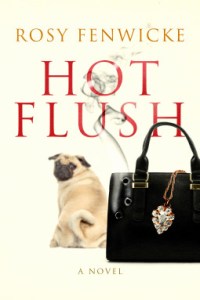
EHot Flushuphemia Sage has been receiving strange letters over the years – from her deceased aunt, the woman who raised her when her mother ran off.  The letters have been spookily aware of Euphemia’s circumstances at the time she reads them, and they speak of strange powers that she will possess once she hits menopause.  Euphemia is looking forward to seeing if the letters are true, but unsure how she will use such powers – her life being relatively uneventful.  She runs a consultancy business with her golf-crazy husband, and has two daughters, one a police detective and the other a cyber-whiz who works in the family business.  She finds enjoyment in her family, her work, running, and in Petal her pug.  But that all changes when the hot flushes start.

Euphemia’s annoying but efficient receptionist turns out to be running a loan shark business along with her obnoxious husband – using the Sage’s business to target clients.  And an old school rival, Jane, ends up at risk of having her legs broken by the loan shark’s heavies.  When Kenneth, Euphemia’s husband, goes off on a golf trip with a group that includes Jane’s husband, Euphemia thinks she has everything under control and can help Jane.  But that is before she sees Jane beaten and bundled into a car at gunpoint – and before the heinous baddies take Petal as an additional hostage.  After that, things go from terrible to dire, and Euphemia can’t go to the Police, so from the Police point of view she is starting to look like part of the problem.

Hot flush is a great romp, you find out more and more about the characters as you read, and the story is unveiled layer by layer, with things turning out to be not at all what they first appear to be.  Greed, manipulation, and playing the long game, all underpin the story.  The writing is very funny, and it is great having the drivers of the plot for the most part being strong women – and having ageing, change of life, and mitochondrial inheritance focussed on in a positive way.  There are also unanswered questions and lots of unfinished business, which promises there are more adventures of Euphemia Sage to come – excellent!


Posted in #yeahnoir, Book Review | Leave a comment