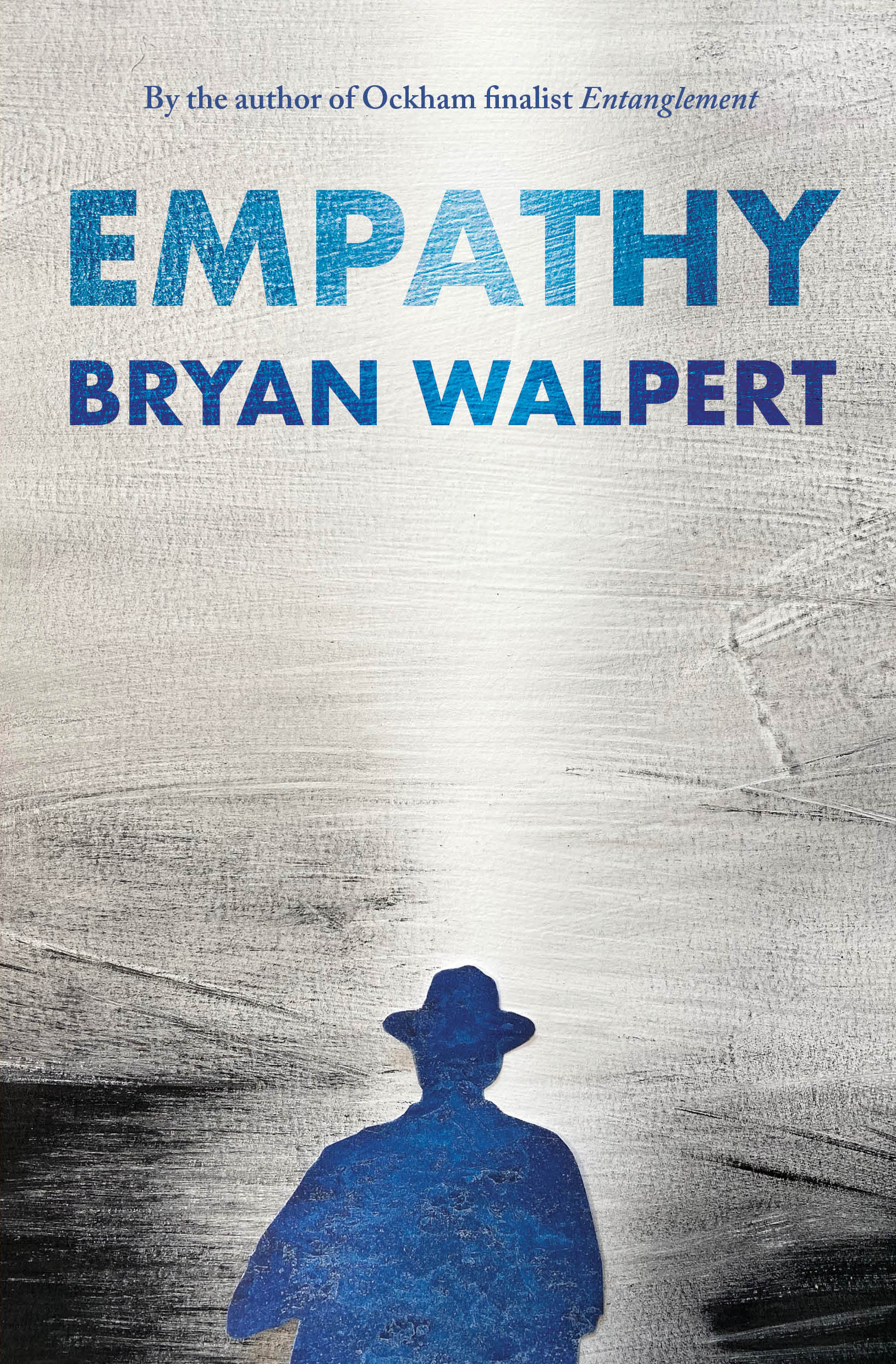
Empathy by Bryan Walpert – 2025

David Geller is a father of two, Gemma and Finn. He is  a grieving widower. He is an “upper-level chemistry and biology” teacher. He is a compulsive organiser “a little OCD”. When David’s father, Edward, goes missing, things get very messy when he turns into an amateur sleuth. External to his endeavours is the backstory of his father, a chemist the reader comes to like through a brief introductory chapter, where he is in a very bad situation. And there is also the narrative of the predicament of Alison Morris, an ambitious manager in a perfume corporation, and her dream-driven husband Jim, a gaming software developer.

What draws all these people together, as you would expect from the title, is their ability or lack of it, to empathise with others. It is a layered story, and very current – David’s teenage daughter is traumatised not just by the death of her mother, but from being the target of online bullying – that stark example of a lack of empathy. David in his grief has become quite insular, oblivious to the hurt he may be causing a long-time friend.    

As well as the plot being moved along by the stories around David, there are his online experiences of playing Jim’s game: EmPath. The game allows both an explanation of empathy and the irony of an online anonymous game designed to engender understanding between people – a game where your interactions are distant and with avatars. There is also the nice contrast of the game’s use of the choice of self-sacrifice for others, and the reality of being confronted with that choice in real life.

The reader gets a feel for maybe why EmPath is not a sure-fire hit, and that, plus Jim’s business partner being an empathy-less ratbag, leads to loan shark collection guys entering the story. Guys with an interest in any way to recoup their money. The aim of Jim’s game is also that of Alison’s new project; the creation of a fragrance that will engender empathy. Alison had contracted Edward to develop the formula.

What a great idea – a fragrance that creates what the world so desperately needs – people to understand the ‘other’s’ point of view. The magic of Empathy is in its so convincingly showing that whatever the world needs for good can so easily be weaponised for bad. Empathy turns into not just a good mystery story, but an exciting thriller.

The plotting is excellent, when I feared towards the end it wasn’t going to round out, it did so in a satisfying way. And in keeping with the theme of the book, the  characterisations are totally engaging. You understand all the motivation, the mistakes, and the aspirations of the characters. Even David’s eleven-year-old son Finn adds to the other characters and to the plot. Emphasising the question of how much we ever understand another person, or merely create them in our mind, is the very present character of David’s dead wife throughout the book.

If all this sounds a bit intellectual and heavy, Empathy is a very entertaining read: “for a detective he made a pretty good science teacher.” As in his previous novel, Entanglement, Bryan Walpert has given us in Empathy a wonderfully complex novel packed with important ideas and heart-felt emotions.

Posted in #yeahnoir, Book Review, Science Fiction | Leave a comment

The Good Father by Liam McIlvanney – 2025

The Good Father is a complex and disturbing mystery centred on a nightmare scenario – a child going missing, along with the awful speculation of what might have happened, or be happening, to him. At the beginning of the book, Gordon Rutherford’s 7-year-old son, Rory, vanishes from the beach in front of his home in Fairlie, Ayrshire.

The story of his disappearance and its aftermath is told by Gordon and spans years: first is the adrenaline of Rory’s disappearance and the efforts to find him – encounters with the police (who “looked like kids in fancy dress”) and the ravenous media. The surging waves of denial, fear, guilt, desperation. There are also the horrors of social media and the spreading of rumours: “It was as if I had walked across a bridge, from a world where everything had its place to a world where nothing made sense.”

Gordon feels a “sense of rupture, a family dismemberment”. Everyone falls under suspicion – neighbours, friends, wider family members. Eventually Gordon and his wife Sarah, a lawyer, attempt to continue living their lives – doing ‘the messages’, going to the local pub. But they will always no longer be Gordon and Sarah, they will be the Rutherfords who lost their boy.

When Rory falls off the police radar (“It was their job. It was our life”), Gordon and Sarah team up with Gordon’s cousin Paul, an ex-cop, and Ian Kerr, the father of a boy who went missing in similar circumstances to those of Rory’s vanishing. The small group undertakes some amateur sleuthing, with some success – but with no authority to act the “little detection club” falls away. Years go by, Gordon and Sarah rebuild their lives. However, their lives will never be the same.

There is a wave of ecstasy when they get news that Rory’s been sighted, but Gordon is not surprised when they find out it’s a false lead. He discovers an online group with members from around the world dedicated to solving what happened to his son. Scarily the group has photos of Rory that Gordon has never seen, and some of the inside of their house. It is all unreal – a  parallel world. But Gordon and Sarah “had no idea what was coming down the pike.”

The Good Father ramps up into a tense sequence of plot twists that leave the reader reeling. As events unfold, questions are raised about how you can seek justice when you don’t know whom to trust. Whether unjust punishment can give you a credit for future bad behaviour. And at what point do you surrender the responsibility of trying to secure justice or fairness for those you love?

The Good Father skilfully presents a gripping suspenseful thriller whilst engaging the reader with the inner lives and motivations of the protagonists. Like McIlvanney himself, Gordon lectures on Scottish literature at the University of Glasgow, and his narration is enriched by being smattered with Scottish verses and Scottish vernacular. There is an imperfection to the writing that portrays lives out of joint. Gordon and Sarah fumble around each other with ‘all at sea’ exchanges.

Reading The Good Father, I was reminded of the disturbing tone of Joyce Carol Oates’ Daddy Love – the thin veneer between the ‘normality’ of routine life and the abyss that can suddenly yawn beneath you in an instant of inattention. The difficulty of discerning the “The dumb bored badness of boys” from the evil they are capable of inflicting.

I highly recommend The Good Father, and urge you to avoid all spoilers!

Posted in #yeahnoir, Book Review | 1 Comment

The Book of Guilt by Catherine Chidgey – 2025

The Book of Guilt is an alternate history of a dystopian Britain, and the bildungsroman of a boy called Vincent. It is a mystery to solve, and a #YeahNoir thriller. It is a cautionary tale of how we accept the benefits of our society whilst being wilfully blind to their origins. It is a vivid description of the tyrannical cruelty of those in power, readily recognised from actual history, and current regimes.

The book starts with thirteen-year-old Vincent living in an old country house with his two brothers, Lawrence and William. They are identical triplets: “their light green eyes, their thick blond hair, their full, curling mouths. How tall they were for their age.” They are part of the government’s Sycamore Scheme, and they are cared for by three women who take shifts: Mother Morning, Mother Afternoon, Mother Night. The boys’ lives are regulated, quite monotonous, but not unpleasant – apart from the random illnesses the boys are prone to catching, known generically as “the Bug”.

The reader is soon suspicious of the Scheme, which includes others, both boys and girls, in other Homes. It is strange but understandable that they are being taught from The Book of History, and that their transgressions are recorded in The Book of Guilt – but why does Mother Morning record their dreams each morning in The Book of Dreams? And surely there is something sinister about the ageing Dr Roach, the founder of the Scheme and overseer of the boys’ health?

We read the boys’ Home was once full of others, but the triplets are now the only ones: “How much quieter the Home was without all the other boys, we said; how rowdy they’d been.” We learn some of the other boys were monstrous. And the triplets are not identical in their personalities; one can be reprehensible at times. It becomes clear the triplets are captive: “If we went outside early enough we could see the low sun shining through the pieces of glass, shards of amber and emerald alight in the quiet morning”. When the government brings in a policy change and the boys are allowed into the village on errands, the villagers are suspicious of the children and are often mean to them.

The boys sometimes discuss leaving the Home, and they live in hope of following their fellows once they are clear of the Bug. Following them to the Big House in Margate, where they will play on the beach and visit the wonderful amusement park. The boys are a mystery, as too is Nancy a young girl in another town, living with her parents but similarly confined and kept hidden from the world. The reader starts guessing: the existence of the children is somehow linked to pragmatic and self-serving decisions made at the alternate ending to World War Two. And their future is linked to the Thatcher-ite regime that is ruling Britain in the alternate 1970s.

The regime brings in another change, to be under the auspices of the Minister of Loneliness, and the tension of the story starts to ramp up – when first visiting the boys, the Minister: “Slipped a vegetable knife into her handbag.” To say any more about developments would be to spoil what is a tense and astonishing read. The story has so many resonances as it relentlessly unfolds – there are so many ways groups of beings are marginalised in our society, seen as ‘other’, seen as objects not subjects: “We were ever so relieved when we found out it wasn’t an actual boy.”

The plotting of The Book of Guilt is exquisite – the pieces of the puzzle falling into place, the reader feeling horrified but also empathetic towards many in the story. It is, like the boys’ days, structured into The Book of Dreams, The Book of Knowledge, and the Book of Guilt. Fittingly ending with an exploration of how society deals with its past crimes, and their victims. The overarching message: “It’s the community we need to worry about!”

The Book of Guilt is amusing in places, tragic in others, and very caring of its main protagonists. There is a tiny sliver of hope in the story too, as there are heroes. I really can’t speak highly enough about the experience of reading The Book of Guilt, it is going to stay with me for a long time. I highly recommend you read it too.

Posted in #yeahnoir, Book Review | Leave a comment

Carved in Blood by Michael Bennett – 2025

Hana Westerman’s life as an ex-cop in Tātā Bay, working with her dad on a driver training scheme for the local youth, is about to be shattered in many ways: Illness in the family, an impending wedding, a possible new relationship, desperate friends making wrong decisions, and a devastating event that leads to her facing the kind of offender no one “in the history of New Zealand policing has encountered before”.

Carved in Blood is full of characters that readers of Hana’s previous exploits will know, which makes her experiences this time around gripping, both emotionally and viscerally. Warmth and threat are woven throughout the novel. In the talk of Matariki: a time of reflection, of coming together, of valuing the dead; in the images of Hana being circled by a shark, “Its eyes never leaving her”.

In the wake of an horrific violent crime, Hana is sworn in as a temporary constable of the New Zealand Police. She finds herself once again in the conflicted position of being a Māori cop in a country where “Māori are one of the most incarcerated Indigenous races on the planet”, and she is tormented by the question: “Why the hell did this kid go and get a gun, walk into a shop and do the awful thing he did?”

The answer to that question is complicated and takes Hana to the Moon Lake Bistro and Lounge, a front for high stakes gambling and illicit imports, takes her back to her memories of a highly fortified gang pad, and requires her to visit a storage unit that may hold information that will overturn everything she knows about someone she loves.

There are new characters too, for instance Elisa Williams, head of the investigation. Williams is ex-SAS, having served in Afghanistan – she left when she felt she was part of “a painful and soul-destroying process of witnessing warring nations implode”. And there is Gracie Huia, young, staunch, pregnant, and seriously in need of someone to believe her side of the story.

Hana begins to suspect that the prevailing Police theory of the case is wrong, and gradually finds herself pushed to the edge – literally in one thrilling car chase. She digs deep to find stability: “Hana was trained to kill. But you do everything you possibly can to never pull the trigger.” However, she does find situations in her personal life that require a bit of flexibility – her daughter Addison commenting: “‘Sheesh, Mum … You believe in the rules, until you don’t.”

The plotting of Carved in Blood starts in slow motion and then takes off like a rocket. The mystery unfolds as the reader immerses themselves in Hana’s world. People both sides of the law will consider breaking it if they are desperate enough – or empathetic enough. Even the villain of the piece, “His mind is a sticky place. Nothing escapes”, is the victim of a swirl of situations, culminating in evil – just as weather conditions collide to form a serious storm with “as much rain in a day as would normally fall in three months” – a tense backdrop to escalating events.

The moral complexity of the characters is reflected by other contrasts. Rats are for many regarded negatively, a word for a snitch or a traitor, in the novel they symbolise horrific things happening in garden sheds – but “The tā moko artist explained – for us Māori, rats aren’t nasty, ugly things. They’re smart as hell … They’re tricksters, man. They can get themselves out of the shittiest situations”. Everything has another way of looking at it – I’ll never again have the same response to anyone suggesting “a visit to the Desert Road”!

One of the most poignant contrasts is that between those who are sent off in an unadorned wharenui and those who are sent off by tens of thousands at Eden Park. However, the novel makes the point that all lives become equal at Matariki: “All year long the navigator of the canoe collects the souls of those who have passed in a net. Then the waka disappears, and when it emerges again, the souls are released. And they become the new stars.”

An excellent continuation of the Hana Westerman series, Carved in Blood can be read as a stand-alone, but if you haven’t read the previous two instalments, you really should! And the novel finishes with indications of a next book in the series – great!

Posted in #yeahnoir, Book Review | Leave a comment

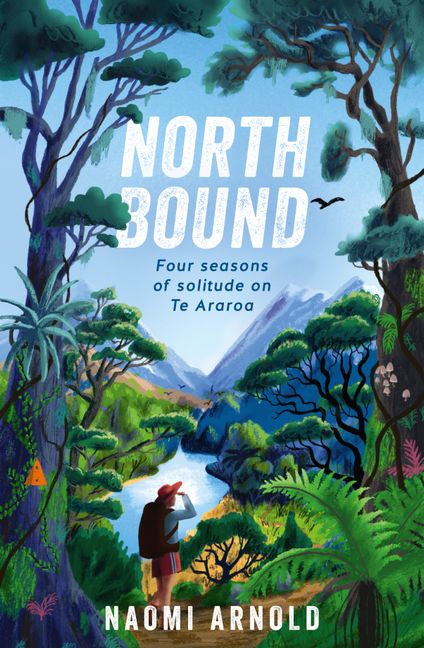
Northbound by Naomi Arnold – 2025

“It was at once too universal and too personal to put into words, an experience of awe and devastation known only to those who shared it …” Naomi Arnold walking the Te Araroa trail, which spans the length of Aotearoa, over 20 years after she first determined to do so – after reading Geoff Chapple’s Te Araroa: One Man Walks His Dream.

Northbound is far from a work of fiction, but I am reviewing it here as it is one of those wonderful books that resonates on so many levels beyond that of a travelog.

There are exquisite descriptions of the Aotearoa wilderness, its wildlife, its parks and reserves,  beaches, and  its urban landscapes …

The beaches were a mosaic of stones and shells, scraps of broken-up pink and white sea creatures I had never seen before. There were giant kina skeletons, huge slabs of kelp slumped on the shore like elephant trunks, scatterings of mauve and fuchsia seaweed. The waves were crashing eggshell blue, dragging the pebbles back to themselves, sorting them according to size.

It includes histories of some of the areas Arnold walks through, and of the trail itself – meeting those whose idea it was, who helped make parts of it more navigable. And it describes Arnold meeting others walking the trail, those whose paths intersect with hers. She becomes part of a community who have developed their own lore, their own acronyms: They are walking the TA; Arnold is a NOBO – walking bound for the north, passing SOBOs as she does; all who agreed that people should HYOH, Hike Your Own Hike; Arnold is an Effer, she had decided to walk EFI “Every Fucking Inch”.

Northbound is a love song to Aotearoa, to its beauty, its dangers, and its people. She encounters non-hikers of every political viewpoint, but all she meets are the same in their generosity and kindness. On the actual trail she meets very few people, especially in the North Island, and is shocked, even scared, when entering populated areas: “I felt scared of people now, yet craved to be around them.”  It is a cliché, but the book is an account of a journey of self-discovery – she notices and documents the changes in herself, both physical and psychological.

Arnold’s tale is the inverse of a glorification of a woman alone in the wilderness – she is often scared, often angry, and she cries a lot. She is frequently slogging through mud – over her boots, up to her knees, up to her waist. It reminds her of The Piano, a movie so Kiwi she can imagine it vividly – despite having never seen it. She weathers horrendous storms, including electrical storms: “Well, it forked right down on me.”

“Each day, I set off alone and walked with no one. I don’t remember what I thought about.” The retelling occasionally evokes a numbness, a weather-blasted fugue-state where she observes rather than experiences herself. However, there is one consistent anchor that steadies her – her husband Doug is tracking her and can guide her remotely to safer ground when she despairs. Doug is only an occasional presence the book, but is a crucial one.

Arnold notices the treatment of solo women hikers, the older ones for the most part ignored, the younger patronised. Yet the book it full of anecdotes showing the intimacy of total strangers – how not knowing someone, and knowing you will never see them again, encourages confessions. “I knew this was just the immediate, short-term closeness of strangers thrown together for a short time.” 

At the end of the trail – as ‘2400 kilometres’ nears, Arnold ricochets between extreme experiences: boredom to intense excitement, energy to lethargy, starvation yet not bothering to eat to gorging on junk food – she is both figuratively and literally fraying at the edges. And it is in this state she again encounters tear-inducing kindnesses. Arnold at one point asks in frustration: “Where is this transcendence that is meant to happen on the trail?” – and answers it herself with this remarkable book, which generously allows others to share her journey and her insights. Highly recommended.

Posted in Book Review | Leave a comment

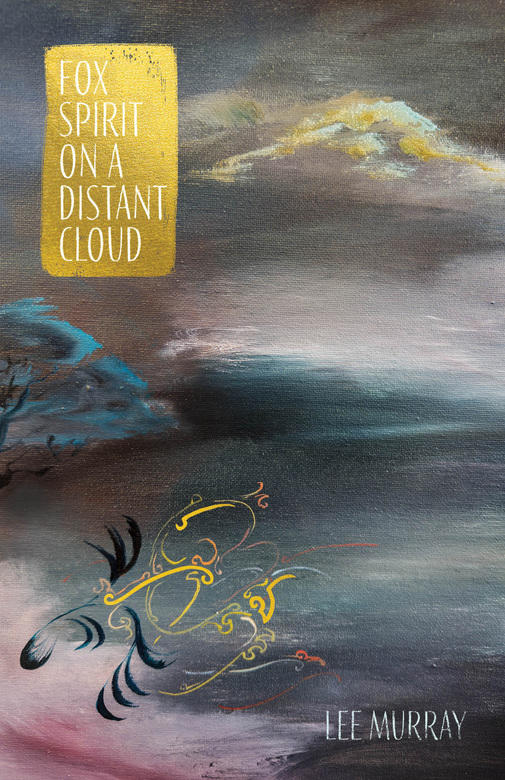
Fox Spirit on a Distant Cloud by Lee Murray – 2024

“You will give these women voice and nourish them with hope … You will give them flesh and make them real” – Lee Murray, a “New Zealand-born Chinese Pākehā”, tells nine tales of women of the Chinese diaspora, women who were either the victims of and/or perpetrators of unconscionable crimes in Aotearoa. How did these atrocities occur (and they did occur), and how did stifled women get the spirit to act?

Murray frames her stories as tales of the morally ambivalent húli jīng, a nine-tailed fox. But a húli jīng out of her milieu. Not travelling from China to Korea, where she would have switched into a gumiho, or to Japan where she would have morphed into a kitsune. The narrating Fox finds herself awaking in Aotearoa, a land where no embodied fox has ever set paw – “turning your hazel fox-eyes instead to the bright wax-eye that is flit-flit-flitting from flax to fern, to the sturdy black wētā trudging up the trunk of a nearby ponga tree … you curl your claws in the softening detritus.”

Out of her environment, the Fox, like the girls and women in the tales, is unable to enjoy the beauty of her new world – she is from a different culture, speaks a different language, she “becomes a lonely spectator of life”. She cannot run free, she is confined to the lives of the nine women. This is because she longs to travel to heaven, and “she cannot know her true place without first experiencing the agony of living. It is the eternal contract”. There is only one way: “Nine tails. Nine tales. Nine mortal lives.” And what tragic lives they are.

“Whose skull will you wear?” The tales are of women from different times and at all stages of life, from baby, to girl, to young woman, to adult, to elderly. All the women are confined and lacking agency. As well as their spirits being the húli jīng, Murray also terms the women penjing, which became bunjae in Korea, and usually known as the Japanese bonsai – wild things dwarfed and shaped by humans.

The women are all seen as of value only for their capability to procreate or carry out menial tasks. Education, aspiration, potential, all having no place in their lives, or if they do, they are quashed as the women mature. And this cycle of extinguished hope flows through the generations. The Fox is always there as a silent witness, apart from when she bushes her tail “beneath stiff cotton”, or gnashes her “tiny sharp teeth in distaste”, when “for an instant, you become your true self. You lift your head, and flick your ears”.

Fox Spirit on a Distant Cloud talks of the burden of a culture when it can’t be embraced, when it traps you rather than empowers you. In this “New Gold Mountain” you are only seen as: “An almond-eyed difficulty.” Any flicker of personal life is taken, as are any children you bear: “It is the way things are, the way things are destined to be.” You have no property, and if you do manage financial independence, you are always aware of shadows in the dark: “They exist everywhere. Not a woman, since women understand the rules, and any woman who has a problem with you would approach you in the daylight … Only men skulk in the shadows.”

The tales are all sad and bleak, they wear down the women and drive the Fox to explosive rage: “All these years your fox-bones squeezed into places they didn’t belong.” These are not tales of women who are ciphers for all Chinese women. One is, like Murray, “one-part willow and one-part manuka”. They are tales of those who became snippets in Papers Past, or whose stories appeared in the national media. They are tales of women whose spirit has waned: “The gods were right all along. You are a no-good woman and a waste of rice.”

The book is beautifully constructed, prefaced by poetry, and contrasting the tales are the smatterings of short couplets they include: “tuatara / steps on a rock”, “frost on the grass / late for work”, “lifting a rock / the slaters scatter.” The Fox, after: “All these years imprisoned in a domed skull cage. Surrounded by ghosts”, comes to a revelation that her difficult journey to heaven, her life in this far off lonely alien land, has been all about bearing witness – just like Murray’s novel. I found Fox Spirit on a Distant Cloud wonderfully conceived and executed.

Posted in #yeahnoir, Book Review, Historical, Short Stories | Leave a comment

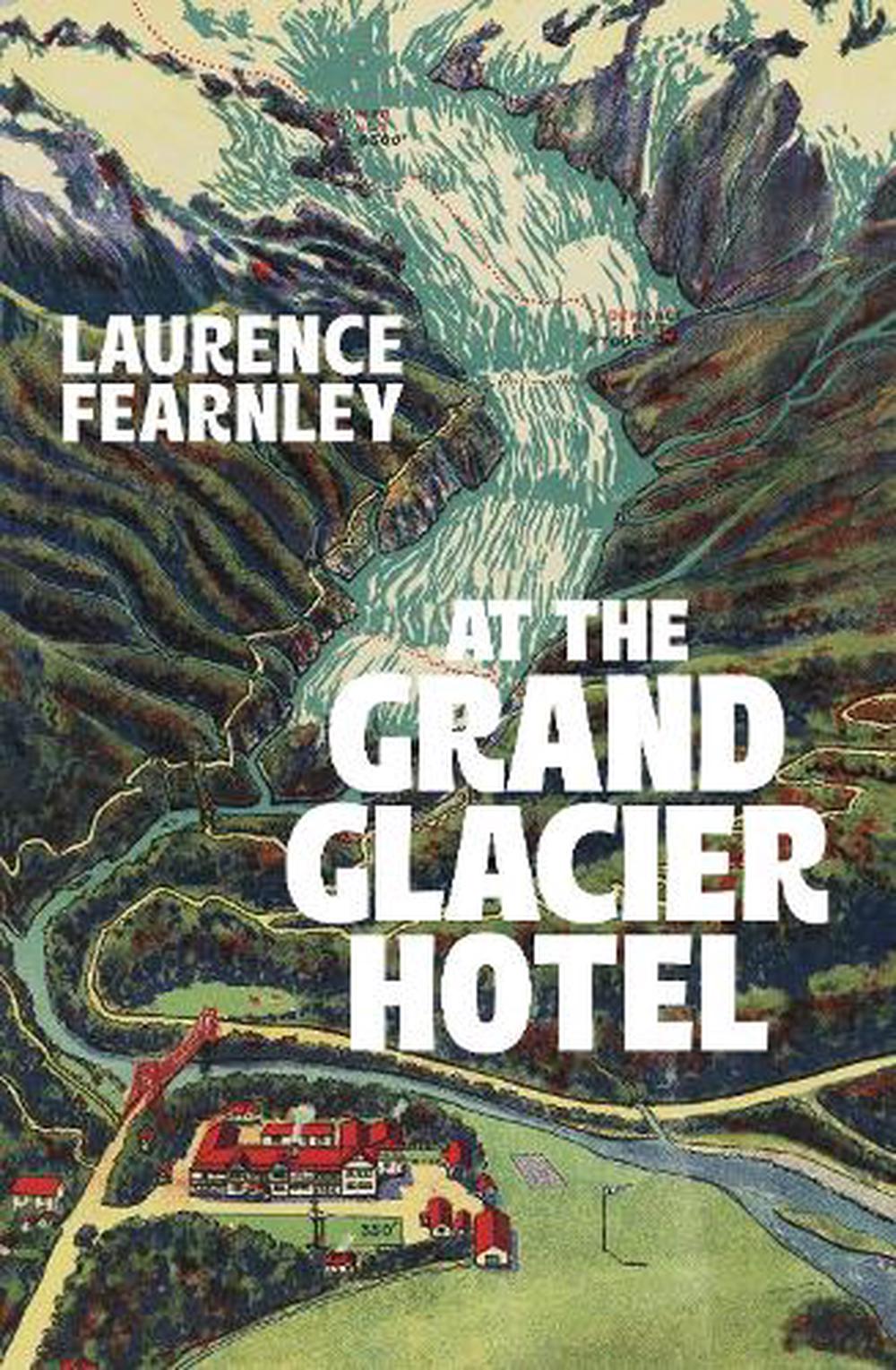
At the Grand Glacier Hotel by Laurence Fearnley – 2024

“‘It’s a funny old world, eh?’ I said after a second sip. ‘It’s pretty random,’ said James.”

Libby is back at the Grand Glacier Hotel, on the West Coast, Aotearoa. Twenty years earlier she and her husband, Curtis, had promised each other they would come and stay one day when they could afford it. James has come down to the hotel from his remote campsite, as the weather is closing in.

Libby “used to be fit and strong, and work in construction and landscaping”, but is now recuperating from major cancer surgery on her leg. She is in constant discomfort, with frequent spasms of acute jolts, “like an electrical current”, zapping through her leg – “I spent every hour of every day dying.” When Curtis decides to leave on a quick return trip to Wanaka, Libby is relieved to be able to take the break at her own pace, and she suspects Curtis feels similarly: “If we’d been dogs we would have been tugging at the leash, albeit in opposite directions. Even so, I felt a pang of sadness.”

With Curtis gone, Libby just wants to rest. She has a fear of storms and caves, and she feels anxious about her proximity to the Alpine Fault. However, even though she has just turned 50, she still imagines her mother’s voice telling her to “make an effort” – to be active and not just lie around all day. She ventures out on a nature trail, but her leg turns even simple negotiations into major events, and she ends up lying in a ditch. “There was a man standing over me. It was James. ‘Are you hurt?’”

At the Grand Glacier Hotel is the story of two people trying to make sense of how their lives are unfolding, both experiencing symptoms of PTSD. The descriptions of Libby’s situation are pitch perfect. James’ story is a series of snippets that evoke the reader’s solicitousness. Like Libby, he is dealing with physical trauma and its psychological aftermath. On that first encounter Libby and James continue the nature trail together, ending up looking out over a swollen river, as cow carcasses float by. It is the first of a series of outings, that eventually turn into a strange treasure-hunt.

Libby is slowly regaining her agency after falling into patient-mode with her cancer diagnosis: “I went from competent and decisive to being a passive observer.” She still feels socially and physically inept, and she feels awkward spending time with James, a younger man. Libby knows that  “women like me were invisible”, and worries that she is boring, or that her disability is too limiting. Libby decides her spirit animal would be a lichen, they “symbolised my own painful progress”.

Libby’s memories of her treatment are harrowing, as is her consequential arrival at ‘disabled person’: “Disability as a form of loneliness that extended far beyond self-pity.” Libby mourns for her previous self who was a “confident solo traveller, sure of my abilities when it came to looking after myself.” She now struggles with getting out of the bath, stepping over low barriers, keeping up with other people.

“Many times I’d sought reassurance, only to have left a consultant’s room feeling less certain and hopeful than when I entered.” Libby’s emergence from a life being determined by the medical is traced by her trips with James. She even manages a walk in a dreaded damp cave: “At last we were back in the fresh air, and the smell of the bush and the damp earth warmed by heat was almost overpowering.”  

James has a medical background so is both Libby’s recent past and her lived present. “Why we were drawn to each other was somehow simple but also mysterious. We were easy in each other’s company but beneath that? I felt seen, I suppose, but something more.” They both know that their relationship is transient, they are surrounded by imagery of decline: the dead cows washing away; the drastically receding glacier; James hunting for a bird thought to be extinct; characters enthusiastic about a constructed international language that almost nobody speaks.

At the Grand Glacier Hotel is drenched in the healing, if not dangerous, atmosphere of the West Coast bush – a magic place with kiwi and fantails but also soaking wet and frequently flooding. “I flattered myself that I now had more than a passing connection to the place, that I’d tapped into its rhythms in a way that a tourist wouldn’t.” The book has, like all Fearnley’s work, a strong sense of place. However, it is the depiction of Libby I found striking – and I wasn’t surprised to find out that Fearnley had herself received the same diagnosis she writes for Libby.

Libby realises that, despite she and Curtis having a loving relationship, “Not once did we sit down and talk seriously about our feelings, or our fears.” Sometimes it is leaving your comfort and braving it with complete strangers that can trigger healing – At the Grand Glacier Hotel is a wonderful book.

Posted in Book Review | 1 Comment

The Royal Free by Carl Shuker – 2024

The Royal Free depicts the fracturing of a stable reality – personal, institutional, and societal. James Ballard is a grieving widower with a six-month-old daughter, Fiona. He is a copy editor at the Royal London Journal of Medicine, the: “third-oldest medical journal in the world.” The Royal London is dealing with the surrender to online-only publishing, and the deep-fake takeover of scientific journalism. Ballard’s apartment is in a housing estate being besieged by young thugs, and his London is one of constant riots and mayhem, sparked by the police-killing of a “29-year-old black man”.

In keeping with the themes of disintegration, The Royal Free meanders from intra-office politics and foibles to Ballard’s personal difficulties, to national and international chaos. The point of view changes, at one point even being that of Fiona, probably a Ballard projection, but maybe not. The only theme that is consistent is Ballard’s plodding digitisation of the journal’s multi-volume style guide. Such a Baroque urge to order and uniformity is a stark contrast to the surrounding pandemonium: “It was very quiet but for the sirens outside.”

“Nothing quite like a six-month-old baby to adjust your expectations of yourself.” Ballard finds himself wanting when, after farewelling Tatia (“23, Lithuanian, ‘economics student’”) after a week of Fiona-minding and sex-providing, he goes for a run. Leaving Fiona in the neglected apartment, alone. Shuker is an expert in the looming dread – the reader horrified at all the things that haven’t happened but that might. Ballard has similar forebodings when he encounters a group of youths on his return. And thereby starts a sequence of events, with at one point Ballard doing “a stupid, stupid thing” – “They  would come back for him.”

The Royal Free highlights how modern life is increasingly wanting of a style guide, of “man as an ordered political animal, civilisation, and its critique”. There is no madness in a way, as all is madness. People behave as though they’re avatars in an online platform game, hurling rocks and bottles at anything, to see if they get a reward. First responders must often curtail treatment to just get the injured to a hospital. Or those wanting to cheer up the masses with entertainment end up regretting their choice. There is little social cohesion: catching public transport is to enter the domain of an individual – a driver who will rip you off, and who you have to just hope will take you to your intended destination.

Ballard loses himself in the monotony of the style guide. He and his colleagues appear a nit-picking, arrogant lot – an editor’s job is to be judgemental after all. And they are in the specific field of the medical – a group that don’t know the meaning of “petrichor” but don’t stumble over “vesicovaginal and rectovesical fistulas”. They edit “A Patient’s Tale” by a young Nigerian woman, an awful tale geographically distant from themselves – little knowing how soon her plight might be one befalling those closer at hand. They are more concerned with their journal going solely online. Some compare it to the fate of the OED: “Gives the word ‘Help’ in the menu bar a whole different feel, doesn’t it?”

The arc of the book, really a rapid descent into darkness, is provided by Ballard – his discoveries in Fiona’s nursery, a decapitated cat nailed to his door grill, his ending up always walking with a knife in his pocket. However, themes also emerge through the stories of his workmates: Dr Ibrahim al-Reyes, impeccable, dealing with the trauma of personal atrocities in Syria, watching horror movies with “the sense of cruising hostility and blankness”. The terrifying commute to work for Annabel Pitti, after her bike has been stolen out of her backyard shed. Kristian Shattuck, losing his sight, desperately volunteering for more and more work, making more and more mistakes – “words holding together the things that are falling apart”.

The book is like the sexist banter of some of the Royal London staff: “a weird, doomed fin-de-siècle finality that soon became a lurching inevitability.” All characters are fraught and flawed, the only judicious character being an uncanny Rhodesian Ridgeback. I think The Royal Free will be polarising; there will be those who worry that it doesn’t hold together, and those that think that that is Shuker’s point. The novel itself disintegrates. I was initially destabilised by the book, but I ended up finding it riveting. And increasingly disturbing the more I recognised that for many in this world, what is described would be their own non-negotiable, lawless reality.

Posted in #yeahnoir, Book Review | 1 Comment

A Divine Fury by D.V. Bishop – 2024

“Investigating a murder that involves the Church never ends well in Florence.” Cesare Aldo and Carlo Strocchi are back pounding the beat in 1539 Florence. Literally pounding the beat for Aldo, who has been assigned to months of night-patrolling the curfew since his return from banishment to the Tuscan countryside. But one night Aldo makes a gruesome discovery at the feet of Michelangelo’s David, and Aldo and Strocchi are once again pursuing a murderer.

As they hasten to find the killer, there are more murders, and then multiple suspects – neither the victims not the suspects appearing to have anything in common. However, eventually they all have links to a particular church, and to the rite of exorcism – possibly being used as a punishment for “those who were different” rather than a purification ritual. Now Aldo and Strocchi must deal with the power of the Church as well as their incompetent superior at the Otto criminal court, Segretario Massimo Bindi.

A Divine Fury has all the characters that followers of the Cesare Aldo series have come to love, as well as those they loathe. A great thing about a good series with ongoing characters is that you get to follow their development through time. “Life was simpler when I lived in a village” – Strocchi, now promoted to an officer of the Otto, is maturing into a thoughtful investigator, albeit needing the calming influence of his wise wife, Tomasia, now expecting their second child.

Aldo is becoming bolder and more carefree: “Yes, he wanted to see justice done, far more than he cared about the laws of Florence.” His being demoted and now subordinate to Strocchi plays a part in this, along with being back nearer to his soulmate Doctor Saul Orvieto, renewing his acquaintance with Duke Cosimo de’ Medici, and encountering a woman who is his equal in wit and manipulation: Contessa Valentine Coltello.

The Contessa is, and wants to remain, a Venetian spymaster – a pivotal role in a society that turns on intelligence and deceit, always judging “how much and to whom to share information.” The book give you the feel of 16th Century Venice; you can smell the “merda”, be intrigued by the political manoeuvrings, feel frustrated for the women who must manipulate men to have any agency – and cheer on those who are confident of their skills, such as Saul’s assistant, Rebecca. 

A Divine Fury might have all the elements of historical fiction, but it also has modern resonances. Sometimes this is overt: “Honestly the poor people of Milan would not notice good sewing or gorgeous gowns if they tripped over such delights in the street”, but often by allusion. Many areas of the world today would recognise the bigotry and prejudice of 1539 Florence. There are hints at conversion therapy, and a willingness of the Church to transfer people to other regions rather than admit one of their own have committed crimes.

The reader has all the clues to formulate a theory about the crime, and all is coming to a neat conclusion when, as with all good murder mysteries, things start to get murky and then hurtling in a new direction – with suggestions of modern criminal profiling techniques, and the need for them. A Divine Fury is an engaging murder mystery and ends with Cesare Aldo making a significant decision about his future. I can’t wait to read of his further exploits!

Posted in #yeahnoir, Book Review, Historical | Leave a comment

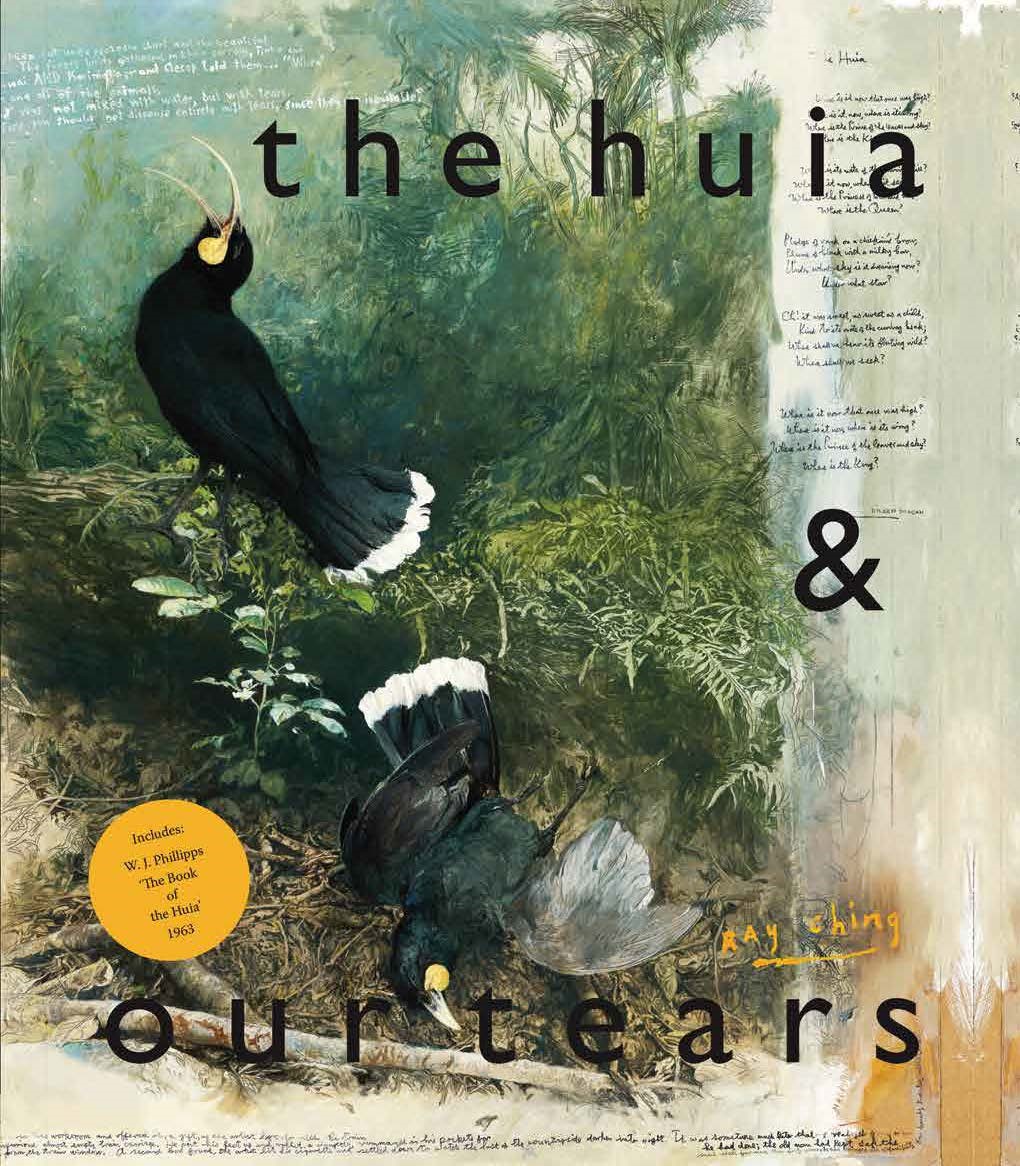
The Huia & Our Tears by Ray Ching – 2024

“The fables come always to the same end; this beautiful bird that touched all who met with them or heard their call from their forest places, is gone.” I include The Huia & Our Tears in my reviews of Aotearoa fiction as, although including what scant scientific knowledge there is about the huia, it is a wonderful anthology of legends, tales, and anecdotes about this iconic bird.

The huia’s beauty and restricted geographic range made wearing their feathers a mark of high rank among Tangata Whenua. When European collectors arrived, Māori guides would imitate the call of the huia to lure them. But the demand for specimens for taxidermy for museums, models for drawings in ornithological records, auction houses, and private collectors was insatiable.

“Charles Jamrach, an exotic bird dealer living in East London, refused to buy any more New Zealand skins” however “he would nonetheless be ready to take rarer birds such as Huia, should they be offered.” Many of the observations of huia related in the book are from specimen-collectors and taxidermists. Sadly, it appears that few of the specimens have been well-mounted or well-preserved. The number of extant ones internationally (mounted and skins) are few enough to be included in an Appendix.

Hunting pressures, habitat clearance, and the introduction of stoats to control rabbits drove the huia to extinction in the early 20th Century. Ching’s book is subtle in its conservation message, and more powerful for it. There is such irony in the desire to hunt the birds becoming more energised as it became clearer the huia was heading for extinction. One of the loveliest observations quoted in the book is from naturalist and specimen-collector Alfred Wallace, from his The Malay Archipelago (1869):

… all living things were not made for man. Many of them have no relation to him. The cycle of their existence has gone on independently of his, and is disturbed or broken by every advance in man’s intellectual development; and their happiness and enjoyments, their loves and hates, their struggles for existence, their vigorous life and early death, would seem to be immediately related to their own well-being and perpetuation alone, limited only by the equal well-being and perpetuation of the numberless other organisms with which each is more or less intimately connected.

The Huia & Our Tears is also a memoir of Ray Ching. He reminisces about his encounters with renowned literary figures and high-profile conservationists, with taxidermists and fellow enthusiasts. He writes of his various projects, many including the huia: “They are difficult because neither you nor I have ever seen these birds foraging about the forest floor with their beautiful ivory-coloured beaks, and can’t just exactly know of their movements.”

Ching makes a point of the fragile value of treasured artifacts, relating how once he had accidently tossed away an item that someone had kept for years, and gifted to Ching only hours before. He is often short of money and laments having to divest treasured specimens and books to make ends meet. He was not able to attend the book launch of The Book of British Birds, which he has worked on with Sir Peter Scott, as he didn’t have the £8 train fare.

The Huia & Our Tears includes wonderful descriptions not only of the huia but of the 19th century bush and birdlife from historical writings. There are quotes from the memoir of Laura Mair, Walter Buller’s sister-in-law, who drew significant sketches of huia from her observations in Buller’s aviary. She also had a pet Kākā until “he became very mischievous, biting pieces out of the chair backs, destroying antimacassars etc., and finally he bit the tail off my favourite cat. That was too much to overlook, so he was put in a pie with some wild pigeon!”

The book is lavishly illustrated with photographs, some very poignant. And of course it is full of Ching’s spirited artwork. There are also the works of such as Goldie and Lindauer. A bonus of this edition is the inclusion of W.J. Phillipps’ comprehensive 1963 work The Book of the Huia. All in all, The Huia & Our Tears is a moving and entertaining read, and once read a book to go back to time and again: “taking us as close as we ever can be to these beautiful birds now lost to us.”  

Posted in Book Review | Leave a comment