A middle-aged man with a rifle in his car decides to pick up a young woman on the highway. He is just wanting to help; she is about the same age as his estranged daughter. The young woman sees accepting the lift as a failure of spirit, she has a blade concealed in one of her rings, she is running from something and wants to be totally self-reliant. But shortly after being dropped off in the man’s home town she is harassed by local thugs and the man once again comes to her rescue. The man, Lewis, and the woman, Tess, end up co-habiting, innocently – but when a middle-aged man co-habits with a woman the same age as his own daughter there is inevitable tension, and suspicions from others. We learn of Tess’ unusual background; that she was abandoned by her drug addicted mother to the care of her loving earth-mother grandmother, that she is now fleeing from a series of violent incidents, which are revealed gradually. And Lewis is a man in mourning; his wife died in horrific circumstances, he is estranged from his daughter, Jean, his mother is living with advanced dementia in a rest-home, and Jean’s twin brother is in residential care. We learn that Tess is a drifter because she has a ‘gift’, and whether that really is a gift that helps those she meets, or whether it is a curse that leaves chaos in her wake is the central issue of this book. The book starts off in a slow and considered way, with a measured revealing of the characters and their histories, but when Jean arrives at her father’s house the novel alters, the pace picks up and we are soon at a fast denouement. The different story lines are inventive and the characters of Lewis, Jean and Tess are engaging. But the change of pace left the length of the novel a disappointment for me – it ended up reading like a too long short story rather than a novel – and I really wanted to spend longer finding out more about these intriguing people. Maybe Tess will wander into someone else’s world and I will get another chance? Tess is well worth a read.

 ‘common opinion’, but there is one captivating section devoted to his admiration for the writer of the Police notebook, a column in the Timaru Herald: “Every crime, a sentence; every sentence, a little masterpiece of brevity and accuracy, at once banal and surreal.” He was so taken with the entries he compiled some into a poem and sent it to Bill Manhire for his consideration!
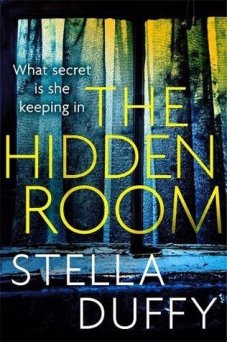 carried the other’s children, all from the same sperm donor. They love each other and flowing water surrounds them; their property is in the fens, there is a stream running through it, the ocean is a short drive away and two of the children are competitive swimmers. Martha is taking on more of the household responsibilities because Laurie’s career has taken off, but she is sort of OK with that – except for feeling she might like to have something of her own she doesn’t have to share – like meeting with her birth daughter’s new dance teacher, who wants to practice his life coach skills. Laurie decides to keep a small secret of her own too, a hidden room she finds in their house. So the solid family starts to develop minute cracks, not enough to be a problem really – except there are much bigger secrets in Laurie’s past. Secrets to do with the dry American desert community that obtained her as a child, for a purpose, and to which she returned a few years after being rescued from it as a small girl. As the book unfolds, the power of the desert starts creeping into the moist security of the family, making larger cracks that are harder to ignore. And Laurie’s purpose once more starts to play out. The hidden room begins like the story of a family in the throes of change, as children grow up and parents start thinking of the next stage in their lives. But it slowly turns into a tale of psychological suspense. Even in as entwined a family as that of Martha and Laurie’s, the differences play out – the DNA connection between biological mother and child as opposed to the familial relationship between birth mother and child, the woman who feels basically safe and the one who has never really experienced safety. There are hidden rooms everywhere, in the family home, in the fens, in the desert, and inside the characters. And horrifically the strongest imperative appears to be the insidious power that men have over women. The hidden room is a deeply disturbing book, and one that I pondered over long after I had finished reading it.
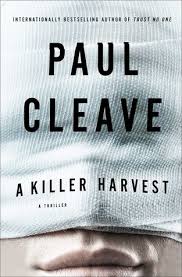 A Killer Harvest reprises The Hands of Orlac idea that body parts transplanted onto a new host will carry the evil intent of the donors – as donors in historic horror are most likely to come from the criminal classes. Cleave has wrapped this in the current pseudoscience of cellular memory. He has also updated the classic source of the harvested organs (criminals) by having some of his central police and medical characters in on a scheme to harvest organs for the greater good, by the summary execution of suspects. Central to the plot is young Joshua Logan. Joshua has been blind from birth, he also lost both parents when he was quite young so he was fostered by an aunt and uncle. His ‘dad’ is a detective and when he is killed on the job Joshua is devastated and sees it as another episode in his cursed life. But there is a potential miracle in this particular episode, as his father has arranged that in the case of his death a brilliant ophthalmologist will transplant his eyes into Joshua, allowing the boy to see for the first time. Unfortunately, the father’s death occurred during one of the executions planned by Joshua’s father and his partner Ben Kirk. Ben carried out the killing and so it is not only Joshua’s dad having his eyes removed the day Joshua gets new eyes, the murderer is too. Even more unfortunately the executed-without-trial murderer also had a partner, Vincent Archer, and Vincent makes up a list of people he can kill to make Ben very very sorry he killed Vincent’s mate. In a nice touch Cleave has Vincent leave Ben’s cat off the list, but his ex-partner’s son is way near the top. So poor cursed Joshua not only has his new eyes to cope with and the bullies at his new school, but he also has a very nasty man trying to kill him. There is a theme through the novel of Joshua’s favourite books – vampires and zombies – books where creatures unsuccessfully struggle against their true natures. And A Killer Harvest certainly leans to the view that evil is carried out not by choice but as a result of who you are, or whose parts you may have received under anaesthetic. It is creepy and extremely well plotted, you may guess some of the twists but I bet you don’t guess them all. It is compelling reading and yet another great Kiwi thriller from Paul Cleave.
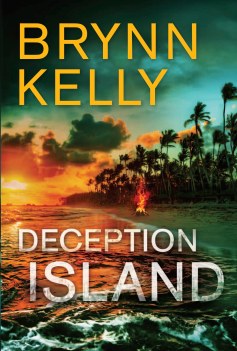 Deception Island won the 2017 KORU Published Romance Book of the Year Award, and deservedly so. It is a Romance novel; a large part of it deals with two people on a tropical island, they should hate each other but between them sexual tension sizzles, and they frequently have to plunge into the lagoon to cool off, and hide parts of their bodies that are betraying lustful urges. The two characters are evenly matched and it is all good fun and deliciously played out. But this book is also a thriller, and a really interesting one. The woman on the island has been kidnapped by the man. She (Kelly) has been body doubling for an heiress who is supposed to be sailing solo around the world, keeping the socialite’s fans entranced via a low-resolution web-cam. She is actually an ex-con with an abusive background and no time at all for men. The guy (Rafe) kidnaps her for ransom in order to free his son from the clutches of an old boy-soldier comrade (Gabriel), who is threatening to recruit the boy in the same vicious way the two of them were when they fled their war-torn homes. Rafe is a damaged man who has no time at all for anyone – except for his son. The story blasts through the expected resolution of the two lost souls on the island to a sequence of events on a second island, where Kelly is given more texture to Rafe’s background and ends up fighting for her life, not knowing if she is in danger from just one of the ex-boy-soldiers or from them both. When she accuses Gabriel of being an animal he responds: “No, my dear. I am human, and that is far worse.” The book has themes of child abuse (both in war and in the home), people trafficking, and most of all whether abuse can take away a person’s capacity for love. It is a high adrenaline read with a feisty female lead and I really enjoyed it.
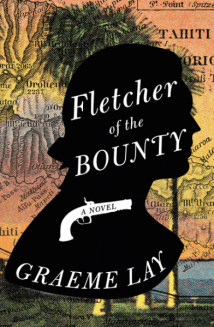 I really enjoyed Lay’s James Cook trilogy, from the first installment which adores Cook, through to the final depiction of a man gone mad. I picked up Fletcher of the Bounty expecting a combination of the two – adoring of Christian and a depiction of an insane Bligh – needless to say my history of the events comes from various movies! Lay’s portrayal is much more complex, following Christian from a youth whose prospects are thwarted by the fall of his family, through to his failed attempts at creating a Pacific utopia. And Bligh from a fair leader with an honorable history, through to an insecure man conscious of his humble origins; a lonely and isolated man. At the beginning, I was a bit distracted by cousin John seemingly introducing Christian as his nephew, and Christian being offered a job where he will “mess as an officer” and then his causing a kafuffle because “you’re just a gunner, and gunners don’t eat with officers.” But I was soon absorbed in the unfolding of the tale, and horrified by the choices made and intentions expressed on the basis of roaring hormones, and the consequential abuse of any exotic woman. It really is an appalling tale of a far from noble enterprise. And Fletcher, although feeling guilty over the business of slavery that underpins his voyage to the Pacific, is certainly not pure in many of his intentions. And his reasons for mutiny are nothing to be proud of when looked at through the lens of today’s sensibilities. The point is made that any success that the Pitcairn settlement enjoyed was totally due to the women taken to the island. Fletcher of the Bounty is a tale of how a life can become something so different from the one imagined in youth or in one’s yearnings – perhaps it is intentional that Lay has a fictional encounter between Fletcher Christian and William Wordsworth when they were both youths – Wordsworth growing up to realise the mess we make of our potentially perfect worlds: “Our birth is but a sleep and a forgetting.” This book is not a pleasant read, but it is an interesting one – and one that brings another chapter of our not too glowing history to life.
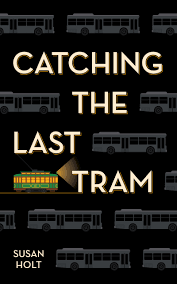 romantic arc – but not at all in a usual way. Beth is a librarian who has moved into a new part of town, she is lonely and on the lookout for a fella – her last few relationships having not ended well. Beth finds a likely prospect on her commuter tram, but her fixation on behaving in a way that will give her the best chance of pursuing a relationship, means she misses some very odd details about the tram and its regulars. The reader is suspicious from the outset, which leads to a fun read as you try to work out exactly what might be going on. Beth’s world is modern, but the style of writing is slightly not – until the cell phones came out I was thinking we were possibly in the 1950s, and the processes at Beth’s Library seem a bit dated as well – all of which added to the mystery. I don’t want to give anything away, as the enjoyment of the book is in not knowing, but it gets pretty darn scary in a number of places. Holt includes the theme of the evils of bullying, and the value of friendship, and a quite tongue in cheek reference to an environment where money trumps true love. I still had a few questions at the end, but nothing that got in the way of this being a delightful read.
 Ruth is a young girl, living with her family on her grandparent’s apple orchard in Nelson, when a terrible accident tears her family apart. Ironically it also keeps her family together, as her parents were talking divorce before the accident, but afterwards her father decides they should take their grief to Irian Jaya. He intends for them to work on community development programmes – building a hospital, introducing rabbit breeding and avocado growing, handing out health pamphlets. Little Ruth packs up – armed with A Guide to the Flora and Fauna of New Guinea and The Swiss Family Robinson, gifts from her grandfather “Thus armed, he could send me anywhere.” The novel is the story of Ruth’s time in the small mountain village of Yuvut. Set in the 1990s, the civil unrest and uneasy mix of peoples in the village echoes Ruth’s inner turmoil: Wracked with childhood guilt about what part she may have played in the accident that took the life of her little sister, and feeling apart from her unhappy parents, she laments: “In Yuvut you would try to guess who was on whose side, but there seemed to be too many sides and no one was ever on yours”. The small and large cruelties inflicted by people on people, by people on animals, by people on nature, and the suffering of people at the mercy of nature – these are all described; when Ruth is in a plane looking down at what appears to be pristine forest, she can imagine the enormous devastation man has caused to the environment and “I imagined, too, the tinier forms of life, the dancing birds of paradise, the spirits waiting at the edge of things for their time to come, waiting for the water to get low enough in the swamps and expose all of Papua’s hidden secrets: its bodies of planes, of people.” The book also deals with the difficulties of translation; the tenuous connections between those who don’t speak the same language, or who must rely on a third person to interpret. At one point these connections are likened to Papuan rope bridges – “The ropes sometimes broke. But people kept crossing them anyway.” There are inserted sections throughout the book that are named for various plants, all of them relating to the horrors that have played out in Papua. These inserted stories are from different years and perspectives – most seemingly gathered from a later time when Ruth is working with refugees – from one of them: “We’re all just sitting with our toes dipped in that dark water and the only thing separating mad from not mad is how far we let ourselves slip in.” The Earth Cries Out is a sad book, but I found it really compelling, and Ruth a wonderful character.
 Amy is a new mum, still coming to terms with having a ‘family’, her husband has moved from a job where he smelt of coffee all the time to one where he stinks of petrol, they have problems with the neighbours, her mother is ailing and her elder sisters judgemental – but all in all things are OK. Amy is also surrounded by crime, she is a store detective at Cutty’s, a large Wellington department store, she was an animal rights activist in her youth, and from experience knows that most people have infringed at some point in their lives. And Amy is being interviewed by the Police, and the interview has something to do with an incident during the disturbing last few weeks, the weeks since the announcement of the closure of Cutty’s. Lifting drifts through these few weeks, and through Amy’s memories as she becomes quite disengaged from her life, observing her child, her husband, herself much as she observes the shoppers in the store. She wonders about moving away from ‘security’ work, thinking that it puts her in constant proximity to low-level criminals, but then again maybe that’s exactly where she wants to be? Amy uses her power of ‘discretion’ with the ‘persons of interest’ she spots as she pretends to be a fellow shopper, thinking she has a moral compass, but isn’t she just random with her grace and with her decisions to act? The closure of the store becomes a metaphor for the disintegration of an era – with its sexist doormen, the sensual face-to-face rather than face-to-screen shopping experience, the tea and cream buns after the first bra fitting, and the various methods of shoplifting; brazen to furtive, but all on an individual, human level – not the horrific violent gang raids on dairies and service stations we see on TV, not the impersonal mass cyber robberies we read about. “It was tempting to believe that venturing outside the crumbling world of Cutty’s would bring you even closer to the apocalypse and that gangs of wild children carrying improvised weapons wandered the streets … “. And there is Gerty Cutty, the last surviving member of the founding family, an embodiment of the store’s long and shady past, Amy is intrigued by her and wonders if her sad farewells to the store aren’t also a good riddance, she watches her driven away “A small hand waved at the window as the car pulled away”. As the staff of Cutty’s work through the final weeks, some getting jobs, some still hoping for a final reprieve, no one really has a handle on the situation – large items go missing, is it theft or part of the wind-down of the store? And the staff start eyeing up items themselves, to buy or … And interspersed in the narrative is the Police interview – which crime great or small is being investigated? Is Amy a suspect or helping with the investigation? As the store at once winds down and also starts preparing for a final sale – they are flying people down on a special flight from Auckland for it – there is a sense that something has gone very, very wrong. Lifting is inconclusive and ambiguous, even the title can refer to petty crime or to triumphant moments, it harkens to a time of clarity and certainty that probably never existed on an individual level, not even in youth, and definitely not in any previous era. It is a lovely read about the passing of time and how every now and again that passage leaves you unmoored for a while.
-
Archives
- March 2026
- November 2025
- July 2025
- May 2025
- April 2025
- February 2025
- January 2025
- December 2024
- November 2024
- October 2024
- September 2024
- August 2024
- July 2024
- June 2024
- May 2024
- April 2024
- March 2024
- February 2024
- January 2024
- December 2023
- November 2023
- August 2023
- July 2023
- June 2023
- May 2023
- April 2023
- March 2023
- February 2023
- January 2023
- December 2022
- November 2022
- October 2022
- September 2022
- July 2022
- June 2022
- May 2022
- April 2022
- March 2022
- February 2022
- January 2022
- December 2021
- November 2021
- October 2021
- September 2021
- August 2021
- July 2021
- June 2021
- May 2021
- April 2021
- March 2021
- February 2021
- January 2021
- November 2020
- October 2020
- September 2020
- August 2020
- July 2020
- April 2020
- March 2020
- February 2020
- January 2020
- December 2019
- November 2019
- October 2019
- September 2019
- August 2019
- July 2019
- June 2019
- May 2019
- April 2019
- March 2019
- February 2019
- January 2019
- December 2018
- November 2018
- October 2018
- September 2018
- August 2018
- July 2018
- June 2018
- May 2018
- April 2018
- March 2018
- February 2018
- January 2018
- December 2017
- November 2017
- October 2017
- September 2017
- August 2017
- July 2017
- June 2017
- May 2017
- April 2017
- March 2017
- February 2017
- January 2017
- December 2016
- November 2016
- October 2016
- September 2016
- August 2016
- July 2016
- June 2016
- May 2016
- April 2016
- March 2016
- February 2016
- December 2015
- November 2015
- October 2015
- September 2015
- July 2015
- June 2015
- May 2015
- March 2015
- February 2015
- January 2015
- December 2014
- November 2014
-
Meta
 alysontheblog