Pansy, Clem and Otto are inseparable mates in the West 
Coast coalmining town of Blackball pre the Great War. The children have quite different home lives, Pansy having the worst of it by far – her father being a cruel drunk who abuses his wife and whose view of society would make him feel right at home in A handmaid’s tale. To make matters worse Pansy is full of promise, and with a supportive family she would have gone far, but she ends up in service. There’s nothing new in Pansy’s story, but it is well told. The novel then switches point of view and we follow Clem off to war – he is a sympathetic character, but his reasons for enlisting are appalling. And his decision is seen as a betrayal by his ‘workers of the world unite’ dad. Clem goes from digging in the mines to digging tunnels for the allies, and his section of the book is again well told and textured, with lots of interesting characters. I would have preferred to continue Pansy’s story while Clem was off at war, and also for Otto’s story to be told. We hear what happens to Otto but he doesn’t have a ‘voice’, which unbalanced the book for me. Also the author plays around with time sequences a bit, which is effective in keeping you concentrating while reading, but one twist to the story really had me struggling to fit it into the timeline. And another twist I was sure would be revealed, drawing all three characters back together, never was. There is much in this novel that had me engrossed, but I would have preferred it to be longer, for it to give the reader a chance to be part of all three children’s lives and destinies, not just a slice of two of them, and for it to explore more the effect of the First World War on the lives and politics of small town New Zealand communities.
 Amy is a new mum, still coming to terms with having a ‘family’, her husband has moved from a job where he smelt of coffee all the time to one where he stinks of petrol, they have problems with the neighbours, her mother is ailing and her elder sisters judgemental – but all in all things are OK. Amy is also surrounded by crime, she is a store detective at Cutty’s, a large Wellington department store, she was an animal rights activist in her youth, and from experience knows that most people have infringed at some point in their lives. And Amy is being interviewed by the Police, and the interview has something to do with an incident during the disturbing last few weeks, the weeks since the announcement of the closure of Cutty’s. Lifting drifts through these few weeks, and through Amy’s memories as she becomes quite disengaged from her life, observing her child, her husband, herself much as she observes the shoppers in the store. She wonders about moving away from ‘security’ work, thinking that it puts her in constant proximity to low-level criminals, but then again maybe that’s exactly where she wants to be? Amy uses her power of ‘discretion’ with the ‘persons of interest’ she spots as she pretends to be a fellow shopper, thinking she has a moral compass, but isn’t she just random with her grace and with her decisions to act? The closure of the store becomes a metaphor for the disintegration of an era – with its sexist doormen, the sensual face-to-face rather than face-to-screen shopping experience, the tea and cream buns after the first bra fitting, and the various methods of shoplifting; brazen to furtive, but all on an individual, human level – not the horrific violent gang raids on dairies and service stations we see on TV, not the impersonal mass cyber robberies we read about. “It was tempting to believe that venturing outside the crumbling world of Cutty’s would bring you even closer to the apocalypse and that gangs of wild children carrying improvised weapons wandered the streets … “. And there is Gerty Cutty, the last surviving member of the founding family, an embodiment of the store’s long and shady past, Amy is intrigued by her and wonders if her sad farewells to the store aren’t also a good riddance, she watches her driven away “A small hand waved at the window as the car pulled away”. As the staff of Cutty’s work through the final weeks, some getting jobs, some still hoping for a final reprieve, no one really has a handle on the situation – large items go missing, is it theft or part of the wind-down of the store? And the staff start eyeing up items themselves, to buy or … And interspersed in the narrative is the Police interview – which crime great or small is being investigated? Is Amy a suspect or helping with the investigation? As the store at once winds down and also starts preparing for a final sale – they are flying people down on a special flight from Auckland for it – there is a sense that something has gone very, very wrong. Lifting is inconclusive and ambiguous, even the title can refer to petty crime or to triumphant moments, it harkens to a time of clarity and certainty that probably never existed on an individual level, not even in youth, and definitely not in any previous era. It is a lovely read about the passing of time and how every now and again that passage leaves you unmoored for a while.
 outfit on the Kapiti Coast. Her new, still finding out about each other, partner is a cop – and currently off in the Solomon’s on secondment – leaving their relationship at the Skype level. She loves flying and is studying for more qualifications, she is swearing off alcohol for a good cause, and enjoying the mix of work, friends and living alone with her cat, Nelson. But not far into the novel Claire starts meeting a range of intriguing characters, getting odd flying assignments, and being in the vicinity where bodies are being found. Claire doesn’t end up unravelling the mystery so much as getting swept along into it – her piloting skills being of great interest to both the good guys and the bad guys. She is a great character, a mix of pizazz and composure – and very human, she gets a rumbling tum at a very tense moment, and fleetingly thinks she didn’t really need to have changed the sheets during a torrid sex scene. It is great to have the males the ones who are agonising over relationships, and eliciting “Magnificence in a man can be so transitory” comments about their physiques. The plot involves drugs, gangs, rich people, Maori sovereignty and a very whacky attempt at bio-terrorism, but somehow it all hangs together. And there are a few red herrings along the way. The settings are great – the beautiful Kapiti Coast, the Marlborough Sounds and the misty Uruweras, are all described to great effect, often from the air. The technical information about flying is absorbing – on more than one occasion I thought of taking lessons! This is the second Claire Hardcastle outing and a third is on the way. Well worth a read.
 Cassy has a typical love/hate relationship with her parents, especially her ex-army Dad, and she is well on the way to completing a Law Degree when she and her ambitious boyfriend Hamish decide to go off on a short trip to New Zealand, to fill the gap between a friend’s wedding and heading back to varsity. At Heathrow, she promises her family she will see them in September. But a fall out with Hamish and an offer of a lift from a friendly band of ‘hippies’ sees Cassy spend years in Gethsemane, a commune/cult not far from Rotorua. The novel is structured with two and bit streams – one from Cassy’s POV, the second that of her devastated family, and there are some quotes from The Cult Leader’s Manual, written by an anthropologist specialising in destructive cults. Although this book tells a predictable tale, it does so in a very suspenseful and ambiguous way – and there were a number of times when I was ready to pack my bags and head off to Gethsemane! I was sure I knew what lay ahead for Cassy (or the woman formally known as Cassy – renaming being part of the package) but her story is so carefully told that I became totally enmeshed in her ‘present’, and I was kept guessing throughout the book whether Gethsemane and its leader, Justin Calvin, were really that bad compared to the ghastly events unfolding ‘outside’. The depiction of the destruction of her family back in England is appalling, especially the effect of her choices on her younger sister – but isn’t that because her family just refused to believe all the wonderful things they are told about Cassy’s new home? Even by the Private Detective they hire? We are told we are living at the most peaceful time in human history, but it is kind of hard to believe with all the bad news bombarding us every day – and there have been a lot of earthquakes lately … I don’t want to give too much away, as I was still questioning right up to the end of the book, but Charity Norman does a great job of making bizarre human behaviour seem perfectly reasonable. I really enjoyed this book.
 Iris is 35 and living in London in 1956, her only company her father, her cat and a workmate, Colleen. She does have a brother, but their relationship is tainted by the brother’s ambitious wife. When her father and cat both die, Iris takes Colleen’s advice and ditches her long-standing Civil Service job and heads off to take up a mysterious secretarial position in the South of France. Not speaking much French and never having been abroad, Iris is very much at sea. The large house she arrives at is being run as a guest house for rich eccentrics – but the focus of her work is Hammond Brooke, the brother of her hostess – who is a recluse living in the guest cottage on the grounds. The novel is a light easy read and has all the requirements for a simple tale of an innocent abroad finding romance despite the artifice of the high society she gets caught up in – it even has quaint drawings within the text. But there are many twists along the way, and this is a darker story than you first think – with the legacy of the war casting a shadow over the characters. I was enjoying the read but then was a bit disappointed to find out the bulk of Hammond’s story as related to Iris by another character. But then we find out a large part of Iris’ story in a separate narrative, and with another twist I finally understood the structure and frame of the book. It is quite lovely – although dealing with sad things – and has a very nice resolution.
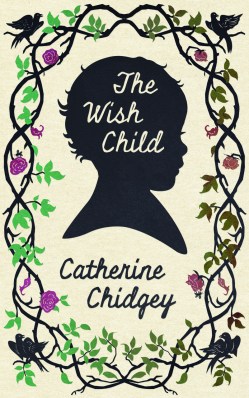 The Wish Child is a beautifully written tale of terrible things. It tells the story of two children living in Germany from the height of Hitler’s power to his demise and beyond. Erich lives on a farm near Leipzig, he listens to the buzzing of the bees and has the strange feeling that within him is a different person, and he experiences strange glimpsed memories. Sieglinde lives in Berlin with her siblings and her obsessive mother, and her father who makes a living finely excising dangerous words from documents. As the lives of the two children deteriorate and finally intersect, we see the ways people adjust to worsening conditions, hanging on to hope, trying not to face reality, knowing and not knowing what is happening around them. Many of the horrors of the story are just alluded to, knowledge of the Nazi regime giving the reader the ability to fill in the gaps, but others are presented to us unflinchingly. The narrator of the story is enigmatic, but totally satisfying when revealed at the end. The Wish Child is one of those books that make you hope that by documenting past evils they will go some way to making sure such things will never happen again – while reminding you that unfortunately they probably will. A highly recommended read.
 What makes a great thriller great is nerve-wracking plotting, rich atmospheric settings, and complex characters – Marlborough Man has the lot – and it treats the ‘Top of the South’ as Paul Cleave has been treating Christchurch for years – describing a heightened scuzzy substrate that tourists, and many residents, will never glimpse: “In rural New Zealand, calling police out at the sound of shots fired is like calling them out for the sound of cows mooing”. Nick Chester, a Geordie cop, has been relocated to the Wakamarina Valley, near Havelock in the Marlborough Sounds, after an undercover job back home went South. Chester makes fun of the Zild accent, double takes at the literary references to The Hobbit, and settles in to continue his class-based grudges, and to get to know Latifa Rapata, his new partner. Rapata is 24 and is often the voice of reason; for Chester is a rebel; happy to toe the line when his duties only stretch to bad drivers and petty theft, but when it emerges there is a sexual predator preying on young boys in the area he just wants “… to catch the prick who’s been murdering the kids” – and he starts playing by his own rules. He builds a case with the help of Rapata and her whanau. And his interest is galvanized when he starts suspecting that the press-named “Pied Piper” may be one of the local arrogant-ocracy – those people that “… never get looked at …” – and to make matters worse one of them starts a logging operation in the valley that is ruining his view! In Marlborough Man Carter breaks all the rules about not hurting animals, and he pulls no punches in showing the many sides of Chester – who makes some very bad choices. Chester’s shaky marriage and his concern for their special needs son back-drop the story, as does the fact that comeuppance for the botched undercover job back in Geordie-land is stalking “the feral hills of the Wakamarina”. The wild weather and visual beauty of the valley give you a sense of place in sand-fly-filled spades, and the mud and slips from the frequent downpours nicely echo Chester’s roller coaster ride. A trip back to the old country triggers a new look at the Wakamarina, and Chester’s reentry into “A magic roundabout of people who won’t let go.” It also gives Vanessa, Chester’s wife, a chance to become a more interesting character, and another foil to Chester’s excitability. The crime plotting keeps you guessing the whole way, and the cliff hanger ending comforts me that there will be more. Read this book!
 Lewisville follows the life of Martha Masters / Grimm / Lewis from the hard turnip fields of 1815 Warwickshire to a grand house in 1871 Wellington, NZ. It documents the successes, the lies, the mistakes and the omissions of Martha and those around her as they try to carve out a better life for themselves and their families. Martha is not a good woman, she has some good intentions, but in many ways she is reprehensible. But the terrible things she does are those that people have done over and over again as they travel away from home in search of a better life. Her story is about choices made, and how the lives of the members of one family play out in England, Tasmania, Victoria and New Zealand. But it is also a story of human dispersal, a behaviour that has impacted on New Zealand from the earliest times when the canoes arrived from Hawaiki. Martha arrives in New Zealand during the disorganised time of the New Zealand Company, but waves of migration continue, through my parents arriving in the 1960s to make a better life, to the ongoing arrivals of migrants and refugees hoping for the same. Lewisville is based on the true story of Tidswell’s family and is told in strict chronological order, it occasionally wanes a bit but for the most part keeps you engaged in the tangled tale of one family through time. It shows how even those who have decided to escape repeat patterns from the past, how human resilience often overcomes the direst of circumstances, and that when you travel to divest yourself of decisions made, they often hop on board and stay with you throughout your journey. Tidswell has pieced together the true fragments of her family’s story and woven in plausible fictional motives and actions to present a thoroughly enjoyable read.
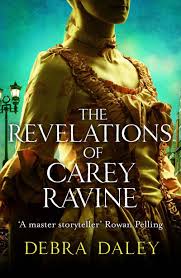 A woman’s rise from dupedom in the 1770s. Carey Ravine is a smart and capable woman who has escaped her dismal teenage years by entering the social swirl, cons, and ambitions of her husband, Oliver Nash. Carey is not giving herself too much time to reflect on her life, or the puzzle of her father who has been missing in India for ten years. But a series of discoveries tantalises her, and draws her into trying to solve a mystery concerning strange poisonings, blue lights, and her place of fascination: India. As she becomes aware of the potential impact of what is lying at the heart of the mystery, and the possible connection to her father – she finds she is not really satisfied with the frippery and dubious politics around which her life is revolving. And as she becomes aware of cover-ups and conspiracies she, and the reader, start to suspect those around her might not quite be who she took them for. The setting and language (I really must use bloviate more often) are rich, and Carey’s character admirable. The book has historical detail, an intriguing plot, the evil East India Company, romance, and a strong female lead – a delight.
 Stray is a glimpse into the wasteland created by drug culture from a south of the border perspective. “The dark secret of every American suburb is that every blunt, joint or bowl, line or pill, every Charlie-fed frat party, cranking rave or huddled knot of office stoners is washed in Mexican blood” – and in Stray the effect of the cartels and corruption on a small Yucatan fishing village isn’t unveiled by a gung-ho ex-marine or a naïve but true blue FDA agent – but by Tom Mullinger, a 20 something New Zealander fleeing his own drug based disaster back home. When things go very very wrong in Auckland, Tom heads for the Yucatan – for a small seaside village recommended by his mate Dog as a haven, and far from the violence of the cartels. But Tom arrives in Ria Lagartos at the same time as three headless corpses; in the year since Dog’s stay, the capture of El Chapo and the unravelling of his Sinaloa drug cartel have allowed other cartels to make deals and spread – and the Los Zetas cartel now has a hold on Ria Lagartos. And along with the cartel, government corruption and a local armed citizens’ militia complete the trifecta of terror for the local community. Tom gets involved with a local environmental protection group, in large part due to his fascination with Lorena, a researcher who has moved to Ria Lagartos to work on her thesis, and who has taken the cause of the local Maya fishermen as her own. In her sights is Miguel Sabas, the local rich guy whose short-term profit monopoly on the local industry is proving disastrous for the environment as well as for the locals. As the intimidation of the cartel increases, their narcomensaje threatening messages going up around town and their blatant disregard of the local law enforcement being made apparent, it becomes increasingly difficult to work out who is loyal to whom. And Tom gets totally embroiled when he agrees to help Lorena get evidence of Sabas’ illegal activities. There are some terrifically tense moments and lots of action. But what I loved most about this book was the feel of Mexico; you can smell it and taste it as Lang describes the village and the jungle, and the slow flying pelicans cruising over the Mayan ‘endless apocalypse’. At times the historical narrative gets a little adrift of the story, and almost all of the characters are extremely insightful and erudite, but sections such as Lorena relating the story of her forebears, are totally engrossing. Tom’s story in Ria Lagartos is interspersed with the events in New Zealand that led up to his flight from Auckland, depicting a New Zealand drug sub-culture where the authorities are similarly powerless: “People are gonna do what people are gonna do”. Tom didn’t want to be a tourist, he was “an outsider who likes the company of others” and wanted to find a place just to exist. But Stray is a great example of character arc! I really enjoyed this book.
-
Archives
- September 2026
- March 2026
- November 2025
- July 2025
- May 2025
- April 2025
- February 2025
- January 2025
- December 2024
- November 2024
- October 2024
- September 2024
- August 2024
- July 2024
- June 2024
- May 2024
- April 2024
- March 2024
- February 2024
- January 2024
- December 2023
- November 2023
- August 2023
- July 2023
- June 2023
- May 2023
- April 2023
- March 2023
- February 2023
- January 2023
- December 2022
- November 2022
- October 2022
- September 2022
- July 2022
- June 2022
- May 2022
- April 2022
- March 2022
- February 2022
- January 2022
- December 2021
- November 2021
- October 2021
- September 2021
- August 2021
- July 2021
- June 2021
- May 2021
- April 2021
- March 2021
- February 2021
- January 2021
- November 2020
- October 2020
- September 2020
- August 2020
- July 2020
- April 2020
- March 2020
- February 2020
- January 2020
- December 2019
- November 2019
- October 2019
- September 2019
- August 2019
- July 2019
- June 2019
- May 2019
- April 2019
- March 2019
- February 2019
- January 2019
- December 2018
- November 2018
- October 2018
- September 2018
- August 2018
- July 2018
- June 2018
- May 2018
- April 2018
- March 2018
- February 2018
- January 2018
- December 2017
- November 2017
- October 2017
- September 2017
- August 2017
- July 2017
- June 2017
- May 2017
- April 2017
- March 2017
- February 2017
- January 2017
- December 2016
- November 2016
- October 2016
- September 2016
- August 2016
- July 2016
- June 2016
- May 2016
- April 2016
- March 2016
- February 2016
- December 2015
- November 2015
- October 2015
- September 2015
- July 2015
- June 2015
- May 2015
- March 2015
- February 2015
- January 2015
- December 2014
- November 2014
-
Meta

