
 Lale was a bit of a lad in Slovakia, fond of women and fine clothes: “Always dress to impress”, but when he ends up in Auschwitz/Birkenau in 1942 he must use all his charm and cunning to survive – and he does, he does well, and then he falls in love …
The tattooist of Auschwitz started out as a screenplay before being ‘kickstarted’ into a debut novel. It is very simply written and it is not the writing that keeps you engaged – it is the incredible true story of Lale and Gita, the young woman he falls in love with, and the other inmates of the camp – Jews, Romani, Poles – all those people whose “futures have been derailed and there will be no getting back on the same track.”
Morris creates a world within the camps that has all the usual rivalries and kindnesses to be found when groups of people live together; the dislike of new comers, the suspicion of those who appear better off than you, but also the incredible generosity that people are capable of, both from those held in the camps and from those civilians who visit to do their work. There are also fleeting kindnesses from the guards, but very fleeting, their behaviour unfortunately typical when people are given free reign to hate and vilify another section of humanity.
Lale is given the job of tattooing the numbers onto new arrival’s forearms, first as an assistant and then as the official Tätowierer for the camps. And that raises all sorts of moral questions for Lale – is he a collaborator? Is he complicit in taking away people’s identities? If he doesn’t do it someone else will – someone maybe not so gentle, someone who won’t use his position to help others? And being the Tätowierer’s assistant is how he first saw Gita, where he first got his absolute determination to make sure they both survive.
Questions about what the right thing is to do when you are in the most surreal of circumstances pepper the novel: another young woman, Cilka, becomes the sexual plaything of the Senior Commandant of Birkenau, we learn later she was charged with being a Nazi conspirator and sentenced to fifteen years’ hard labour in Siberia. Jakub is required to torture his fellow Jews, we don’t hear of his fate. The ‘why didn’t the Jews rise up and overthrow their captors’ question is briefly dealt with: “we have fists, they have rifles – who do you think is going to win that fight?”
Lale comes to live by the motto “To save one is to save the world”, and in the three years he is held he does what he can for those around him, and especially for Gita. It is a remarkable story, at the end of the book there are sections on Morris’ research and on Lale and Gita, including photographs. The tattooist of Auschwitz is a timely read given the Trump administration’s rumblings about ‘Muslims’, the current apparently wholesale incarceration of Uighur Muslims in China, and the treatment of Rohingya in Myanmar’s Rakhine State, the ongoing insanity of punishing people for who they are not what they have done.
 Cato Kwong and his new wife Sharon Wang are blissfully married, if not a bit sleep deprived, with an infant daughter, Ella. But when Kwong starts working on a series of murders among the Fremantle homeless community, he gets more and more involved, and then the murderer appears to be working his way towards Kwong. Gradually his precious new life starts to look very shaky.
 Abhay is a writer and primary caregiver to his daughter, Mira. He lives a comfortable life in Wellington with his wife, Lena – “… simply the daily opportunity to play. That’s one of the biggest things I owe New Zealand …” But Abhay is haunted by an incident from his childhood in India, where he and his half-brother, Ashim, got lost when they wandered away from their father at a train station. As a result of the incident, Ashim was sent away to boarding school and his full sister, Aranya, opted to move with him, leaving Abhay feeling guilty for causing the break-up of his family.
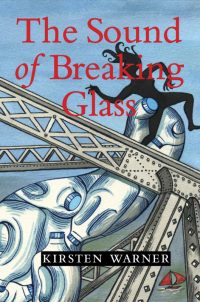 Christel is married to Ted and they have two children, Jim and Maisie. Christel works in TV – making reality TV shows that emphasise people’s suffering. Christel is a rape survivor. Christel was taken advantage of when a teenager. Christel’s father was scarred and traumatised by the holocaust. Christel is losing her mind.
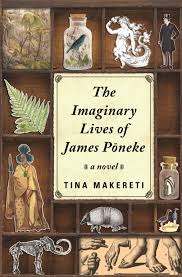 “Wanderer, freak, sailor, philosopher, Native boy in English costume, English boy in native costume. Exhibitionist, lover, clown, Maori boy, Man of the world.” – Hemi (James) Pōneke is recuperating in a house in Victorian London – and recording his story for “My future, my descendant, my mokopuna”. A future that must be better than what he has experienced – as appearing at first to be aged, we discover Hemi is young and has spent all his short eventful life looking at the world through the eyes of ‘the other’.
 Maggie Potter is an independent funeral director in picturesque tourist village Queenstown. Her life is not what she had dreamed for herself, but she does have her son, her recently-returned-from-the-UK daughter, and her firm circle of female friends. But when one of her friends is diagnosed with cancer, her daughter starts acting oddly, and an annoying Doctor seems to always be where she is, Maggie is confused and feels stretched to look after everyone. Maggie’s life may not be what she had dreamed for herself, but it turns out no-one’s is …
 Sadie Rosenberg is hanging down a crevasse in Antarctica, refusing to cut free her friend Bill who is hanging beneath her, making it impossible for another friend, Sean Tomasin, to haul her to safety. Sadie and Sean, and a large Antarctic diamond in their possession, are saved by another geology team headed by Kirk Barnby – Bill and two others of Sadie’s group perish. Is Sadie “A protestor, political lobbyist, a greeny activist, an internet whistle-blower, internet pirate, a low-level diamond thief … diamond smuggler … terrorist”?, is she even Sadie Rosenberg? And who is Kirk – a geologist, a soldier, a government agent? And whose side is Sean on?
 A man’s body is discovered in the floating basin; a murky tidal estuary on the West Coast of New Zealand’s South Island. Ru Clements, a local detective, investigates and discovers the sad secrets of the town he now calls home.
 ‘The Quaker’ is the nickname given to a serial killer who has taken three female lives, ruined families, stymied the police, and terrorised a city. The city in question is the “disintegrating city” of Glasgow in the late 1960s, and the prevailing culture of male prejudice, misogyny and corruption has been complicit in ‘The Quaker’ getting away with his crimes.
 alysontheblog