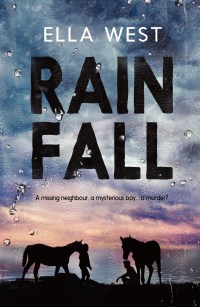
Rain Fall by Ella West – 2018

Rain FallRain fall is set in rain-soaked Westport, amidst mine-closures and the decline in dairy prices.  The town in depressed; the residents trying to make the best of things.  But when 15-year-old Annie misses an important basketball game when her mate’s house across the street blows up while surrounded by the Armed Offenders Squad, and it looks like her Dad’s job might be the latest victim of the Stockton Mine staff reductions, and when she meets a rodeo star, things are never the same again.

Rain fall is a YA novel, told from Annie’s point of view.  She is a realistic young woman, describing what it is like to be one of her peers: “You are all just the same.  You are all just nobodies.”  And of living on the Coast “This is the West Coast, … Anything can happen tomorrow.  We take what we can get today.” Her descriptions of Westport are great, when asked when the wet season is: “It starts about the first of August and goes through until about the end of July”, and if the Buller River floods “Nothing survives if caught in its waters.”

So, a great environment to set a mystery, the young lad who blew up his house is generally thought to not be capable of hurting anyone: “Doesn’t sound like the Pete we know.”  And the townsfolk keep information close, they are a besieged lot, they are pro-mining, pro-hunting, and not just anti ecological activists but pro Rimu-logging.  Annie has picked up the secrecy bug and fails to tell her parents several things, including her knowledge of vital clues, and about her relationship with Jack, the rodeo star she meets on the beach while riding Blue, her horse – and yes, we are in pro-rodeo territory as well.

Once Annie and Jack meet, we are in a real YA romance novel; first kisses, mistaken beliefs, not knowing whether to trust or divulge secrets.  Jack’s father is the detective sent up from Christchurch to find the missing Pete (no human remains being found in what’s left of his house), as well as blowing up his house Pete is known to have shot up the local Police station.  And Jack’s dad is also there to solve a suspected murder that is somehow connected with the explosion.  The Police think maybe a drug deal gone wrong, but they are struggling finding out what has happened.  And all we know is via the conversations Annie overhears, or the things she works out, or that she sees on TV between reports of conflicts in Syria and Iraq.

The Coast is a real character in the story, and its history is hauntingly evoked: People struggling on farms their families have been on for over a hundred years, the moving roll call of mining disasters, and the five layers of wall paper coming down in Annie’s house, in preparation should they have to move.  Annie has been in Westport forever, but her parents only moved there when she was a baby, so they are much more comfortable about moving should her father lose his job, while Annie is in a state of trauma about a possible move.  She is a young woman amidst a whole lot of change, and she makes some quite rash decisions that get her, and Jack, into danger.

Rain fall is a love story, a murder mystery, a thriller, a book for horse-lovers, but what I most liked about it was its portrait of a town struggling with massive social change, and the character of Annie, she can ride, she can shoot (guns and basketball goals) and yet she has a lovely teenage fragility.  It is a YA novel but is a good read for older people too!

Posted in #yeahnoir, Book Review, Young Adult | Leave a comment

Call me Evie by J.P. Pomare – 2019

“Who is the mad one, me or him?” Male privilege, the dangerous side of social media, Call me Eviechildhood trauma, teenage angst and the vagaries of memory, all play a part in this slow-burning thriller.
Kate is a seventeen-year-old teenager living with partial amnesia.  She is in a small rural New Zealand town, Maketu, apparently being held captive by a controlling yet devoted man named Jim, who has renamed Kate Evie.

Kate remembers enough to know she wants to go back to her home city of Melbourne.  There is an extremely traumatic event that has made Jim bring Kate to Maketu, but Kate’s memories of that night are blurry and partial. As she starts to remember, she becomes suspicious of Jim – is he really trying to help her or manipulate her?

Kate is used to being manipulated by men: “Boys are so skilled at drawing apologies when they’re the ones who owe them.”  She had her controlling father, her overly jealous boyfriend, the father of a friend who made some weak choices, and she now has her new friend Iso, but can she trust him? I really can’t say anything about the twisting plot without giving the game away.  But believe me, you will change your mind about what has happened and what is going on many many times as you read.

The story is told in six parts, flashing backwards and forwards between ‘before’ and ‘after’ and is peppered with questions from a psych interview form.  All of which adds to the mystery.  The vulnerability of children, the power of the Internet to ruin lives, the anonymity of social media and the ability of people to create their own realities are all skilfully handled.  “The truth, I realise, doesn’t matter.”

Call me Evie is a great debut novel, read it and see if you agree!

Posted in #yeahnoir, Book Review | Leave a comment

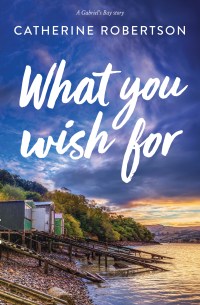
What You Wish For by Catherine Robertson – 2019

what you wish forCatherine Robertson published Gabriel’s Bay in 2018 and What you wish for takes us back to the New Zealand coastal town, which is even more geographically unfettered this time – the story of the locals being bracketed not by that of a dog, but by that of a local moose!

As with Gabriel’s Bay, this novel is full of interweaving stories, some of them stories of the characters we got to know in the first novel, some of those who were then hovering in the wings.  For example, solo mum Sydney is back front and centre, now firmly in a relationship with Kerry the UK import. Kerry’s parents, Bronagh and Douglas make an entrance, staying with local farmer Vic, in a B&B his wife set up before leaving him for a bloke in Aus.  There are a group of environmentalists camped on his land too, who are infiltrated by a dodgy character called Loko, who Mac and Jacko’s daughter, Emma, has trailed back to Gabriel’s Bay.    Dr Love is now retired but still active in the town, and he has been replaced by the delightful Dr Ashwin Ghadavi (Ash), who is smitten with Emma, who has decided to wade in to help the beautiful Devon get a girlfriend … well you get the idea … lots of characters, lots of storylines, all intertwined.  There is a helpful cast list at the beginning if you get lost.

Amongst the kindness, joviality and the humour (I particularly liked the list of trendy baby clothes) there is some solid social commentary.  The tension between environmentalists and traditional farming practices (“How could Vic blame him for lamenting that bare paddocks had usurped lush native bush?”), between small business and big business, between inherited prejudices and gender identity, between those who unintentionally fall pregnant and those desolate with unwanted childlessness, about the battles you must fight if you haven’t got much money, and about the vulnerability of children – little Madison isn’t back from Gabriel’s Bay but we get to know her Christmas buddy, Reuben: “And children were the most vulnerable of all.”

All the characters, apart from Loko who we don’t really get to know, are complicated and contradictory, and most evolve through the story, they are willing to learn, either from wise elders or from their own mistakes.  What you wish for is another slice of Gabriel’s Bay life, funny, sad and dynamic.  It deals with the social problems New Zealand is facing, including how easy it is to get swept along with a crowd you may disagree with but are nervous of publicly contradicting.  You could read this as a standalone novel, but I was glad I had read Gabriel’s Bay first.  And hopefully we will get to return another day!

Posted in Book Review | Leave a comment

Women in the Field, One and Two by Thomasin Sleigh – 2018

women in the fieldRuth Bishops is an assistant art keeper toiling in the Fisher Gallery in early 1950s London, shy of relationships after losing her fiancé in the war.  She reluctantly goes to view some paintings by Irina Durova, an aging Russian artist, and avoids her for some time after.  But when she sees Irina’s art series Women in the Field, One and Two, she becomes entangled in Irina’s life.
Women in the field, one and two deals with art, artists, male privilege and post-war trauma, and how paintings end up on walls in exhibitions.  Ruth is a passionate and brilliant woman who is overshadowed and undervalued by her male colleagues. She spends time with her sister and her two children, her brother-in-law still coming to terms with post-war life.  She is the typical introvert with a solid core.  Irina is a brash and over-confident artist, an extrovert who is fragile on the inside.  It is hard for the reader to know what, if anything, of Irina’s boasting is true: was she a famous avant-garde artist in pre-revolutionary Russia?  Did she even paint her early works?  For a while, it is hard to tell if she has any talent at all.  But when Ruth sees the Women in the Field paintings, we, along with Ruth, start to see the possibility of unacknowledged talent.

The politics of the British art world are stifling, and it is with some relief we find Ruth and Irina are going to travel to distant New Zealand: “it’s nowhere really; it’s the ends of the earth; it’s an outpost”.  Ruth has been given the job of suggesting and purchasing artworks for the new National Gallery in New Zealand (another source of resentment at the Fisher), and when her suggestion that they purchase the Women in the Field series is accepted, she suddenly finds herself booked to travel to the other side of the world along with Irina, in a way becoming ‘women in the field, one and two’.

Wellington is cold, windy and rainy, and bristling with colonial attitudes.  An excellent environment to look at the conflict between the artist’s freedom to create and the appropriation of cultural artefacts, the tension between wanting to start anew but also hang on to what is old and familiar, the sexism and colonialism of the art world, the tension between exhibitions and collections,  and the relationship between art, patronage and ‘the common man’.  And on the personal front, Ruth and Irina’s relationship is tested when Irina’s true intent and personal history emerge, allowing for ideas around art and life choices to come to the fore.

If it sounds as though Women in the field, one and two is weighty and complicated, it isn’t.  The ideas are all there behind the text, but the story is a very human one, for example, fleeting references to a man dropping to the floor and covering his head when hearing bangs, the subtlety of Ruth’s brother-in-law’s problems, the difficulty some characters have with talking about their war-time experiences, are all it takes to evoke post-war trauma.

Ruth is struggling personally and professionally with the world she finds herself in, surrounded by relationships and possibilities she is not confident enough to pursue.  But her trip to New Zealand allows her the perspective to self-evaluate, and the novel ends with a brilliant metaphor that indicates Ruth has finally found the freedom to revel in the choices before her.

I really enjoyed this novel, the characters were great, the depiction of Wellington, with its influx of people from Europe and the marginalisation of the indigenous point of view was interesting, and I learnt a lot about how to view modern art!  Highly recommended.

Posted in Book Review, Historical | Leave a comment

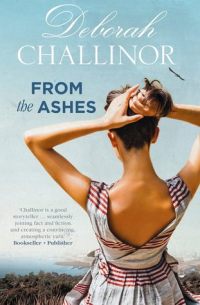
From the Ashes by Deborah Challinor – 2018

from the ashesChallinor’s historical novels are usually cram-packed with female characters who are the books’ main agents, and From the ashes is no exception.  Set in the 1950s, it is one of the titles published recently about this interesting era of New Zealand history: post-war, a time of urban drift, the Mazengarb report bemoaning juvenile delinquency and a ghastly normalised racism.

Ana moves to Auckland with her family from their Hawkes’ Bay farm, forced to move through the frailty of her father in law and the stubbornness of her husband.  Allie is suffering from the loss of a child and post-traumatic stress from a workplace fire, her mum Colleen has two other daughters, Dolly and Pauline, and an ageing mum, Rose.  Allie’s husband, Sonny, has a high-living sister, Polly, whose daughter Gina lives with Sonny and Polly’s mum, Awhi. Three other families from the Hawkes’ Bay are in the mix:  those of Kura and Wiki, neighbours living in squalid houses that are the only ones they can secure, and Kathleen, wealthy, living with her three unhappy children and a maid, who is mates with Polly, and married to a pilot who is often away.

So, you get the idea: all the families come together through various plots – Kathleen frequents the department store where Allie works, Pauline starts dating Kura’s son, Ana moves in next door to Colleen and her husband, Sid, etc, etc.  Through the plots we experience 1950s society – where dementia is little understood and inhumanly treated, where gender identity is totally misunderstood and mismanaged, where women are undervalued, often marginalised and have their work opportunities prescribed by their personal circumstances, and where being Māori often meant you were unwelcome and/or unfairly treated.  It is a country where some in the cities are buying refrigerators and washing machines and others are slipping through the mud to get to the outside loo.

I won’t give anything of the plots away, as they entwine and are often surprising, although I will say that some of the characters’ problems are addressed by women coming together and taking charge of their own circumstances.  Although From the ashes can be read as a stand-alone novel , there is plenty to delight Challinor’s fans – Allie is from the 2007 novel Fire, Ana is a descendant of Tamar Deane from the Tamar trilogy, and a descendant of Wong Fu’s daughter, Bao, who we met in The cloud leopard’s daughter, makes an appearance.  Challinor’s history is robust – she has a section at the end confirming which bits are historical, which fictional and which her own mix of the two.  And the novel finishes with some unanswered questions, which will further please her fans who will see another trilogy (at least) on the way!


Posted in Book Review, Historical | Leave a comment

A Greater God by Brian Stoddart – 2018

It is 1925 and Superintendent Chris Le Fanu has returned to Madras from the Straits a greater godSettlement, fending off multiple job offers while trying to work out who is on a killing spree targeting Muslims, and which romantic relationship to pursue.
This is the fourth outing for Le Fanu, and the first I have read.  The setting is riveting; the beginning of the end of the Raj, with political posturing becoming more and more divisive.  Le Fanu’s boss Jepson is an old style incompetent racist colonial to the point of insanity, and there is a range of colonial attitudes in the characters, right through to the liberal Le Fanu, who is not unblemished in his attitudes to others; “We Indians are always ready to help, sir” quips one of his staff, Assistant Superintendent Mohammad Habibullah (Habi).  

Along with Habi, Le Fanu has head of Special Branch, Jackson Caldicott, in his corner.  Habi and Caldicott are relieved to have Le Fanu back, given the increasingly erratic behaviour of Jepson and the spate of Muslim killings. But Le Fanu has a lot on his mind, the Governor and Chief Secretary of the Government of Madras (Le Fanu supporters) are both moving on, and want to get rid of Jepson and replace him with Le Fanu; the Chief of Police and Military for the Nizam of Hyderabad wants him to work for them, and Le Fanu was offered a position in Penang at the end of his last adventure.

To make things even more complicated for Le Fanu, his ex-fiancée, Roisin McPhedran, enters his life again (in Hyderabad), just when he has started a new relationship with Jenlin Koh (in Penang). Le Fanu blunders through the novel on not much sleep, lots of alcohol and the blokeish support of his mates.  He is a far from perfect character – suffering from PTSD post action in Mesopotamia, and quite neglectful of those close to him and whose admiration for him is unstinting.  Stoddart manages to painlessly cram an awful lot of historical detail into the novel, and there is some light relief by way of every man and his dog knowing all Le Fanu’s business (due to most of them running informants) and the under-stress banter of the men.

I was in India a few year’s ago and met a young Muslim man in Rajasthan who passed himself off as a Christian for safety reasons, so was intrigued by the historical emergence of militant Hindu nationalism, and the conflicts between Hindu and Muslim, which are far from over.  The novel has great descriptions of the bustle of Indian cities, and the (even then) widening gap between urban rich and urban poor.

The only frustration I had with the novel was the female voices being either off stage, mediated by men, or fleeting.  There are some great female characters, but we never really get to meet them – and more importantly they never get to meet each other!  Which I suppose is quite accurate for the ruling British and Indian culture of the time, but frustrating for the reader now.  There isn’t really a mystery to solve either, it is quite clear who (in general terms) is on a murder spree, but the narrowing down of the targets, and the conflicts about when and how to act to not exacerbate the situation, are gripping.


Posted in #yeahnoir, Book Review | 1 Comment

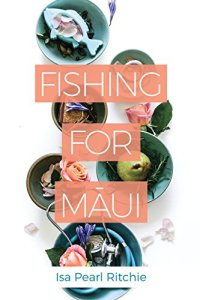
Fishing for Māui by Isa Pearl Ritchie – 2018

Fishing for Maui

Covering spring, summer and autumn of 2001-2012, various voices from an extended New Zealand family talk us through their family dynamics, their crises, their obsessions and their aspirations.

Hamilton, NZ – Elena is expecting her first baby with her ethics lecturer partner, Malcolm.  Elena is obsessed with healthy eating and writes a food blog. Malcolm is feeling a little neglected and spends a lot of time on Facebook.  Elena’s mum, Valerie, is a GP, a Christian and divorced from Caleb, who lives up North and watches a lot of sport on TV.  Michael, Elena’s brother, is a surfer, a varsity student and is beginning to explore his Māori heritage, helped by Gayle, his grandma. Evie is Michael’s on again off again girlfriend, a vegan and angry animal rights campaigner.  John is Valerie’s younger son and angry full stop – feeling neglected and hard done by, especially by his younger sister, Rosa.  Rosa is eight year’s old and having a hard time at school and at home.

If you think you might get lost with all these different characters, you won’t;   Ritchie has given them all different voices, opinions and backgrounds.  Fishing for Māui is a study in identity – how we are constantly trying to make a claim about who we are through our behaviour, food preferences, who we associate with … The novel also touches on the problems of those from cultural backgrounds where a family has drifted (or been pushed) from those cultural roots – where world views have to be learned rather than absorbed.

Fishing for Māui has a lot to say about our need for attention, and the perils of becoming too self-absorbed in our own passions and interest to give care and attention to those closest to us – all of Valerie’s children feel neglected, and all feel resentment towards someone else for getting all the attention.  Also mentioned is the role of spiritual belief; on the one hand giving us something other people might be failing to give, and on the other providing crucial information about our identity and where we have come from.

Another theme is the medicalisation of various aspects of our lives: pregnancy, mental instability, the handling of early cancer avoidance treatments and the management of eating disorders.  If this all sounds over-whelming, it isn’t.  The book flows effortlessly through the seasons, characters develop and relationships change.  There is a slight tendency to preach about the invasive treatment of early stage cervical abnormalities, but apart from that there is a lightness of touch which allows the characters to shine through.  The book is a “slice of life”; things are not neatly resolved in the end – there are various ways the stories of these interesting characters might play out – which is one of the many things I liked about this book – another one being the lovely telling of the Māui hero stories which are scattered throughout.

Posted in Book Review | 2 Comments

The Ringmaster by Vanda Symon – 2019 (originally published 2008)

The death of a brilliant young woman, a circus in town, high stakes university research,the ringmaster a monster of a boss, a critical Mum and a persistent suitor – just some of the happenings in Sam Shephard’s second outing, this time as a trainee detective in Dunedin.

I had jumped into the Sam Shephard novels from the third novel, Containment, and am so glad the series is being re-released for the European market, prompting me to go back to the beginning.  I loved the first: Overkill, and the second: The ringmaster is equally good.  Sam Shephard is a wonderful mix of smarts and goofiness, but is someone you would definitely want in your corner if you got in a fix.

Throughout the wide-ranging plot of The ringmaster is the image of a young woman, Rose-Marie Bateman, face-down dead in the Water of the Leith in Dunedin Botanic Garden.  This is the image constantly reappearing in Sam’s mind as she fights bullying in the force, sexism in the city and a mounting sense of danger to her own safety.  Added to that is great guilt for her actions in one of the most riveting incidents in the book, one that had me, and Sam, in tears.

Alongside all the threats and idiots Sam has to deal with, are some really great supports; her mate Maggie, her partner Smithy, and her Dad, laid low in hospital.  And there is Detective Paul Frost, up from Gore for a court appearance, a “sexier version of Ben Affleck”, and popping up all over the place.

Sam is marginalised from the heart of the investigation into Rose-Marie’s murder and told to manage the various problems with the circus that has come to town; but that doesn’t stop her discovering links between the Dunedin murder and others in the region, having suspicions about various players, and arriving at a vital clue in cracking the murder case with a flash of feminine intuition about how it could have been carried out.

The ringmaster is funny, sad and there is some interesting psychology at play as well: How can you logically profile illogical crimes?  How can you predict human behaviour when it is so random, and the acts so often disproportionate to their causes?  The ringmaster is a great thriller, and I am a bit sad I have now caught up with the Sam Shephard series!

Posted in Uncategorized | Leave a comment

No One Can Hear You by Nikki Crutchley – 2018

No one can hear youZoe is back in her home town for the funeral of her estranged mother, who has apparently been suffering from memory loss and who has left odd notes around indicating that young women have been disappearing from the town.  It is only when Faith, a woman with whom Zoe was briefly friends at high school, returns for another funeral, that Zoe starts putting all the pieces of the puzzle together.  And the two women set out to find the truth and save the missing women.

Crutchley has plonked her novel firmly into the debate about the depiction of women as victims in mystery/thrillers, and she has done so while making her strong characters female and putting all the male characters under suspicion.  The plotting is complex and very clever – the reader does start to suspect every man and worry for every woman in the novel.  I read the book while New Zealand was reacting to the murder of yet another young woman – so the argument about whether such novels depict reality was moot.

Zoe is a great character, leaving her cushy job teaching at a high school in Auckland, in response to the school’s white male sense of entitlement, she returns to Crawton with ambivalent thoughts about her mother’s apparent suicide.  We find out about her far-from-ideal childhood, nicely contrasted with that of her best friend, Alex, the ‘boy next door’, and feel for her as she discovers her mother was idolised by many in the town, to the extent that some of them had been covering up her memory lapses.

We also follow the ghastly experiences of the taken women, both historic and current.  Faith is working at a restaurant in Wellington, still traumatised by her abduction; Aroha is a young woman living in Crawton with a useless father and missing Lillian, Zoe’s mother – the only person she could talk to about her problems; and Megan had been homeless when she arrived in Crawton, where Lillian sorted her out with a job at the Crawton Tavern.  All women find themselves affected by the conspiracy around them.  There are some good male characters too – all for one reason or another falling under the reader’s suspicion, sometimes just because they seem so nice and supportive!

The title No one can hear you refers to the women being held captive in remote locations, but also to the authorities being deaf to complaints laid when the complainants are female, getting a bit forgetful, being from a marginalised group, have been in trouble in the past, etc. etc. etc.  The novel is not a pleasant read, but certainly gripping, and truly ‘thrilling’ in parts, and it is a satisfying read; just when I was thinking the conspiracy was a bit unbelievable, a brief comment had me convinced.  All in all, another great crime novel from Nikki Crutchley.


Posted in #yeahnoir | Leave a comment

The Tattooist of Auschwitz by Heather Morris – 2018

The tattooist of AuschwitzLale was a bit of a lad in Slovakia, fond of women and fine clothes: “Always dress to impress”, but when he ends up in Auschwitz/Birkenau in 1942 he must use all his charm and cunning to survive – and he does, he does well, and then he falls in love …

The tattooist of Auschwitz started out as a screenplay before being ‘kickstarted’ into a debut novel.  It is very simply written and it is not the writing that keeps you engaged – it is the incredible true story of Lale and Gita, the young woman he falls in love with, and the other inmates of the camp – Jews, Romani, Poles – all those people whose “futures have been derailed and there will be no getting back on the same track.”

Morris creates a world within the camps that has all the usual rivalries and kindnesses to be found when groups of people live together; the dislike of new comers, the suspicion of those who appear better off than you, but also the incredible generosity that people are capable of, both from those held in the camps and from those civilians who visit to do their work.  There are also fleeting kindnesses from the guards, but very fleeting, their behaviour unfortunately typical when people are given free reign to hate and vilify another section of humanity.

Lale is given the job of tattooing the numbers onto new arrival’s forearms, first as an assistant and then as the official Tätowierer for the camps.  And that raises all sorts of moral questions for Lale – is he a collaborator?  Is he complicit in taking away people’s identities?  If he doesn’t do it someone else will – someone maybe not so gentle, someone who won’t use his position to help others?  And being the Tätowierer’s assistant is how he first saw Gita, where he first got his absolute determination to make sure they both survive.

Questions about what the right thing is to do when you are in the most surreal of circumstances pepper the novel: another young woman, Cilka, becomes the sexual plaything of the Senior Commandant of Birkenau, we learn later she was charged with being a Nazi conspirator and sentenced to fifteen years’ hard labour in Siberia.  Jakub is required to torture his fellow Jews, we don’t hear of his fate.  The ‘why didn’t the Jews rise up and overthrow their captors’ question is briefly dealt with: “we have fists, they have rifles – who do you think is going to win that fight?”

Lale comes to live by the motto “To save one is to save the world”, and in the three years he is held he does what he can for those around him, and especially for Gita.  It is a remarkable story, at the end of the book there are sections on Morris’ research and on Lale and Gita, including photographs.  The tattooist of Auschwitz is a timely read given the Trump administration’s rumblings about ‘Muslims’, the current apparently wholesale incarceration of Uighur Muslims in China, and the treatment of Rohingya in Myanmar’s Rakhine State, the ongoing insanity of punishing people for who they are not what they have done.

Posted in Book Review | Leave a comment