-
Archives
- September 2026
- March 2026
- November 2025
- July 2025
- May 2025
- April 2025
- February 2025
- January 2025
- December 2024
- November 2024
- October 2024
- September 2024
- August 2024
- July 2024
- June 2024
- May 2024
- April 2024
- March 2024
- February 2024
- January 2024
- December 2023
- November 2023
- August 2023
- July 2023
- June 2023
- May 2023
- April 2023
- March 2023
- February 2023
- January 2023
- December 2022
- November 2022
- October 2022
- September 2022
- July 2022
- June 2022
- May 2022
- April 2022
- March 2022
- February 2022
- January 2022
- December 2021
- November 2021
- October 2021
- September 2021
- August 2021
- July 2021
- June 2021
- May 2021
- April 2021
- March 2021
- February 2021
- January 2021
- November 2020
- October 2020
- September 2020
- August 2020
- July 2020
- April 2020
- March 2020
- February 2020
- January 2020
- December 2019
- November 2019
- October 2019
- September 2019
- August 2019
- July 2019
- June 2019
- May 2019
- April 2019
- March 2019
- February 2019
- January 2019
- December 2018
- November 2018
- October 2018
- September 2018
- August 2018
- July 2018
- June 2018
- May 2018
- April 2018
- March 2018
- February 2018
- January 2018
- December 2017
- November 2017
- October 2017
- September 2017
- August 2017
- July 2017
- June 2017
- May 2017
- April 2017
- March 2017
- February 2017
- January 2017
- December 2016
- November 2016
- October 2016
- September 2016
- August 2016
- July 2016
- June 2016
- May 2016
- April 2016
- March 2016
- February 2016
- December 2015
- November 2015
- October 2015
- September 2015
- July 2015
- June 2015
- May 2015
- March 2015
- February 2015
- January 2015
- December 2014
- November 2014
-
Meta
Landscape with Solitary Figure by Shonagh Koea – 2014
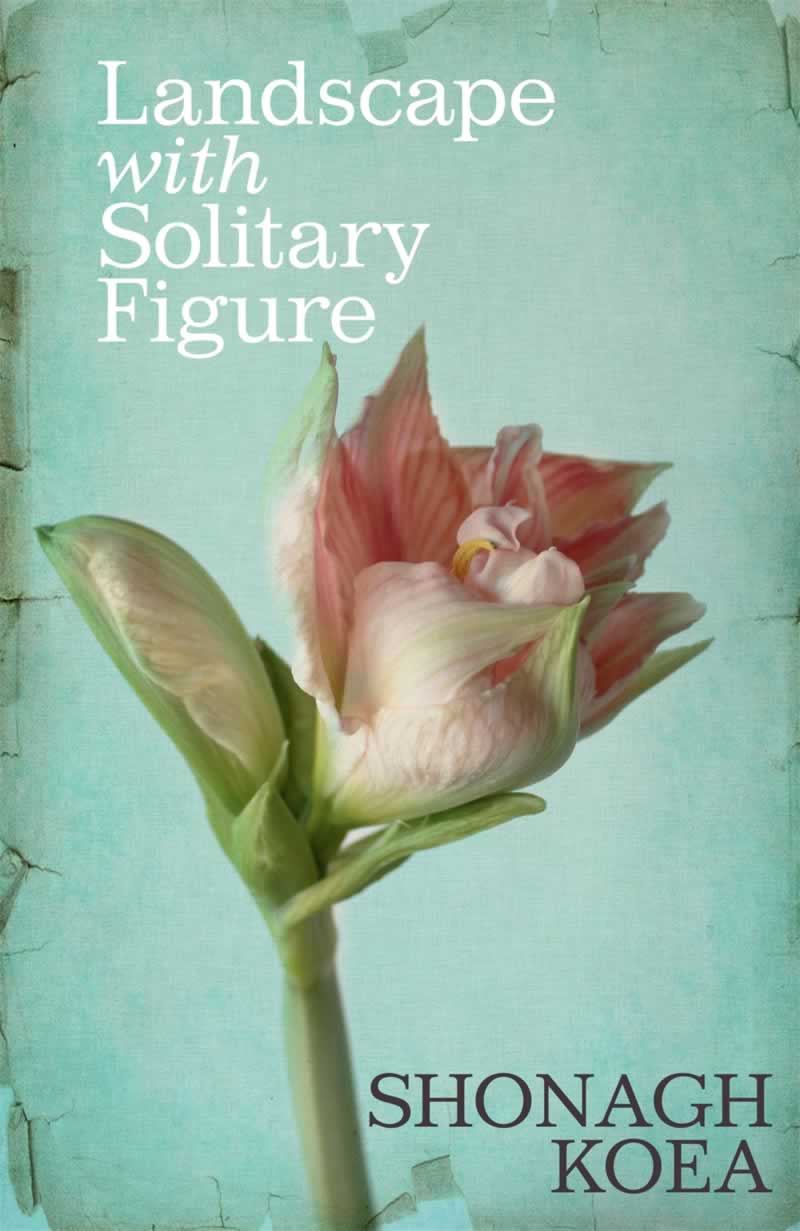 “… when you return to where you belong you find that you belong there no longer”, Landscape With Solitary Figure is the beautiful but quite ominous reminiscence of Ellis Leigh, a woman who has isolated herself in a cottage a short walk from the sea. The narrative is both first and third person, but both from Ellis’ point of view – and we wonder occasionally how reliable that point of view is. Ellis has a son in London, she once had a husband but he died relatively young; she wishes she had more photographs of him, she also has had a terrifying experience amongst a group of people in the place she returned to after having moved away for ten years after the death of her husband – a place she spent most of her time the second time around trying to leave. Even the descriptions of her present place of seclusion are of somewhere that has turned out not at all how she had envisioned. She has divested herself of friends the way she has sold off her belongings, she goes to lengths to mislead her son that all is going well, and although she tells us she feels safe you know she never will. She was already falling ill and seemingly too insecure to resist when falling in with a crowd – and a man – who she feared, we read that even when her son was small she felt isolated and marginalised. Her best memories are those far away on a brief trip to Paris, and she is happy her son has managed to ‘get away’. The moving from first to third person and the detailed and repetitive descriptions of incidents and places add to the reader’s recognition of Ellis’ mildly neurotic outlook. Landscape With Solitary Figure is beautifully produced, illustrated with flowers from the overgrown garden that is Ellis’ hiding place, and is a fine rendering of a fragile and damaged life.
Posted in Book Review
Leave a comment
Purgatory by Rosetta Allan – 2014
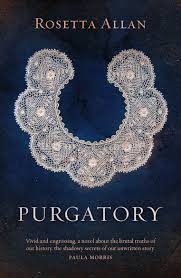 What a wonderfully imagined novel, and so well executed. Its focal point is the 1865 Otahuhu Murders, and the times have been meticulously researched, resulting in rich and engrossing story-telling. The tale is told from two points of view: that of John Finnegan, one of the murder victims after his death, and the other of the murderer, James Stack. John was a young boy when he was murdered and for most of the story he is stuck in his garden along with his Mum and two brothers. Their purgatory is one of total awareness but lacking in touch taste or smell; they are monochromatic and wearing the clothing they wore at their death – so poor John is stuck with one girlish boot on. John’s predicament is eerily convincing and just as captivating as the detailed story of his murderer. James Stack is almost an anti-villain – heinous though his actions are, as we read how his life is blighted at every step we find his crime believable, maybe even inevitable. We read James’ story from his childhood during the potato famine in Ireland, through a terrible sea journey on a transport ship to Australia, on to New Zealand where he fights with the British Army in the Land Wars, and finally his path to his ghastly act in Otahuhu. The range of this historical novel allows tropes such as colonialism in Ireland and New Zealand, the ‘father leaving the mother to cope with a large brood in tough times’, and the desperation to own land so you can feel you actually belong somewhere, to emerge and re-emerge, thus leaving the impression that it is not only the dead who are in purgatory. The writing is effortless: “What’s heaven like?”, “Ah, like Tyrone I expect, only without the trouble.”; “Still the hat sat strangely, lopped to one side, fitted to the shape of another man’s troubles.” Purgatory is a great addition to New Zealand historical fiction, and an impressive debut novel.
Posted in #yeahnoir, Book Review, Historical
Leave a comment
Swimming in the Dark by Paddy Richardson – 2014
I was looking forward to reading Swimming in the dark – having read rave reviews of 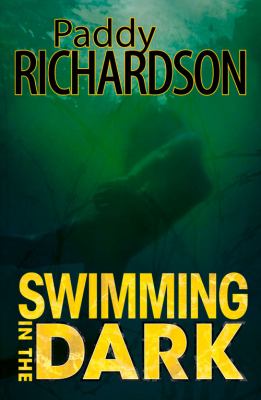 Richardson’s latest ‘psychological thriller’. And the premise is great: Alexandra’s troublesome Freeman family is the victim of physical and systemic abuse due to their low socio-economic status and their drinking and partying solo Mum, and also due to a more sinister influence first on elder daughter Lynnie and then on the promising youngest, Selena. We first discover the Freemans from Selena’s point of view, and one of Selena’s teachers is ‘Miss’ – Ilse Klein. Ilse is a German immigrant, and we learn the Klein’s history in Stasi-terrorised Leipzig from the point of view of her mother Gerda. Ilse and Gerda live in relative seclusion in Alexandra, where they purposefully keep a low profile and avoid the authorities as second nature. But the Klein’s are drawn into young Selena’s plight when Ilse discovers her by the local river in the process of giving birth, and they decide to take her in. When Selena’s Mum finally phones Lynnie in Wellington to tell her Selena is missing, Lynnie returns to Alexandra and takes up part of the narrative. The parallel tales show how victimisation and a culture of fear can occur at both a state and an individual level; and how easy it is to end up living in terror and not knowing who you can trust, especially amongst the ‘authorities’. So a great premise, but I found most of Richardson’s characters one dimensional – and her device of passing backwards and forwards from Alexandra to Leipzig more disruptive than tension-building. I thought township New Zealand was well captured – “… what else can people do when they know a most precious loved one has gone than try to fill the deep chasm left with macaroni cheese, cakes made with carrots, and shepherd’s pies?”, but less so Leipzig, where as I read I was reminded of those movies with annoying voice-overs where you just want the action and dialogue to tell the story. I also found some of the plotting quite clunky, like the arrival of Else’s friend Anja. And I was as unconvinced by the vigilantism as I had been in her previous Hunting blind. I really wished I had been more engaged by this novel – but maybe you will be, so give it a go!
Posted in #yeahnoir, Book Review
Leave a comment
Five Minutes Alone by Paul Cleave – 2014
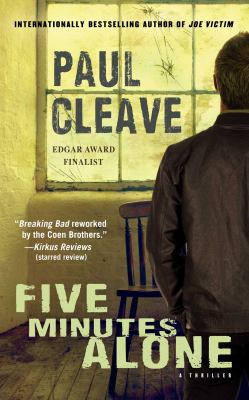 I had feared that this eighth installment in Cleave’s Christchurch Noir series might be the beginning of a decline – but I actually think it is the best so far. Pushing the boundaries of his thesis of what is good / bad, who is villain / hero, Cleave takes us on a roller coaster ride of vigilante killings gone bad. The characters we have seen get battered and damaged through the series are back – Theodore Tate is back on the Force after being in a coma, his wife Bridget is home again but has lapses during which she thinks their dead daughter is still alive, and his ex- partner Carl Schroder has survived a bullet to the brain – sort of. Even Tate’s new partner has been severely injured in an explosion where Schroder saved her life. The tale starts when the man who stabbed and raped a young woman, Kelly Summers, five years previously is released from prison. Schroder, now isolated through his injury, finds out about the release and begins to think of all the times the loved ones of victims of violent crime have asked: “When you find the man who did this, give me five minutes alone with him” – and then goes on to think that maybe granting that wish would achieve fairer punishment than that offered by the Justice System. And things fall apart from there. The fulcrum of the plot is the friendship between Tate and Schroder – both of whom at various times through the series have been either the voice of ‘the law’ or the one who takes the law into their own hands. The plotting is thrilling – I was taken by surprise a number of times – and the pace relentless. It builds to a tragic denouement – and I really hope this isn’t the end of the series!
Posted in #yeahnoir, Book Review
Leave a comment
The Naturalist by Thom Conroy – 2014
 The naturalist is a moving account of the life of Ernst Dieffenbach. A revolutionary who believed in universal equality, Dieffenbach spent most of his life in exile from his native Giessen, and as an outsider from the various groups and organisations he became associated with. Even the Ethnological Society of London, which he co-founded, had no office for him, as he was a ‘foreigner’. Dieffenbach travelled to New Zealand on the Tory as a naturalist with the New Zealand Company. But he rapidly became alienated from the Wakefields, who were headed to lay claim to New Zealand with no mandate from the Crown. He travelled extensively in New Zealand – describing flora and fauna, compiling a Maori dictionary, and even being one of the first two Europeans to climb Mount Taranaki. He loved the country and made many friends amongst the Maori he met and the whalers who had apparently reached a peaceable co-existence with them. But as all decisions were being made solely for pecuniary benefit, he saw nothing but disaster ahead the way the colony was being established and the Maori inhabitants treated – he could see ecosystems and species disappearing and world views being lost. Initially I found Conroy’s structure – passing backwards and forwards in time – a bit contrived, but eventually thought it was an effective way of telling the story of a man who spent most of his life wanting to be somewhere – and some time – else. When in London he longed to return to his home of Giessen, and later also longed to return to his beloved New Zealand – believing he could mediate in the conflicts that were erupting in the young colony. Conroy effectively captures the New Zealand early arrivals from Europe must have found, and later the energy and excitement of the young colony. While reading The naturalist I really felt the frustration of Dieffenbach, who believed he could always clearly see what was wrong but was never in the ‘circle’ with the power to put things right.
Posted in Book Review, Historical
Leave a comment
Drowning City by Ben Atkins – 2014
 Set at the end of the prohibition era in the US, Drowning City is one eventful night in the life of Max Fontana, a partner in a booze smuggling business. Despite there not being a blameless character in novel, Fontana manages to have a conscience and a haunting past – and to adhere to his own set of standards. His evening turns fast-paced when he discovers his partner is missing and that Fontana seems to be the only one who doesn’t know one of their consignments was raided while he was out of the country. He then discovers the business was being defrauded over time, and one of the biggest mysteries he has to solve is whom he can trust. The narrative is full of noir fiction one liners (A socialite preaching equality? She looked as though she powdered her face with the ground bones of Papa’s factory workers) and is intelligent and cleverly plotted. The story is set firmly in the political mix of the time, and is full of the irony of criminals feeling ripped off when virtually anyone who wasn’t begging on the streets in the Depression must have been ripping someone off. What a great read from a young New Zealand author!
Posted in #yeahnoir, Book Review, Historical
Leave a comment
Fallout by Paul Thomas – 2014
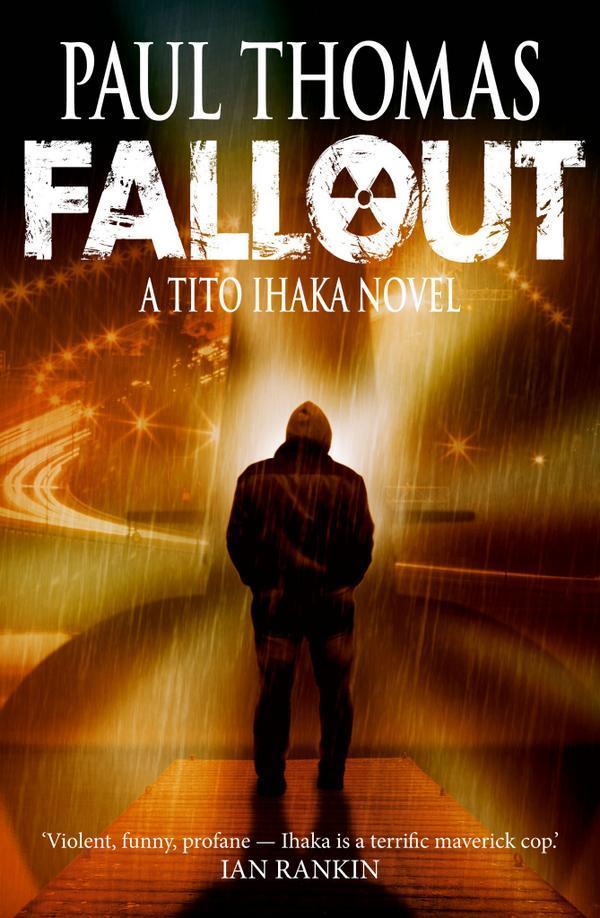 I didn’t read the original Tito Ihaka books, written in the 90s – but did read his comeback title Death on Demand in 2012. Fallout is the next installment and finds Detective Sergeant Ihaka working two cases, one very personal and one a cold case that has haunted his boss Finbar McGrail for 25 years. Ihaka is given information suggesting his father, a trade unionist, might not have died of natural causes, and McGrail gets a possible breakthrough in the solving of the murder of a 17 year old girl at a 1987 election night party. Both cases end up having threads in common, as does a private job the disgraced ex colleague of Ihaka’s Johan Van Roon is given, chasing down a political power-broker who disappeared the same year as the election party. The plot is clever and includes political machinations around New Zealand’s nuclear free stance and resulting exclusion of US warships, as well as the connections between the Soviet Union and the New Zealand Trade Union Movement at the time. I am warming to Ihaka as a character and will certainly read more of his crusade against pomposity and bureaucracy. I did find the resolution of the mystery a little unsatisfying, but really enjoyed the setting of New Zealand times and places.
Posted in #yeahnoir, Book Review
Leave a comment
Joe Victim by Paul Cleave – 2014
 Once again Paul Cleave takes us to ‘hell-on-wheels’ Christchurch – a city well on its way into moral and physical chaos. Characters from previous novels appear – mainly Joe Middleton, a serial killer in prison awaiting trial, and Carl Schroder, now an ex-detective and working for a TV psychic. Although there are continuations of previous story lines, this book can stand alone, as Cleave cleverly fills you in along the way. Joe is awaiting trial as ‘the Christchurch Carver’ – trying to shore up a ‘slow’ persona and an ‘I don’t remember anything’ defence. Tension is added by Schroder’s angsting over doing a deal with Joe for his TV show, Joe’s girlfriend “Melsissa” planning to break him out of jail, and the whole of Christchurch debating whether or not to bring back the death penalty. What I enjoyed about the book was its complex plotting – keeping you guessing and surprised all the way along. It is bleak and bloodthirsty – but then it is part of Cleave’s “Christchurch noir” series.
Posted in #yeahnoir, Book Review
Leave a comment
News pigs by Tim Wilson – 2014
 News pigs is a relentless comedy of errors set in the US. Tom Milde, a total ‘think piece’ disaster from a fictitious country that is to NZ what NZ is to Australia, wakes up drunk and discombobulated in an apartment in New York – has an unfortunate accident that riles a local and it all takes off from there. He crashes from one misunderstanding to another and ends up being sent to Virginia to cover the worst ever campus shooting in US history for his home country TV station. The novel is relentless, satirical and often very funny. It is littered with footnotes and in-jokes and pokes fun at NZ, the US, and ‘the news’. I was a bit concerned at one point that Wilson wasn’t going to be able to ‘bring it home’ – but he does, perfectly – highly recommended.
Posted in Book Review
Leave a comment

