Mrs Jewell and the Wreck of the General Grant by Cristina Sanders – 2022

The General Grant was sailing to Britain from Melbourne in 1866, carrying a large quantity of gold, and miners who had had enough of the fields. Among them was a young newly married couple: Joseph from the gold fields, working as an able seaman, and Mary, who had been working as a hotel maid in Melbourne when they met. Everything was new and exciting for Mary, and she was full of hope. And then the General Grant wrecked on the cliffs of the Auckland Islands far to the South of Aotearoa / New Zealand. The vessel was crushed into a cave and eventually sank – all but a “collection of fifteen wrecked souls to be counted” were lost.

Mary and Joseph are two of the fifteen. Mary, the only surviving woman, is the narrator of the story. One of my favourite novels is The Bright Side of My Condition by Charlotte Randall, based on an historical incident where four escaped convicts were left on one of the Snares Islands. Such stories are told in a crucible of extreme hardship. Mrs Jewell and the Wreck of the General Grant has the same intense character presentation as Randall’s novel, and it has the added elements of a woman amongst the survivors, and the gold that weighs them down – gold that has value “not for what it could buy, but for what it had cost”.

Mary and Joseph’s relationship on the islands is fraught with suspicion and guilt, and eventually “My husband had lost the habit of talking to me.” Could Joseph have done more to save others? If Mary had acted differently would more have survived? She had been working as a ship stewardess, helping some of the passengers with child-care during the voyage, and she was beginning to think she would soon have a child of her own. Why had she not held onto the child she had become particularly fond of? If she had, might the child have been saved?

Mary is, as are many of the others, haunted by those she saw drown. There are two candidates for who should lead the group and keep them occupied. The obvious choice is Mr Brown, the first mate, but he is not coping well with the situation, particularly tragic for him. James Teer is a strong Irishman, a natural leader. Teer and the others vow to protect Mary, and he gets all the men to introduce themselves. It is a civilised beginning, but there is a woman and there is gold, and among them are those who had swum passed drowning children to get to the lifeboat.

The reader gets to know the individuals in the group (there is a handy list of names and occupations at the beginning of the book). There are the charming, the pathetic, the hideous, the heart-rending, the noble. Mary must balance keeping the men distant with keeping them loyal to her, and there is always a hand creeping on to her leg at night. She is excluded from any decision making or storytelling, she is viewed as different, women are bad luck at sea, women should be able to sew and heal, women are a temptation, however “We aren’t nearly such good men without a woman’s company.”

Mary is not without agency, she exerts herself when necessary, breaking up fights, staring down charging seals. And she puzzles that she is drawn to another in whom “There was appeal in the sheer bulk of him.” She copes with the hunger, the cold, the disgusting food, the loose teeth, the loose bowels, the bad breath. It is a nightmare and within it is the significance of objects, a bottle, a box made for her, a whistle, her handkerchief that causes a fight. She is almost lost. She holds onto the hope that a ship will find them and carry them away.

Most of the fighting is over gold. “They were draining energy they didn’t have over sunken gold they couldn’t eat.” Many wanted to go back to try and recover what had been lost to the sea, for some it was gold, for others dead bodies. But they had no bearing to point to “where the ship lay in a cave with her bones and gold”. Some of the fifteen don’t make it, and those that do have a way to go to ease back into the world. The survivors must adjust to the company of others “I think, … now that we are back in the world again, that you should call me ‘Mrs Jewell’”.

Mrs Jewell and the Wreck of the General Grant is an imagining of what might have happened on the islands based on the reports of three of the shipwrecked men. It is vivid and visceral, with the best and worst of the human character on display. Mary Jewell is a wonderful rendering of a woman in extraordinary circumstances. And somewhere under the water in one of the hundreds of caves in the cliffs along the coast of the Auckland Islands, the bodies and the gold still lie …  

Posted in Book Review, Historical | Leave a comment

Paper Cage by Tom Baragwanath – 2022

Lorraine Henry is living in Masterton with a dicky hip and the memories she shared with her husband Frank, a cop who died through misadventure on the job. She works as a file clerk at the local police station, and she sneaks rent money to her niece, Sheena. Lorraine and Sheena’s mum were Pākehā sisters who married into Māori families. Lorraine took Sheena in when her parents died in an accident, and Sheena and her son Bradley are now Lorraine’s only family.

The community Lorraine lives in is not flash, and when peaceful “Some might call it peace, but that’s not it. It’s more like something lying in wait”. Ads for rental accommodation are for garage space, “ family of four max”. The Mongrel Mob is a clear presence, and Bradley’s dad, Keith, is a big man in the gang. Lorraine has struck up an unexpected friendship with a recently arrived neighbour, Patty. She and Patty often share a meal, a gin or three, and some telly of an evening.

The current worrying case at the station is a missing child, a young girl. And when a second child goes missing, this time a young boy, a detective comes over from Wellington to help the local cops investigate. Lorraine is being kept well away from the centre of the investigation, her colleagues seeing her as aligned with the ‘bad’ community. There’s also a suggestion she’s only kept her job through pity for what happened to Frank. But Detective Hayes from over the hill, “Dressed like a stork that’s fallen through a wardrobe”, soon realises the asset Lorraine is, with her knowledge of the local police files alongside her ties in the community.

When a third child goes missing, and all three of the kids’ families have either direct or indirect gang connections, the local cops jump to conclusions. And the ‘us-and-them’ shutters fall into place, hindering the investigation. Lorraine and Hayes start working together, trying to negotiate a way forward. Lorraine is used to such negotiations, as well as being seen as suspect by her colleagues, she is also viewed as an outsider by the community, due both to her being Pākehā and her working for the cops.

Lorraine hangs between two worlds; she compares Tangi she has experienced to the quick modest funeral organised for her sister; she automatically notices when Patty first enters her house without taking off her shoes. She knows Hayes is using her to get information from the community, just as Moko, one of Keith’s gang members, wants her to use her influence with the police: “You just keep them on track”.

Lorraine is intent on finding the kids. And she knows Keith and his boys want that too, despite what the local cops are saying. She hates the meth culture that accompanies Keith and his cohort, including Sheena – and she would prefer that Keith keep away. But she also knows Keith as a gifted gardener, just as Frank had been. And she knows how gentle he can be with Bradley. As things unroll, she is taken aback by the kindnesses shown to her by Moko.

Lorraine and Hayes manage to get some leads, and despite the local station trying to keep her away from the investigation, she persists and ends up in the most awful situations. Paper Cage is an extraordinarily tense read, there is a nail-biting sequence at the end of a long forestry track, and a similarly harrowing sequence on a remote farm: “Anyway, hell doesn’t have to be a big place, or hot. No reason it couldn’t be a shed out past Martinborough”.

The novel starts and ends in rain and the reader is totally immersed in the environment, and in the lives of the characters. The plotting is great, with the reader finding out crucial information ahead of Lorraine, adding a further layer of poignancy to her situation. And Lorraine, Aunty Lo, is the real heart of the novel. She is staunch despite all the unkindness around her. She has suffered great loss, yet still lives for others.

Lorraine’s efforts to find the kids are unswerving, kids with “the absolute halo of joy holding them, their glee not yet checked by rules and preferences and us-and-them eyes”. Somehow Lorraine manages to keep her world from spinning apart – the pressure she is under is brilliantly shown in an outburst in a supermarket carpark. And the resolution of the mystery is extraordinary, the reader being as gob-smacked as Lorraine, “Sometimes we know so little”. A great #YeahNoir novel.

Posted in #yeahnoir, Book Review | Leave a comment

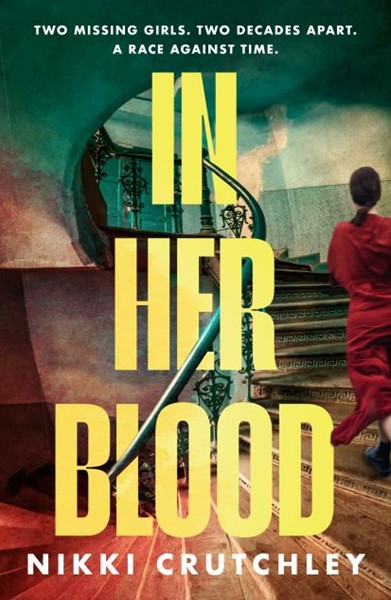
In Her Blood by Nikki Crutchley – 2022

Hotels are great thriller/mystery/horror settings – lots of corridors with lots of rooms, lots of creaky staircases, lots of people passing through over many years leaving stories and ghosts, and lots of places to hide bodies! In Her Blood uses this to great effect. Jac Morgan ends up staying at the Gilmore Hotel in Everly, a small town near the Waitomo Caves. She has reluctantly returned to her hometown in response to a text from her father saying her sister, Charlie, is missing and that no-one seems to care.

Jac runs into Iris Gilmore when fleeing the town campground, her arrival there coinciding with the discovery of a body in the river. The Gilmore has not been a working hotel since it was used as a hospital for servicemen during and immediately after World War Two, but Iris commandeers Jac into helping clean it for the annual Gilmore Hotel Open Day. At the hotel, Jac discovers that her sister isn’t the only young woman to have disappeared in Everly.

Twenty years ago, the Gilmore Hotel was home to sisters Paige and Lisa, both musicians with promise, but each receiving quite different treatment from their mother, Iris. Iris was a domineering woman with long-held sorrow – and a fixation with room 12A. When Jac meets her, Iris is still domineering, but starting to lose her grip, and living half in a fantasy world regarding her long-disappeared daughter, Paige. Her remaining daughter, Lisa, has recently come home to care for her mother.

Jac spends more time in the hotel than she would like, busy with her cleaning work, but she is still determined to investigate Charlie’s disappearance. She is not welcomed back to Everly, as she left under deep suspicion. The local cop is not eager to put any effort into finding Charlie. Charlie had been living with her drunkard aggressive father in a caravan at the campground, and she was cursed with “a surname that was synonymous with tragedy and gossip”, there is evidence that she might have just had enough of Everly and left – but Jac isn’t convinced.

When Paige disappeared from the Gilmore Hotel twenty years ago, there was evidence then that she too might have left of her own free will. But the police investigated Paige’s case thoroughly, and the townsfolk helped with the search, including Nathan, a young gardener at the hotel. Nathan is still working at the hotel twenty years later, and he has a close bond with Iris. Despite the lack of official interest in Charlie’s case, Jac finds clues and suspects galore for who might have abducted Charlie. The story is told from the points of view of Jac, Charlie and Lisa, and is set in the present and twenty years ago – allowing the reader to solve the mystery multiple times, and still be wondering who the culprit is!

In Her Blood makes the most of the gothic elements of an old and crumbling hotel, which has long been the source of ghost stories for the local children – many scenes are candle-lit, or dimly lit, people are often seen emerging from shadows, strange sounds are heard behind walls, people are locked in dark rooms. The plotting is an emerging reveal, with tension added by the up-coming Open Day – as the anniversary of Paige’s disappearance, it is an obvious impending denouement. All the main protagonists are damaged in some way, holding grudges, being terrified of fire, being overly possessive, or desperate for affection or approval. Jac reflects on her own history and her waste-of-space father, and she worriesLike father, like daughter”.

The depiction of abduction is dark and creepy – having to wear someone else’s clothes and underwear, emerging from a stupor to find your ears have been pierced. There is appalling treatment of children through the novel, by parents dealing with their own demons. And there are the intense bonds between siblings, the bitterness when one decides to leave the other, the guilt of the one who manages to get away.

Each of the main characters punches through their demons, the woman terrified of fire sees it as her escape, the one who throws her all at mollifying her continuous threat ends up turning into that threat, and the woman who starts thinking the world is full of people who have seriously lost their way, realises she is the only one who can find “their way out, a new beginning”. In Her Blood is intriguing, horrific, creepy, and a gripping read – as skeletons, literally and figuratively, gradually emerge from the crumbling hotel. Another excellent piece of #YeahNoir.

Posted in #yeahnoir, Book Review | Leave a comment

The Axeman’s Carnival by Catherine Chidgey – 2022

Set on a remote Central Otago sheep station, The Axeman’s Carnival is a dark tale of violence and cruelty. The story unfolds in a menacing way – with the reader knowing bad things are coming and wishing they could get the potential victims out of danger. You know the version of the story you are reading is the true one – there is a totally reliable narrator, a magpie called Tama.

Tama, short for Tamagotchi, falls out of his nest as a young fledgling. Marnie picks him up and takes him home, much to the annoyance of her husband Rob. Marnie makes a home for Tama, who proves to have a facility for languages. And the stage is set. Set for a story not just about the casual cruelty of routine farming practices, pest control, and keeping wild animals as pets – but the appalling blokeish expectations of the rural male. “The power of these men! You wouldn’t want to get on their bad side, that’s for sure.”

Rob, a champion axeman, is anxious about the upcoming annual competition, and is struggling with the sheep station during drought and at a time of plummeting demand. Their house is disintegrating, and their marriage endangered by Rob’s irrational jealousy – and not just of Tama, of any guy around – his love is one of ownership. “All our debt – sometimes I feel like I can’t breathe”, Rob blames his situation on anyone but himself, and he’s not one to take advice. Advice is readily available from Marnie’s sister Ange and her husband Nick, who run a successful cherry operation on the next property.

Ange and Nick also see the marketing potential in Tama – which finally gets Rob’s attention. Tama is doubtful when told, but an online marketing expert flies down from Auckland, and Whammo! “Everywhere. All over the world. I’m a meme, I’m a gif. I’m trending. I’m an influencer” – enter the nasty violence that grows in online communities, and those whose animals-rights ideologies drive them to action – often creating the very hurt they intend to liberate animals from.

The plotting of The Axeman’s Carnival leads to a startling climax, prefigured in the text: “So, I suppose that everything that happened afterwards was my fault”; “Perhaps I should have questioned it. I don’t suppose it matters now.” Like Tama, who dreams of living alone with Marnie, the reader wants the best for her. She is struggling with having had a miscarriage, and is fiercely loyal to Rob, which is sinister behaviour that no one around Marnie sees through. You find out what has happened to Marnie, and you get glimpses of her in happier times, when she chats with Ange or they practice their musical piece for the carnival.

Tama is surrounded by voices, those around him, those on the television, those of dead relatives, and those still alive. He is torn between his love for Marnie and the comforts of her home, and his own family and being free to be a magpie. His comments are constant, random, inappropriate, usually apposite, and very funny. His knowledge of the world outside of the farm is gleaned from the lurid cop shows Rob likes, and when flying over the local town he is puzzled not to see “traffic backed up all the way to Sunset”.

The Axeman’s Carnival is disturbing, but despite it’s dark and serious themes, it is funny and engaging. You really care about what is happening, or rather what is going to happen, which makes it a gripping read. Quite genius really.

Posted in #yeahnoir, Book Review | Leave a comment

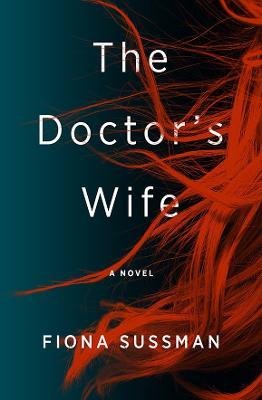
The Doctor’s Wife by Fiona Sussman – 2022

Tibbie, Carmen, and Austin have been friends for years. Tibbie and Austin partnered up, and when Carmen married Stan, he eventually blended into the group. Then Carmen and Stan had twin boys, who Austin and Tibbie dote on. The four are a unit, having the odd tiff, but solid. Then malignant cells, a forgotten cell phone, and an obsessive young man in the neighbourhood, smash open the façade of civility – exposing what churns beneath.

A body is found in the water at Browns Bay, Tāmaki Makaurau / Auckland – is it there through accident, suicide, or murder? The more we find out about the people in the wide circle around the victim, more and more motives and suspects are revealed. Tibbie and Austin are well-off, she comes from a wealthy family and works voluntarily for various charities, he is a popular general practitioner. Carmen, Stan, and the boys just get by, he is a tutor at an arts centre, she a freelance writer.

I was glad I knew absolutely nothing about the story as I read, not having even read the blurb on the back cover. I guessed the first two mysteries – whose was the body that was discovered? What was behind some emerging aberrant behaviour of one of the characters? But they were like the edges of a jigsaw puzzle, and I became gripped with wanting to understand the picture that was emerging. And that picture was full of complex and damaged characters.

The curiosity is raised that awful events in childhood can result in life-long damage, hidden fears, and insecurities – or they can lead to a determination to steer a steady path. The two detectives on the case, Bandara and Stark, both have tragedies in their histories. And now they both feel excluded from their peers – but one has become empathetic, while the other behaves in a way that attracts the slur “ice queen”.

The Doctor’s Wife deals with the trauma of losing a loved one, either through death or through illness-induced alterations to their character, and the stress of caring for the chronically ill. Eliot, a lifelong patient of Austin’s, and the only son of solo mum Andrea, has diabetes, is a whiz with numbers, is conscientious to a fault, and has the unguarded manner of a child. There are those who think if Eliot were to die it would be a release for his mother, a point of view his mother would in no way understand.

And when suspects line up, and one of them is going to die soon anyway, there are others who can’t help but think if the terminal patient took the fall, wouldn’t that get everyone else off the hook, and not make much difference to them? Things spin further and further out of control for the affected families, and they start seriously falling apart. And then there are the children: having to deal with their family disintegrating, and the cruel business of navigating school when rumours are rife.

The Doctor’s Wife is well plotted, leading to a cathartic reveal, which once again shows the complexity of human nature – with the perpetrator appalled at the enormity of what they have done. The mystery is solved, some characters are going to be able to continue, others not. The natural tragedies and the crimes have passed and taken their toll. The reader is left with a lovely bit of hope, and the knowledge that Fiona Sussman is a great #YeahNoir author, and a great observer of human nature.

Posted in #yeahnoir, Book Review | Leave a comment

The Pain Tourist by Paul Cleave – 2022

A small mistake leads to two people lying dead and their eleven-year-old son in a coma. The investigation eventually dwindles with the only suspect having a strong alibi, one provided by the cops who were arresting him the other end of town at the time. Years pass, the boy’s sister visits the boy regularly, desperately hopeful, his doctor considers “Most people who get shot in the head don’t live to tell the tale, and those that do don’t get to tell it well”. Then in the ninth year, the boy wakes up, and for those nine years he has been far from unconscious …

Detective Inspector Rebecca Kent is at a crime scene identical to those of a notorious Christchurch serial killer, who is still on the loose – is this his work, or that of a copycat? Kent is leaning towards the latter when she is told to follow up on a coma patient who has woken up after nine years; he might have crucial information about the violent crime that left him comatose. Kent knows the case and one of the detectives who worked it, Theodore Tate. She decides to visit Tate to see what information was left out of the official reports.

Theodore Tate is no longer on the force; he is working as liaison between the police and a TV company who do crime re-enactments. The hope is that viewers might have information that will help investigations. He remembers the young boy James and his sister Hazel, and the suspect he and his partner Carl Schroder were not able to pursue. He is keen to help, but neither Kent nor her boss want him actively involved, which in no way stops Tate getting actively involved. James’ doctor Wolfgang McCoy then tells them how unique James is.

James Garrett was an imaginative young boy with an eidetic memory and a desire to be a writer. He wakes from his coma in a twenty-year-old body, but his memories of the world are as an eleven-year-old boy. However, he also has memories of growing up alongside his parents and his sister in Coma World, a world he created for himself, and to which he returns when things get too hard. McCoy quickly realises that in James’ Coma World memories are details and dates that coincide with the real world, including information about a possible murder. And when Kent and Tate investigate, they discover there may be another serial killer at large.

The Pain Tourist is a roller coaster ride through the crime-ridden Christchurch readers have come to look forward to in Cleave’s Christchurch novels. Any walk in the woods may be over shallow graves, any walk through a house might be over horrors under the floorboards. The roads are potholed, many areas being redeveloped, some buildings “have new licks of paint, some have more exhaust fumes soaked into the brick, most have lichen and bird crap caked onto the windowsills”. It’s often raining, it’s always bleak. It is populated with characters from Cleave’s previous books, with still others mentioned in passing, making readers familiar with his works feel uneasily right at home.

All the main characters have persisting trauma, yet they battle on to do the right thing, which when on the knife edge of events could fall either side of the law.  Tate: “it bothers him that she thinks this is what the right thing is. And yet here they are”. The reader gets to see the inner world that James retreats to, the shock of the real world being always ‘nine years later’, the out-of-phase experience of his first going back to the family house. His sister Hazel is a great creation; she feels guilt about being the survivor of that horrific night, she is bright, kind, and staunch. And she has a keen moral sense, discussing McCoy’s plans to write a book about James and his Coma World in terms of the possible effects on James, and those in grief who might seek him out, not just of the loads of money they will probably make.

And then there are the villains: there are those wanting to make sure James doesn’t get to tell the cops what he might remember, there are the megalomaniacs, the cruel, the psychopaths. And the ones who just turn up to crime scenes with binoculars and coffee to see the show, or who tune into TV re-enactments or podcasts to relive the thrill of danger from a safe place – the pain tourists. And then there are those tourists who take trophies, those who graffiti their support for monsters who have gotten away with their crimes. Those who are jealous of the notorious, and who may decide to act, to claim their own time in the spotlight.

The plotting of The Pain Tourist is remarkable, the reader’s heart thumps every time there is a knock at a door, every time a phone isn’t answered because it is on mute, or the owner decides not to answer. The three parallel stories are brilliantly woven together, with everyone falling under suspicion and sleight-of- hand writing leading the reader down blind allies. And there is terrible sadness too: the weight of having lost a loved one, the guilt of having survived, the inability to help someone you love who can’t handle events and who retreats into themselves. Even the bad guys have their burdens: “it’s been a long night, and one he hasn’t been able to speed up due to having to wait for people to wake up after being drugged.”

Although the novel is full of characters from and references to previous works, it can be read as a standalone. If you want to read an exceptional piece of #YeahNoir, read The Pain Tourist!

Posted in #yeahnoir, Book Review | Leave a comment

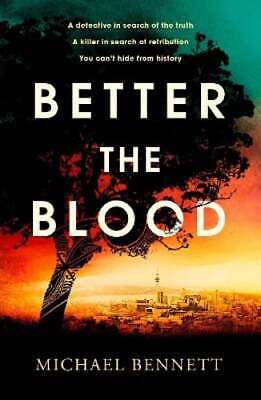
Better the Blood by Michael Bennett – 2022

Detective Senior Sergeant Hana Westerman is an artist, a mother, a gardener, and “the finest police officer”. She is dedicated and focussed and used to pressure. But when she is singled out by the perpetrator of what turns into a series of murders, the pressure is like nothing she, or her Tāmaki Makaurau/Auckland police colleagues, have faced before.

Hana knows she is receiving information from the murderer for a reason, but what reason? The information guides her and her young partner, Stan, to two crime scenes. Hana and her team discover the murders are connected to an atrocity that occurred in the 1860s, and that there are more potential victims. She also realises the link between her and the crimes date from a terrible incident she was part of 18 years ago, an incident that led to her cutting ties with her marae and extended whānau.

Hana is deeply affected by the murder investigation; it makes her consider her life and the choices she has made. And developments start to put distance between her and Addison, her 17-year-old activist daughter. Addison has moved back in with her mother; she had been living with Jaye, Hana’s husband and also her boss. Hana is thrilled to have Addison back with her, but the timing couldn’t have been worse, with the investigation taking all of Hana’s time and attention.

What complicates matters is that both Hana and Addison feel sympathy for the murderer, not with his actions but with his cause. He believes he is restoring balance in a country that “had so much to pride itself on, but it also had so much that was and remained just plain wrong, historically and ongoing”. The novel succinctly lays out many of the injustices against Māori: the blatant appropriation of their land. The use of young Māori men as ‘cannon fodder’ in World War II. The similar use of young Māori police recruits more recently, putting them on the front line of breaking up Māori land protests. The Waitangi Tribunal settlements where tribes get 2% of what they deserve. The disproportionate number of Māori men in prison as opposed to the privileged treatment of Pākehā males in court.

Better the Blood asks: “On which side lies evil?” and has all the elements of great mystery thriller writing: It has a strong social justice theme. It has a great sense of place, Tāmaki Makaurau/Auckland with “its own unique flavour”, and the bush, “he scooped a handful of rainwater from a bowl formed by the thick roots of the rimu and sprinkled it into the opening of the sack, a blessing”. And it has great characters, especially Hana. She is conflicted and stressed. When she feels danger getting closer and closer to those she loves, she finds it harder and harder to maintain clarity. And then she discovers an inner strength that has nothing to do with weapons or stamina.

Better the Blood avoids the simple; multiple voices are presented, there is not one Māori or one Pākehā point of view. Hana’s knowledge of Māori tikanga helps her progress the investigation, and her being in a position to recognise a translation error from Te Reo to English helps her find the suspect. But she is also a cop, and the police in the current investigation are for the most part presented sympathetically, after all “Nobody welcomes a day when you go to work knowing your job might be to end a life”.

Better the Blood is a great piece of #YeahNoir. It is a debut novel, and the promotional material suggests we will be reading more of Hana Westerman, excellent!

Posted in #yeahnoir, Book Review | 1 Comment

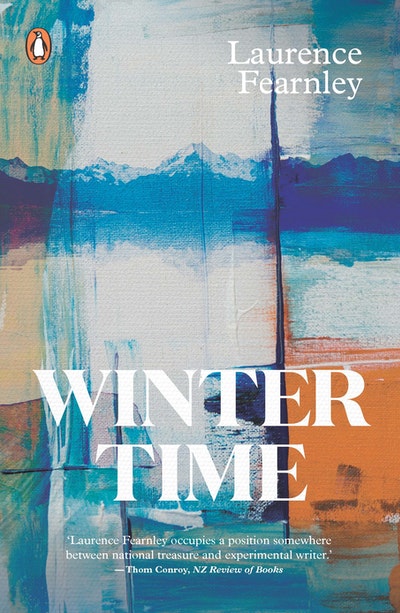
Winter Time by Laurence Fearnley – 2022

Laurence Fearnley transports us to places with her writing, whether it be the rocky coast (Reach 2014), wetlands (The Quiet Spectacular 2016), or, in the case of Winter Time, the Mackenzie Basin, in the centre of the South Island. Her characters are always intriguing, and in Winter Time Roland March is wonderfully drawn. He is back in his hometown of Matariki to carry out the awful business of managing the aftermath of a death – sorting out belongings, deciding on funerals or memorials, deciding what to do with the family home. Eddie, his brother, veered off the road into a canal, and Roland is in shock, “God, he missed Eddie.”

Eddie isn’t the first of the family to go. First their father left, then their mother died after a long illness. Roland stayed with his sister and younger brothers till they were old enough for him to go to Christchurch for a brief stint at university. Then his sister Casey died, then the youngest brother Isaac disappeared, presumed drowned. Roland eventually moved to Sydney, and opened Kernel, a wholefoods shop, with his partner Leon. Eddie stayed in Matariki and witnessed the spread of housing around their once secluded property, the new houses vacant for a large part of the year. He was bitter that his town had become a mecca for tourists: “His home was nothing but a series of photo opportunities.”

In Matariki, Roland rides Eddie’s bike, reconnecting with the town and its surrounds: The freezing winds, the treacherous snow falls, the breath-taking views, and the stunning night skies. “If you stood outside at night, the stars appeared to move, and cross the sky, never still, always shifting, one following the other in a constant migration.” Roland thinks of his family who had disappeared one by one just like the stars. And he regrets the time he didn’t spend with Eddie, the small kindnesses he failed to do for him. And he starts to wonder if his death was indeed an accident. And then Roland becomes the target of online abuse.

There is a sense of menace to Winter Time, the reader becomes uneasy along with Roland. He finds footprints, not his, in the snow around the house. He finds out that Eddie’s culling work for the Department of Conservation included the culling of tahr, and that some hunters thought taking tahr was taking what was rightly theirs. Was that motive enough for murder? Along with the tourists came the demand for property, the family home was now worth a fortune, was that a motive for murder? Even the local cop starts seeming a bit off. Roland even wonders, along with the reader, if the disappeared Isaac will re-appear, isn’t that a usual plot twist? “… it would have been wonderful to see him alive, and standing at the door – even if he did have a gun in his hands”.

Roland befriends an acquaintance of Eddie’s, Bay, whom none of Eddie’s friends have heard of, and whose business is renovating old houses. He also meets Mrs Linden down the road, a bossy woman who knew his parents, who hated his mother, and for whom Eddie would do chores. When Roland returns to Sydney, Leon is not very sympathetic to his helplessness regarding the online trolling. Their relationship is becoming quite strained. Roland wants Kernel to be a solid healthy wholefoods shop, Leon wants to expand and take advantage of the growing market for health supplements and remedies such as, in Roland’s terms, “the latest 5G immunity face serum”. Roland can’t seem to express the clarity he feels concerning what he thinks is right, and he is shocked to hear versions of what others think of him.

Roland travels back to Matariki when the family house has been broken into, and again when the online attacks escalate. He is both at home and a stranger in Matariki, he never did fit in as a child or growing up. He recalls his childhood when the horrors of the cold were shared with Eddie, and sort of fun. He recalls with amazement an incident where the three boys scuttled their father’s boat rather than face his anger. He finds traces of Eddie’s life he was completely unaware of. Roland feels unmoored, he bikes through a formless fog hardly knowing where he is going. He stands in the useless shower trying to thaw out, the cold shower curtain stuck to his back. Roland doesn’t recognise when he is in the presence of nasty bitterness, or when he is being genuinely helped.

The reader, and Roland, do find out what is happening eventually, but that isn’t really the heart of the book. At one point I thought it would end without any resolution, and I would have been fine with that, there are enough clues that the reader could choose from several scenarios. However, the resolution does allow Roland a bizarre act born of relief. What made Winter Time so compelling for me was the atmosphere, the landscape, the uncertainty, and Roland’s adriftness. Highly recommended.

Posted in #yeahnoir, Book Review | 1 Comment

Back Home in Derry by David McGill – 2022

Dan Delaney’s first adventure was as a young cop placed on assignment on Somes Island in 1935 (The death ray debacle, 2015). Since then, we have read of him in incidents every decade. In Back home in Derry, it is the mid-1990s, Dan is nearing 80, and he is reluctantly travelling around Ireland with Jas, his wife. Dan would rather be at home in New Zealand, safe with his family around him. The story starts in small rural villages in Ireland, and unfolds in Dublin, Belfast, and the walled Londonderry.

Dan’s world is closing in; he struggles to see through his graduated lenses, he hears through the squeal of his hearing aids, or the roar of his tinnitus, and he finds most of what is going on around him a puzzle. Dan and Jas’ spend some quiet days when there is an incident with their car, and they hire a “gypsy caravan” (from a village where Roma are not “permitted within village boundaries”). Jas takes photos of the countryside flowers as they amble along, Dan wishes he was at home, thinking “he had nothing in common with the place his ancestors fled”. Dan is increasingly living in his past, having nightmares, and worrying. One evening in a village pub they listen to a local band singing songs of rebellion. Dan finds himself inexplicably in tears when they sing the Bobby Sands poem, Back home in Derry.

After these “idyllically uneventful days”, Dan and Jas are dramatically embroiled in violence in Dublin. As their daughter, Ali, might have been the target, Dan and Jas are keen to work out who is behind the attack. A delicate job during the shaky ceasefire recently agreed between sectarian factions. Ali is a forensic linguistics expert and was meeting them in Dublin to help Jas research the genealogy of Dan’s Irish forebears. In the violent attack, her life is saved by a man called Jack McBride, who Dan is alarmed to discover is related to an old nemesis from Somes Island. Jas and Dan reconnect with the tear-inducing singer from the village pub, and things start to get very complicated. What is clear is that whether grudges are held for decades or for hundreds of years, they can still be the cause of violence and mayhem. And in Ireland those grudges are often held across religious divides.

Jas is a devout Catholic, and Dan becomes more and more irritated at her subservience to a Western-movie-loving priest they encounter, and strangely also to Jack’s wealthy English uncle. However, being ex-law enforcement, Jas and Dan are both suspicious of the local police, specifically the helpful Detective Inspector Gerry Murphy – who ends up being able to continue his investigation over the border in Northern Island due to agency cooperation during the ceasefire. Incidents pile on and adding to the tension is the nearing of the marching season in Derry. Dan and Jas run into an Ian Paisley rally on the way to the airport to pick up their other daughter, Maria. Jas manages to get some interesting photographs of people attending the rally – further complications.

Maria, a hyperactive human rights lawyer with the United Nations, arrives with Max, a journalist, in tow. Max has a prodigious appetite for alcohol when not working on a story, and an equally prodigious number of contacts, which enable him to source information on goings on and related police investigations. The plot proceeds with a possible kidnapping, a definite kidnapping, most of the characters getting trapped underground, and various explosions and threats of explosions. And despite all the chaos Jas and her daughters manage to fit in some sight-seeing and hitting the shops. Needless to say, Dan isn’t so sanguine, “he once again wished he had never come here”, and as old horrors come back to haunt him in the present, he realises how much of his past he has kept hidden from his wife and grown-up children.

The plotting of Back home in Derry is helped by a preface that sets up the motivation for two of the characters. The book has impetus, and although I did get a bit confused in places, McGill manages to keep the various strands of the story moving, and to finally resolve the mysteries. The book is full of allusions to 1990s popular culture, sometimes with too much exposition. But the various and varied characters work well, and mirror the political situation nicely, with some having to tiptoe around others for fear of causing offence. The uneasy relationship between Jas and Dan works too, as at its base they are a solid team.

Dan is, as always, a troublesome character. If you have read the Dan Delaney novels, you can’t help but think of the lovely young man who started the series. But this Dan has lived a long and difficult life. He has old attitudes, is slightly condescending towards Jas, and describes people in quite offensive ways. I found Back home in Derry a good final outing for Dan. He travels a long way in the novel, surprising himself as well as the reader with the possibility of future peace and reconciliation. And he finally claims a political position, although he will probably continue believing: “Bloody politics … another word for abdicating personal responsibility”. If you haven’t read the Dan Delaney books, give them a go.

Posted in #yeahnoir, Book Review, Historical | Leave a comment

Poor People With Money by Dominic Hoey – 2022

Monday Wooldridge is talking to her little brother, Eddy, who disappeared and never returned 15 years ago. She tells him about her life since he left. Their father decided to depart, their mother sort of did too. Monday became a fighter: “Fighting was the only thing I was ever good at”. She fights for money, to hurt other people to vent her anger, to hurt herself to numb her guilt. It isn’t a pretty story. The reader constantly wonders if it would have been a different story had Eddy been a part of it.

Poor People With Money is in three sections. In the first section Monday manages a bar in Auckland, and she fights. She takes on a roommate, JJ. JJ “understood what the universe was made of, but used to act like leaving the house was climbing Everest”. He is a recluse, spending most of his time on his computer, researching the science of ghosts. Monday doesn’t co-exist with rich people; people like her and JJ live in a parallel dimension from “people with so much money it was like a disability”.

When Monday needs more money than she can raise at the bar and from fighting, she comes up with a scheme and drags a reluctant JJ in as an accomplice. Things go well, things don’t go so well. “Everyone believes things will be as they are forever. The good and the bad. As if time is a rock pool rather than a fucking tidal wave”. When events get beyond Monday fighting her way out, she and JJ take off.

The second section of Poor People With Money is set in the tiny village that was once home for JJ. A place “where time moved slow and nobody gave a fuck about anything except what they loved”. Monday and JJ move into a shack on the property of JJ’s dad Tahi, his partner Frances, JJ’s sister Hope and his half-sister Aroha. Hope wants to be the next Parris Goebel. Aroha has visions of the future. Monday keeps finding out she hasn’t yet witnessed the deepest level of poverty.

“We never talked about you, Eddy. Dad wasn’t that kind of man, Mum was never awake, and I kept myself busy with violence.” Monday can never really relax, it’s hard to know who to trust, she’d trust Eddy, but he’s long gone. You know people better once they’ve gone “So much easier to figure someone out when they’re standing still in your memories”. A small mistake increases the sense of impending doom: “Black clouds were rolling in. I lay on my back for a while watching them spread over the blue sky, like blood over lino”.

The third section of the novel has growing momentum as Monday’s story plays out. The telling is tense and cruel, but you can’t help but root for Monday. There is a clarity to the writing that doesn’t allow judgement, the characters are just what they are, because of who they are and their histories. The reader wonders how different they might have been in a different timeline, but is also acutely aware that their lives are the only one they’ve got: “Being smart without opportunity is fucking cruel”.

When an extreme storm hits the village, it destroys homes of those with money as well as of those without. The reader feels everyone is locked into their roles, and escape is managed by a very few. Poor People With Money is a stark and compelling read. It deals with social inequality and the blurry line between right and wrong, and touches on the effects of land disputes, pollution, and climate change on rural communities. But mostly it’s about Monday Wooldridge, and I could happily have carried on reading and reading, until things turned out right for her and she could relax for a bit. Highly recommended.

Posted in #yeahnoir, Book Review | Leave a comment