Reach by Laurence Fearnley – 2014

reachWhat a lovely book about choices and relationships and art and deep sea diving.  Quinn is an artist worried that her best creative days might have passed but unwilling to compromise her lifestyle.  And did she knowingly wreck Marcus’ marriage, or was that just the way things turned out?  Marcus, a vet who is starting to regret losing his daughter in the difficult break-up, is second guessing his own actions and motives – once while out running he was jabbed by a spikey branch ‘and thought, bizarrely, that he had been attacked by a swordsman’  – he becomes so obsessed he is missing what is right in front of him.  And Callum is an itinerant saturation diver – happiest beneath the ocean in the dark – but getting to an age where that is not a viable career and realising he is lonely.

The novel counts down – but is that to the next exhibition, the birth of a child or the breakup of a relationship?  The episodes unfold framed by the natural world, but a world that is not alien: a rock pool “could vary in size from a handkerchief to a beach towel.  Today it was the size of a pillow”.  There is a lovely recurring image of the swaying kelp forest off the coast where the novel is set, but nature is being abused; the characters are constantly picking up rubbish from the beach.  And at one point Callum is upset by seeing a shag caught in fishing line in a rock crevice.

The characters are ageing – Callum looking at the end of his career, Quinn faced with the increasing protocol of mounting exhibitions – her latest requiring an OSH strategy, and Marcus aware that his young daughter is now a young woman.  It is an achievement that you believe in Quinn and Marcus’ relationship despite only witnessing its low point.

The novel is a subtle exploration of the relationship between art and life – Quinn can’t ‘explain’ her art, just as she doesn’t understand how Marcus perceives it.  Callum wants people to actually experience what he loves about being underwater – and is amazed when Quinn captures it in a piece without that experience.  The unfolding of the theme of Quinn’s exhibition is brilliant – as the way we imagine the works alters depending on what Quinn is going through.  Reach is altogether a satisfying novel.

Posted in Book Review | Leave a comment

New Hokkaido by James McNaughton – 2015

new hokkaidoI so wanted to like this book!  McNaughton’s debut novel New Hokkaido is set in a counterfactual New Zealand where there was no bombing of Pearl Harbour, the US did not enter the Second World War, and the Japanese invaded and colonised New Zealand and then formed the Red Sun Alliance with the USSR, which after its victory over Germany had colonised most of Europe.  The book is set forty-five years after the occupation – in 1987, and the Red Sun Alliance stands in opposition to ‘free’ countries such as England, Australia and the United States.  The main character is Chris Ipswitch, an English teacher at the Wellington Language Academy.  This is a job of privilege, as any Kiwis lucky enough to have jobs under the oppressive regime are more usually employed as manual labourers.  Chris’ position is probably due to the fame of his ex-Sumo wrestler brother, professional name “Night Train”.  But Night Train has fallen into disgrace by marrying Japanese Chiyo, and even worse having a mixed race child, Sarah.  Chris becomes embroiled in helping his brother whose situation goes from bad to worse, and who ends up accused of murder.  In a parallel story Chris’ rugby team mates join a Free New Zealand movement bid for freedom by high jacking the Lyttleton Ferry and heading out for Australia.  On his quest Chris receives encouraging messages from his hero Johnny Lennon, who came to New Zealand on a Compassion ship during the English famine of 1946, and became a revolutionary musician before dying in police custody in 1972.  And he is also accompanied by the mysterious Hitomi Kurosawa, one of Chris’ students who is a ‘Settler’; a Japanese sent to New Zealand as punishment for some sort of crime in Japan. It is all great fun and an opportunity to explore colonisation and national identity.  McNaughton at times cleverly describes a New Zealand culture which has unwittingly absorbed some Japanese elements, and has nice details like the Irish (who remained neutral in the war) playing a New Zealand produce trade facilitation role between the Japanese and the English.  But on the whole the caricatures of the Japanese and New Zealand culture are so coarse that the novel doesn’t really go beyond the original conceit, it is possible that McNaughton is trying to say that gumboot wearing rugby players and ladies a plate Sheilas are as much a ‘nostalgic’ stereotype as samurai and geisha, but if so that wasn’t developed.  The murder mystery Chris sets out to solve is unsatisfactorily concluded and the high jacking sequence not really integrated into the story.  It is a pity New Hokkaido was such a good idea but a missed opportunity.

Posted in Book Review | Leave a comment

The Petticoat Men by Barbara Ewing – 2014

THE PETTICOAT MEN (2)The Petticoat Men is a good historical novel which plunges you into the febrile atmosphere surrounding a scandalous trial in 1870s London.  It tells the story of the arrest and trial of Ernest Boulton and Frederick Parks – or Stella and Fanny as they are known when decked out in their finery.  The story is told from different perspectives – the main one being that of the family who owns the boarding house where the boys used to store their gowns and doll up.  Young Mattie is part owner of the house with her mother Isabella and her brother Billy.  Both the family and the house fall into disrepute by association, which is the main point of the book; that the tragedy is not only in the lack of tolerance for alternative lifestyles, but also in the collateral damage inflicted when society decides to ‘take action.’  The novel reads at times like a work of nonsense literature, with the England depicted being bizarre and grotesque.  But there are also themes of the value of education and the influence and generosity the ‘demimonde’.  The pace meanders occasionally but mostly stays on track and it is a fascinating read, but also very sad when the fates of some of the victims of hypocrisy are revealed.

Posted in Book Review, Historical | Leave a comment

Carnival Sky by Owen Marshall – 2014

Carnival-Sky_OM“There is a form of idleness that is not relaxation, but the expression of malaise, a disenchantment with life.”  Sheff has become disenchanted with his newspaper job and resigns with vague plans of travelling overseas.  His father is dying of cancer and his sister persuades Sheff to travel with her to the family home in Central Otago to visit their father before he dies.  We find out there is a gentle but searing tragedy in Sheff’s recent past that has caused the breakup of his marriage.  Sheff is numb but angry, and prone to endless pathetic mishaps.  His trip ‘home’ becomes an observation on family relationships, on coming to terms with grief and on the situating of a person in his own life when that life has taken an unexpected and baffling turn.  In an extraordinarily gentle way we learn of Sheff’s tragedy, his childhood and of the independent lives of his parents, as Sheff finally realises they are their own people and not just adjuncts to his own life.  There are the quite stilted even formal conversations between Sheff and his sister, and the increasingly casual exchanges between him and one of the rural vets, an old school friend of his sisters’ and bridge mate of his mother’s, to whom he is attracted.  In a way it is a novel about growing up, about learning that you don’t always get what you want and that living a good life is only partly being able to chart your own course, it is also being open to what you are presented with.  None of Sheff’s tragedies are unique or ‘momentous’, not like those of a stranger he has a chance conversation with at one point, whose son is bipolar, or the young man at a supermarket afflicted with chronic vomiting.  But Sheff’s story makes you realise that all loss, no matter how commonly experienced, does have a uniqueness that is deserving of total observation and respect.  Carnival Sky is a beautiful book.

Posted in Book Review | Leave a comment

The Secret Life of James Cook & James Cook’s New World by Graeme Lay – 2013/2014

Cook1DesCook2pite much being written of James Cook’s achievements – both positive and negative – little is known of the man himself.  Cook certainly kept a Captain’s log for the Admiralty during his voyages – but in these two novels Graeme Lay has him also writing a personal account of his experiences for his wife, Elizabeth.  This personal account, along with the third person narrative that talks of Cook’s feeling and opinions, attempts to round out Cook’s personality.  Much is made of the tension between Cook’s love of his wife and children, and his dedication to a career requiring his being apart from them for years at a time.  Lay, who clearly states his books are fiction, presents Cook as a very laudable character indeed; within the constraints of the prejudices of his time, Lay’s Cook is liberal, fair handed and possessed of a fine moral imagination.  Cook rose from draper’s assistant to become a cartographer and sea captain, so was obviously a high achiever, Lay underpins this initially with Cook’s drive to avoid a lubberly life, and then his desire to prove himself the equal of the upper class navy men and wealthy scientists who surround him.  The first novel, The secret life of James Cook, covers Cook’s life through to the end of the first voyage of discovery in 1771, and the second James Cook’s new world covers the second voyage (1772-1775).   In neither book do the naturalists come off well, Joseph Banks being an arrogant rake on the first voyage and Johann Forster a pious dope in the second.  The writing isn’t spectacular but despite that, and Cook coming off a little bland in the first volume, Cook’s story is compelling – and by the second volume Cook does shows some welcome weakness, self-doubt and humour.  All in all a great read and, despite knowing it won’t end well, I look forward to reading the third volume.

Posted in Book Review, Historical | Leave a comment

The Silk Thief by Deborah Challinor – 2014

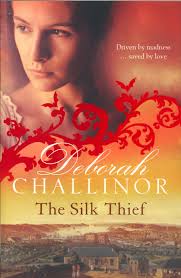
silkThe Silk Thief is the latest and third of four books in Challinor’s The Convict Girls series.  I hadn’t read the previous two and that wasn’t a bad thing, as I loved being plunged into the deep end of the lives of three women serving out their sentences bonded to masters or mistresses in the smelly bustling and dangerous Sydney of the 1830s.  Harrie, Friday and Sarah all arrived in Sydney on the same transport ship and are still playing out dramas that took place on board.  If you have read the previous instalments it would just read through, but if not Challinor cleverly weaves the complex background into the current plot.  Sarah is a skilled thief, currently happily married to the Jeweller to whom she is bonded.  Friday is working as a prostitute for a very understanding Madam, Friday reminds her of her deceased daughter so Elizabeth is supportive and sympathetic to Friday’s horrendous drinking problem.  And Harrie is working for Nora, another supportive woman, and she also works for tattooist Leo Dundas.  Harrie is struggling with guilt over various incidents, a state made considerably worse when the infant daughter of a woman who was transported on the same ship is placed in danger.  The bond between the three women, and the other main players in their universe, is the strength of the book: there are terrible crimes, blackmail, tragedies, deceit and lots of misunderstandings, but the women’s friendship is the solid core in the swirl of events that holds the plot together and also engages the reader.  And Challinor is unapologetic in her use of strong women to drive the plot; even the most evil of the bad characters is a woman: Bella Jackson.  There are sympathetic male characters, Adam the jeweller, Leo the tattooist and Dr James Downey (Harrie’s romantic interest) but they are ancillary to the women’s story.  The descriptions of 1830s Sydney are rich, you can almost smell the heat and stench, and all the characters are intriguing; I particularly liked the entry of the Ngapuhi rangatira, his wife Mahuika,  daughter Aria and entourage, with their almost vampiric  beauty.  I am so glad I finally picked up a Challinor, she is a fine story-teller.

Posted in Book Review, Historical | Leave a comment

The Stove and the Stage by Des O’Regan – 2014

stoveThe Stove and the stage is the tale of Danny Mulligan who arrives in Constant Bay, Charleston in the early 1870s.  But Danny doesn’t arrive for the gold; Danny is an entertainer, and seemingly escaping a shady past in Ireland.  He is the narrator of the story and writes in a rollicking style and at pace.  His story includes the Fenian Riot at Addison’s Flat, the arduous life of the miners and those establishing towns to support them, the difficulties of travelling around the area at the time (he moves to Reefton where much of the story is set), and the extremes of weather and natural disasters.  It is not sophisticated writing – but Danny isn’t a sophisticated bloke, and is well drawn enough that I knew I wouldn’t like to have him around to dinner!  The book is full of characters, incidents and is rich in detail, it even has a bit of romance.  A light read with a lot of heart.

Posted in Book Review, Historical | 1 Comment

Dawn Chorus by Ray Ching – 2014

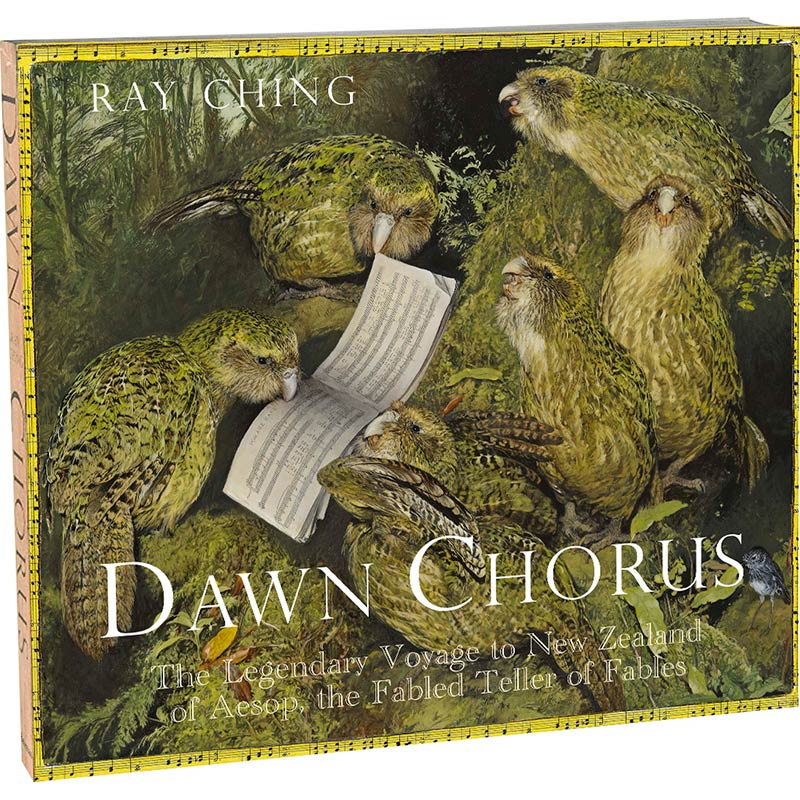
What an absolutely stunnidawn chorusng book.  Dawn Chorus, like Ching’s previous Aesop’s Kiwi Fables (2012), re-imagines Aesop’s moral tales with New Zealand animals as the protagonists.  Dawn Chorus frames the fables with a tale about Aesop himself, in which he posthumously travels to New Zealand in the company of a returning albatross.  The book is divided into parts: telling the story of the great anticipation of Aesop’s arrival at Aotearoa, his journey, the preparation for his welcome ceremony, the welcome concert, and the fables themselves.  As would be expected, yet still astounding, it the richness and beauty of the illustrations.  Most of the text is hand-written and the entire book is a work of art.  New Zealanders can relish the beauty of the native wildlife, and mourn those species we have lost.  Superb.

Posted in Book Review | Leave a comment

Landscape with Solitary Figure by Shonagh Koea – 2014

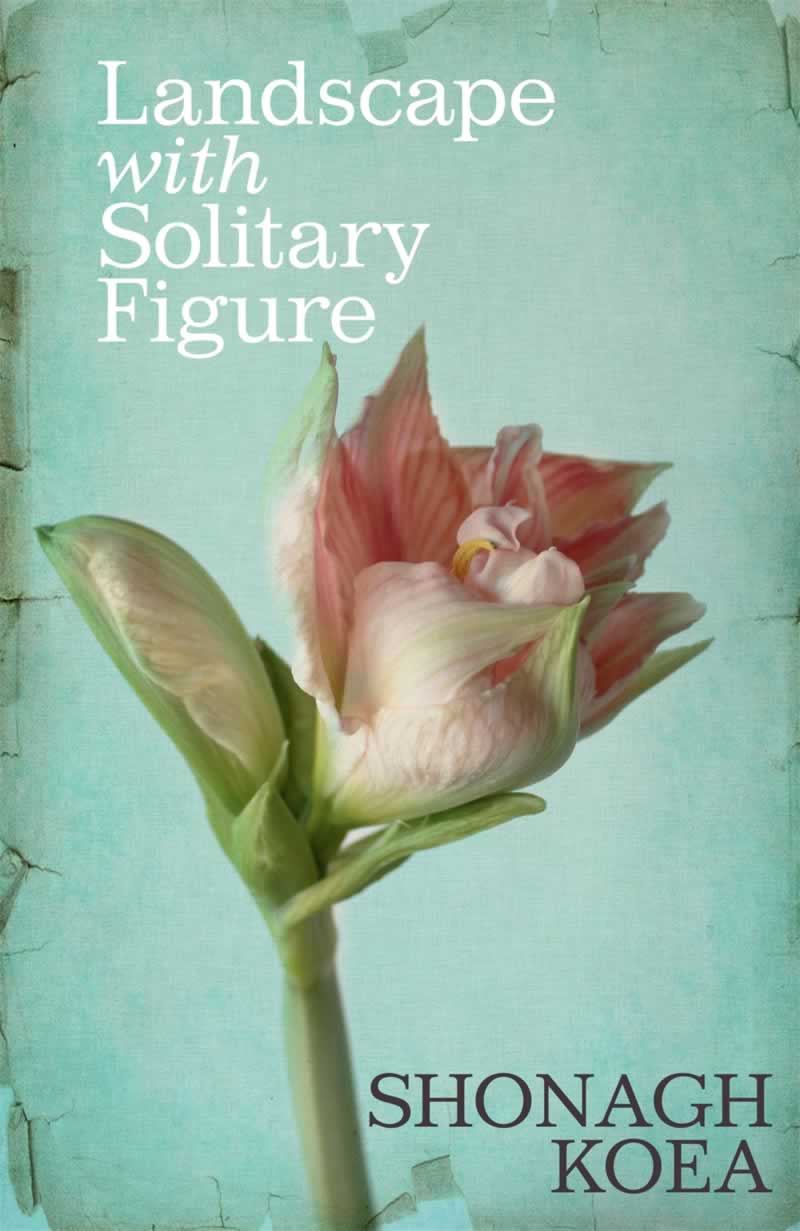
Koea“… when you return to where you belong you find that you belong there no longer”, Landscape With Solitary Figure is the beautiful but quite ominous reminiscence of Ellis Leigh, a woman who has isolated herself in a cottage a short walk from the sea.  The narrative is both first and third person, but both from Ellis’ point of view – and we wonder occasionally how reliable that point of view is.  Ellis has a son in London, she once had a husband but he died relatively young; she wishes she had more photographs of him, she also has had a terrifying experience amongst a group of people in the place she returned to after having moved away for ten years after the death of her husband – a place she spent most of her time the second time around trying to leave.  Even the descriptions of her present place of seclusion are of somewhere that has turned out not at all how she had envisioned.  She has divested herself of friends the way she has sold off her belongings, she goes to lengths to mislead her son that all is going well, and although she tells us she feels safe you know she never will.  She was already falling ill and seemingly too insecure to resist when falling in with a crowd – and a man – who she feared, we read that even when her son was small she felt isolated and marginalised.  Her best memories are those far away on a brief trip to Paris, and she is happy her son has managed to ‘get away’.  The moving from first to third person and the detailed and repetitive descriptions of incidents and places add to the reader’s recognition of Ellis’ mildly neurotic outlook.  Landscape With Solitary Figure is beautifully produced, illustrated with flowers from the overgrown garden that is Ellis’ hiding place, and is a fine rendering of a fragile and damaged life.

Posted in Book Review | Leave a comment

Purgatory by Rosetta Allan – 2014

pugatoryWhat a wonderfully imagined novel, and so well executed.  Its focal point is the 1865 Otahuhu Murders, and the times have been meticulously researched, resulting in rich and engrossing story-telling.  The tale is told from two points of view: that of John Finnegan, one of the murder victims after his death, and the other of the murderer, James Stack.  John was a young boy when he was murdered and for most of the story he is stuck in his garden along with his Mum and two brothers.  Their purgatory is one of total awareness but lacking in touch taste or smell; they are monochromatic and wearing the clothing they wore at their death – so poor John is stuck with one girlish boot on.  John’s predicament is eerily convincing and just as captivating as the detailed story of his murderer.   James Stack is almost an anti-villain – heinous though his actions are, as we read how his life is blighted at every step we find his crime believable, maybe even inevitable.  We read James’ story from his childhood during the potato famine in Ireland, through a terrible sea journey on a transport ship to Australia, on to New Zealand where he fights with the British Army in the Land Wars, and finally his path to his ghastly act in Otahuhu.  The range of this historical novel allows tropes such as colonialism in Ireland and New Zealand, the ‘father leaving the mother to cope with a large brood in tough times’, and the desperation to own land so you can feel you actually belong somewhere, to emerge and re-emerge, thus leaving the impression that it is not only the dead who are in purgatory.  The writing is effortless: “What’s heaven like?”, “Ah, like Tyrone I expect, only without the trouble.”; “Still the hat sat strangely, lopped to one side, fitted to the shape of another man’s troubles.”  Purgatory is a great addition to New Zealand historical fiction, and an impressive debut novel.

Posted in #yeahnoir, Book Review, Historical | Leave a comment