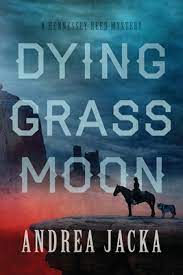
Dying Grass Moon by Andrea Jacka – 2021

Dying grass moon is the second Hennessey Reed mystery after One for another. Back in Melancholy, Idaho Territory, in the late 19th century, Hennessey and Marshall Rafael Cooper are estranged but still very much connected. Their community is still trying to heal from the atrocities of Hennessey and Raff’s last adventure, and are holding a fair to lift spirits. Then Raff discovers a fresh crime has been committed, and this one turns out not to be a one-off horror.

As well as the return of Hennessey, madam of the Fleur de Lis, and Raff, Dying grass moon brings back many of the crew from One for another: Hennessey’s friend Lizzie, who has turned to the bible in response to almost losing Evie, the girl she took in as a baby. Retired Doc Tolliger, Shakey and Fatfoot still have reserved seats at the Fleur-de-lis bar. The trio are still served by Nathan, who is now soon-to-be-wed to Annie from the bordello. Deputy Daniel Hawthorne is still bumbling around. And of course Raven the wolfhound is never far from Hennessey’s side.    

With the fair in town, newcomers are not unusual, for example crystal ball-gazer Madam Beaulieux, “you’ll never see her without gloves and a scarf or shawl”, and her husband Ezekiel Beaulieux who “waddles like a duck.” A lawyer, Hiram Walsh, turns up to give Hennessey some good news, and then a Pinkerton agent, Kip McFarley, arrives. There are connections where there shouldn’t be, and as Raff comments: “things were about to get complicated.”

The plot revolves around a religious group called The Church of Celestial Light and Paradise Divine, and there are linked crimes dating backwards and looming forward. There are lots of clues through the tale, and plenty of action: ambush, a sniper, booby traps, and explosions. There is interest for the reader in working out the mystery, but it is the characters who carry the novel. And the writing, which is evocative: “Raff descried a difference between near silence that excluded humans yet incorporated birdsong and the sounds of nature, and out and out, unnatural silence.”

The setting is a character: the American West, the frontier of the acceptable and a refuge both for those outside the law and those outside social mores. And it is a frontier that is constantly moving, with Melancholy becoming more established and more establishment. Behind all the changes are the memories of the indigenous people who were displaced and abandoned. Hennessey has demons in her past, and she stands as a contrast to the perpetrators of the crimes: when thirsting for vengeance you can either turn your anger inwards and damage yourself, or you can turn outwards and hurt others. The moral of the story is that we are all damaged in some way.

Hennessey is “a woman ruinously dependent on the false-hope promises of laudanum and Irish whiskey”. She sees the spirits of the dead, which makes enclosed spaces and forests difficult. In the latter “the dead of a small country resided in their spiritual form in trees and undergrowth adjoining the trails.” Raff is of Indian heritage and has his own traumatic backstory. But where Hennessey senses “Pockets of terror were embedded in the essence of the landscape”, Raff hears wolves howling and knows “They spoke to each other, communicating to family much as humans did, though their family unit was loyal and loving the way many human families were not”.

What Hennessey and Raff do share is a moral compass, a love of animals, and although stubbornly ignoring it, a love for each other. This romantic tension is another aspect of the book that keeps the reader engaged. And the smattering of little-used words is entertaining: hornswoggled, absonant, caparisoned. Even the characters comment on Hennessey’s idiosyncratic speech: “When anxious or out of her depth her language got more flowery, more confusing than usual, and Raff often found it prickly to keep hold of what she was saying even when fighting fit.”

I really like flawed, insecure, but staunch Hennessey Reed. I like her worrying that she has brought danger to those she loves, like Raff, or that she has inadvertently abandoned an innocent, Mouse, a young boy who worked at the livery in Melancholy. Each chapter is prefaced by a piece of Indian wisdom, and you feel that it is the peace of such wisdom that Hennessey yearns for. Dying grass moon ends with the reader seeing more complications ahead for the oblivious Hennessey, so hopefully there will be another instalment of her story,  “Lord willin’ and the creek don’t rise.”

Posted in #yeahnoir, Book Review, Historical | Leave a comment

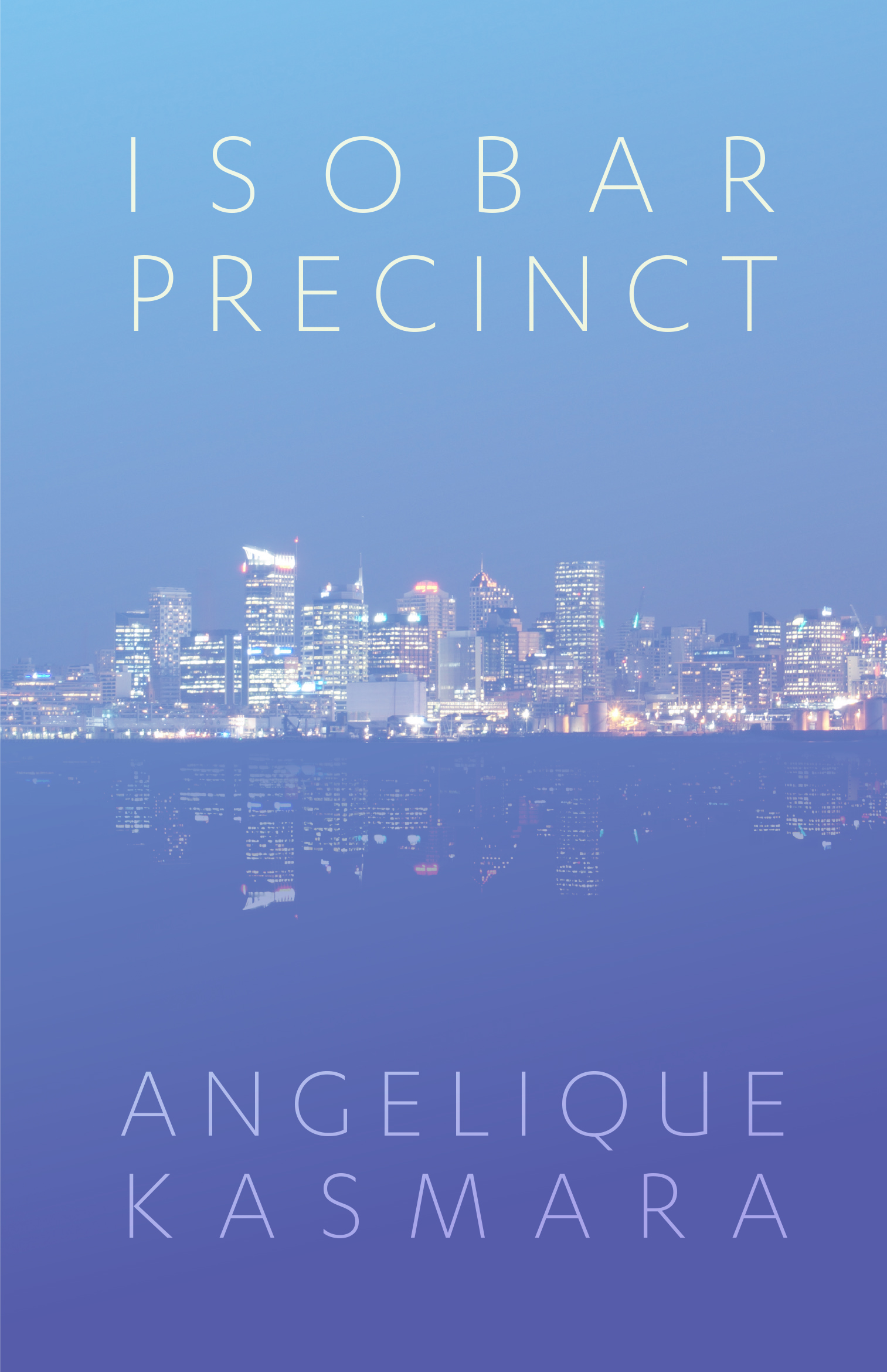
Isobar Precinct by Angelique Kasmara – 2021

Lestari, a tattoo artist, is helping her friend and business partner, Frank, install his latest art installation in Symonds Street Cemetery: a statue of St Michael, which Frank will document as it decays and is defaced through time. Jasper is there too, a 15-year-old stray who sleeps under the stairs of their tattoo studio. The trio witness and record a murder …

The beginning of Isobar precinct is a great mise en scene – a cemetery that has been found to hold many more bodies than it should, the idea of change and deterioration through time, weird crime, and the vagaries of memory. Incidents in the cemetery spur Lestari to action, until then “Like most other locals, my default’s stuck on shallow depth of field”. She and the others take their recording of the murder to the Central Police Station. But their memories don’t tie up, the recording is glitchy, and when they get back to the cemetery, there is no evidence of a murder having taken place.

The policeman they speak to at the Station is Tom – with whom Lestari volunteers as a trainer in a self-defence class. He is a jaded cop: “We’re not even the ambulance at the bottom of the cliff. We’re just the ones working out which victim to pin the blame on.” Lestari and Tom puzzle over the possible murder, and the repeated burglaries of Lestari’s tattoo parlour. There is an attraction between them, frustrated by Tom’s being married with two young children. They are both part of the local community, able to look at a passing crowd and see not anonymous people, but criminals, victims, people with pasts, people with hopes, or dread, for the future.

As Lestari investigates what she experienced in the cemetery, she discovers that her father, who disappeared when she was still at school, was part of a drug trial for a drug called Quantanxrmine. She finds that over the years there has been a pattern of drug deaths in the homeless and street worker communities in the area. And she enters a very strange and distorted world. Concerns the reader might have that she, and other characters, are a little chill about the various turn of events, are settled somewhat by hints that they are already living with instability.

Lestari and Jasper both have disturbing, recurring dreams. Lestari and Frank suspect a previous employer, who is a drug dealer, is responsible for the repeated brake ins at their parlour. There is passing reference to skyrocketing property prices in Tāmaki Makaurau, and the ease of slipping into rough sleeping. Most of the characters use drugs, prescription or otherwise, and alcohol. The tattoo parlour is called The Golden Ratio – referring to aesthetic harmony – and early on Lestari tells a client she got into tattooing because “Tattoos last forever … I hate change” – ironic given what is to come.

“[I]ts addictiveness stems from the basic human trait of wanting things to be better.” People take the novel drug as they want things to be better, they want to be able to put things right. But Lestari struggles with fate: “Alternate cause-and-effect, rerouting through the old. Make it stop.” She thinks she has saved a young woman’s life, only to discover another has died in her place. She finds a photograph of herself in the pocket of a jacket at a crime scene. She sees people inexplicably recognising one another, and people recognising others in the eyes of people from the wrong generation.

To explain what is going on in Isobar precinct would spoil for others what I found to be an unexpected and invigorating aspect to the story. What I can say is that it is thrilling, with attacks, explosions, and mysteries that become more and more mysterious. I can also say that the events described are open to interpretation – many of them drug-induced, so distorted and shakily held in the characters’ memories. The reader often feels like Jasper: “I took the freaking pixie dust.” We read of a gradual improvement of the stability of the drug since its rough beginnings: “More people are surviving the ride … language to describe the experience – not so much.”

Isobar Precinct – a space closed to traffic, a liminal area between those of equal pressure. Behind all the chaos of Lestari’s experiences are people more glued to their phones than interested in what is going on around them – those who take the drug (or drugs) are in a parallel reality. Added to that reality is the social backstory of the deinstitutionalisation of psychiatric hospitals, and the susceptibility of those on the fringe to be abused for scientific research. The fallacy of informed consent when “He didn’t appear to have any awareness of what was dangerous and what wasn’t. In other words – he was crazy”.

The writing in Isobar precinct is sharp – descriptions of the drug effects hitting Lestari are shocking and quite exhausting. The characters are clear and original. Lestari is strong yet also vulnerable. Her mother, a mix of Balinese, Javanese, and Chinese, is a highly educated refugee who is only able to do menial jobs in Aotearoa – she has taken solace in alcohol. Frank has kicked a morphine addiction he fell into after an accident, and he is very protective of Lestari. Tom self-medicates, a habit stemming from his job, but also from a background of having seen his respected father severely beat his mother when he was a child. And there’s Joe, a young boy Lestari catches robbing the parlour, who is a dupe, and whose death, described in terms of any young addict’s death, is tragic. And there are many others.

The novel is firmly placed in Tāmaki Makaurau: the bustle of Karangahape Road, the quieter suburbs, a protagonist having worked on the Britomart project so “I know about tunnels!”. And despite the frantic pace and bleak subject matter, there are light moments, Tom: “So knowing all this shit is meant to make my job easier? Just shoot me now.” It took me a little while to get into the not-rhythm of the story, but once I did, I was hooked. Isobar precinct is Kasmara’s debut novel and is all the more extraordinary for that.

Posted in #yeahnoir, Book Review, Science Fiction | Leave a comment

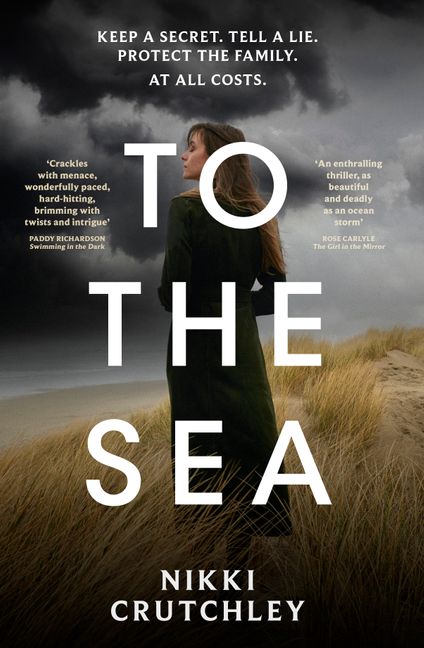
To the Sea by Nikki Crutchley – 2021

A man feels blessed to have survived a disaster. He and his devoted daughter make a new start – moving their family to a beautiful wild seaside property. Starting afresh with new names, they create a world where love of family and home will keep them safe. OR … A man with a brain injury and a young traumatised girl confine their family to a remote dangerous location. They create a world of cruelty and fear – a world held together by dark family secrets. Two perspectives on a place called Iluka.

In To the sea, Crutchley explores the motivations behind inexplicable behaviours. Why would a mother agree to her daughter being constantly physically punished? Why do people, usually women, stay in abusive situations? Why does abuse often become intergenerational? How can society turn a blind eye to suffering? The Iluka family patriarch leaves his job as an accountant, moves his family to Iluka, adopts a new name, Hurley, and re-names his wife and two children, all their names relating to the sea. Ostensibly, his intentions are to provide his family with safety and security. Iluka has a pine plantation to source wood for Hurley’s woodworking, land for cows for milk and butter, a large vegetable patch, and bees for honey. The children will be home-schooled. They will be practically self-sufficient.

The story of the family on Iluka is told alternately from the points of view of Anahita, Hurley’s daughter, in the past, and from that of Ana, Anahita’s daughter, in the present.  “We have our stories, our beliefs here at Iluka” – the reader gradually discovers the truth about these stories and beliefs. We read of them coming into existence, and of the truth behind them. Although extreme, To the sea is believable. The family identity is based on Hurley’s best friend having died in the storm that Hurley survived. It is grounded in the fact that Asherah, Dylan and Anahita’s mother, committed suicide, not recognising the gifts that Iluka has to offer. These tragedies bind the family together.

The family members rarely have to venture from Iluka: “Remember, we will always protect you. The only thing out there for you is loneliness and pain.” And when they do venture out, Anahita and her brother Dylan, and then later Ana, do indeed encounter evil and cruelty. Anahita can remember the horror of being assaulted by a man on the way home from school before they moved. When young Cleo and her alternative lifestyle mother, Wanda, move onto a neighbouring property, Dylan discovers the existence of awful abuse. The local townsfolk are judgemental and nasty. Ana encounters a neighbour Brent, who she finds frightening.

“You don’t understand. It’s not a punishment. It’s a reminder.” Alongside the freedom and safety of Iluka, are the rules. Hurley is an imposing man, and controls his family with taps of his fingernail “grown especially long just for this purpose”. The family have adopted a practice of ‘self’-harm, finding release in the pain. The punishments are brutal, but Anahita and Ana both find solace in the fragrances, vistas, and feel of Iluka. Ana loves the non-judgemental nature of her environment. The girls, and then women, are told to view the punishments as a reminder that they are part of the family, part of Iluka.

There are people around who have the opportunity to intervene to make sure all members of the family are safe. But the police choose to listen to the man rather than the woman when they are called to a situation. A government agency worker just accepts the pragmatic boundaries of her job. The locals find it more enjoyable to be mean than sympathetic and caring … When Dylan’s friend Marina joins the Iluka family, she starts a business offering accommodation at Iluka as a retreat for artists. Ana sees Nikau arrive, he is a photographer and, unusually for the visitors, not far from her in age. It transpires he is a journalist – he takes an interest in Ana, but it is more an interest in getting a good story than redressing wrongs or helping her.

To the sea looks at generational relationships. The reader initially assumes a clear start to the madness – with a clarity around what is right and wrong. But it is not that simple. The more you learn, the more complex it becomes, the more you discern hidden motives, and buried crimes. Ana has so little experience of people that, like the reader, she does not know who to trust. And that is one of the messages of the book; by and large the characters are all untrustworthy. Ana is on her own: “I was terrified of discovering the truth.”

Ana was born at Iluka, and has accepted it as part of her being. The sea: “[t]he constant, comforting sound was like my own breath; inhale, water surging in, exhale, water dragging back out”. She feels empathy with trees that are logged. Anahita shores up Hurley’s views, but Ana starts to investigate them. The tension in the book comes from the presence of an unpredictable, domineering man, and from not knowing how Ana will react to finding out the truth behind her family’s solidarity. And she has the determination to find out – there is tightly controlled Internet access at Iluka, so she does have a way to get outside information.

Iluka, the location, is a character in its own right in the book. It is safety, but it is also danger. There is a treacherous ladder leading down to the beach and the sea, to the bay named after Hurley. There is constant erosion eating the cliff’s edge. Anahita saves Ana from a slip when she was young – Ana has the opportunity to do the same for her mother years later. And erosion is another way to unearth secrets … The sea is a constant presence impinging on the characters’ views of the world – Anahita sees a girl in town as one of “the sirens Hurley told her about who lured sailors to their deaths”. Dangers are everywhere and all lead back to the sea. “To the sea” is a dreaded command, and also a form of tribute.

To the sea has a many-layered plot, with the parallel time frames adding even more depth to the unfolding story. The reader is constantly learning new aspects to what they already know, and having other aspects undermined. Crimes and perpetrators pile on like ripples from a dropped stone – but where is the centre? The visceral descriptions of Iluka give the book an almost mythological slant – where those who reside there are wonderfully bewitched but also cursed, doomed to sacrifice all responsibility to the vagaries of the sea. To the sea is a tense, looming, slow-burning read, with revelations right up to the final page!   

Posted in #yeahnoir, Book Review | Leave a comment

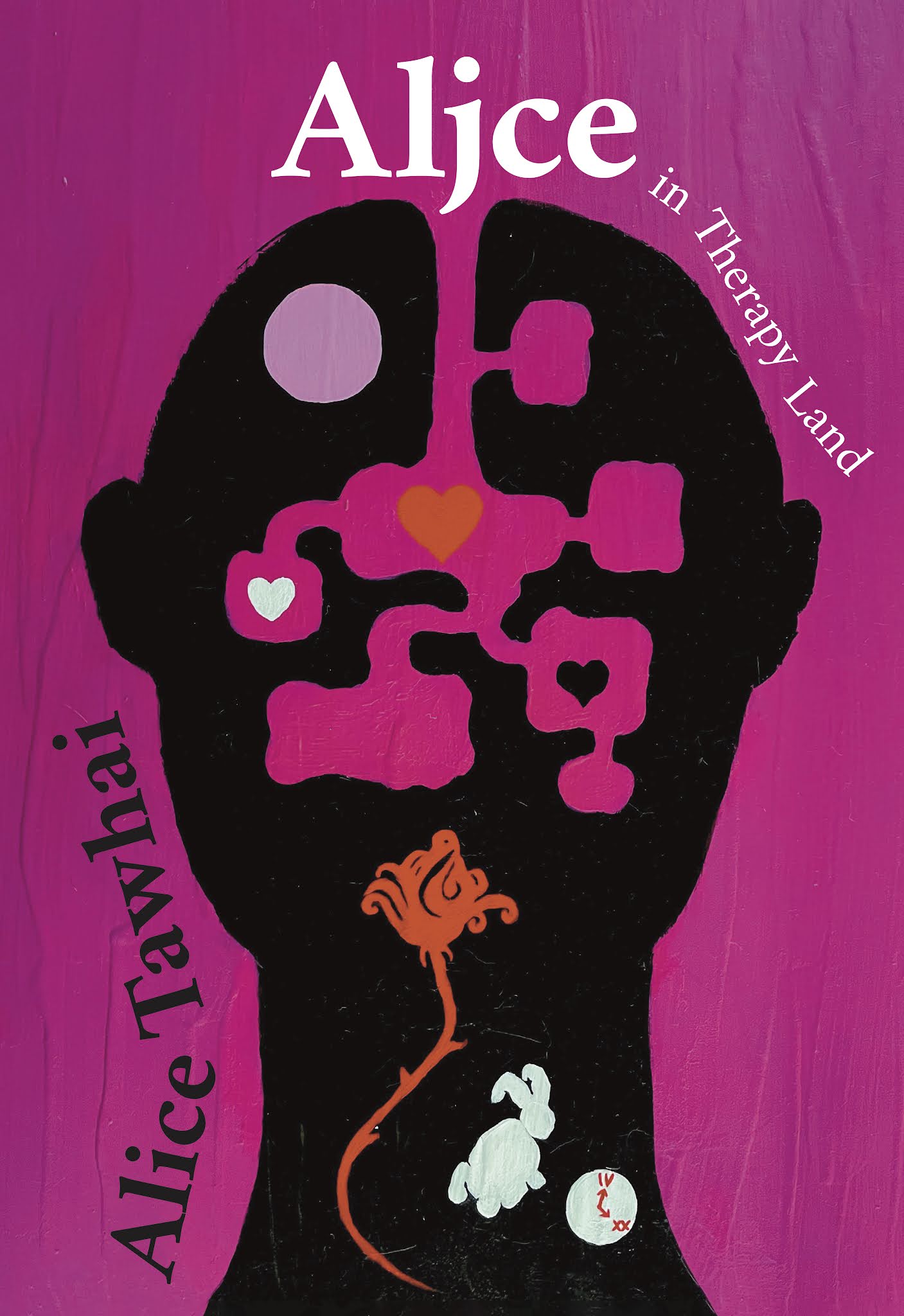
Aljce in Therapy Land by Alice Tawhai – 2021

Aljce is excited to be starting a new job at The Therapy Hub, a wrap-around private counselling service, where she will be able to build up the practical counselling hours she needs to complete her qualifications. But instead of the gratifying job she has envisaged, she falls down a surreal rabbit hole of incompetence, institutional absurdity, and ruthless bullying.

The reader gets hints that Aljce at some point has benefitted from counselling herself, hence her career aspirations. She is fluent in psychological diagnoses and self-affirmation. And this is one of the aspects that makes Aljce in Therapy Land such a good read – Aljce is far from the innocent victim of a toxic workplace. She is complex, self-absorbed, brilliant, and arrogant – at one point pointing out to a friend that boring people mate to create even more boring people, mind you she was stoned at the time.

Aljce spends a lot of time experiencing life “stoned and synaesthesiac”, she associates things with colours, and she has body dysmorphia. The novel is written tightly via her peculiar point of view. She has two daughters, Pleasance and Liddell, a reference to the original Alice, who are around six years old. But we mostly hear of the girls remotely, and when we do read of Aljce interacting with them, it is of her enjoying the kids’ star-projecting night light, or playing with their glow sticks.

The reader meets wonderful characters along with the cast of The Therapy Hub: Aljce’s friend Strauss, whose stoner conversations with Aljce are some of the book’s highlights. And there is the inventive “Mad Neighbour” – Aljce can’t decide if he is mad, or a genius, or a “mad genius”. There is also Lewis, a man who Aljce has connected with via an online dating app. He plays a large part early on in the novel, and he is an author – helping to frame the story as a piece of meta-fiction. Aljce decides she wants to write a book too, talking about her future readers: “I want them to wonder whether my characters are real, or whether they’re just figments of the main character’s imagination.”

The reader often wonders how reliable a narrator Aljce is – I was a bit suspicious about the daughters till they appeared, and of Lewis. After all, all Aljce wants is someone who thinks she is special, and she is always saying that we create our own reality: “I may even be making myself up, I guess.” But then there is the brutal reality of The Therapy Hub, an exaggerated version of many workplaces. It is a workplace Aljce wants to leave, but with Pleasance and Liddell to support (their father is long gone), she needs the money, and she knows if she does leave she won’t get a good reference: She “wasn’t going to be judged on merit, but on the opinion of someone who it was impossible to please”.

Aljce in Therapy Land could be quite triggering if you have encountered workplace bullying. The Hub’s founder and manager is Jillq. Jillq is passive-aggressive, under-qualified, threatened by others, and supported by an entourage of sycophants. Her behaviour is extreme – played out in a building that “was like a rabbit warren”, with real rabbits on the grounds and golf balls (not croquet balls) rolling around the corridors. All the clocks are set to different times. There is no logic to the rules, or to the filing system, and those who are bullied eventually start to fade away like the Cheshire Cat, starting with their hair.

Underneath all of this Wonderland-unreality are descriptions of recognisable bad management behaviour. Jillq is threatened by any staff member who might reveal her incompetence – Aljce has a degree so is fair game. Aljce finds she is always contravening unknown rules, rules sometimes made up post the ‘infringement’. She also finds she is on a three-month trial not in a permanent position. Jillq, or one of her off-siders, are always there keeping an eye on Aljce.

The other staff members, to maintain their positions in Jillq’s favour, are at best not willing to support Aljce, and at worst willing to actively undermine her. Aljce is astounded that “community champions against bullying and violence could be so determined to ignore it when it was under their noses.” Aljce refuses to become a sycophant, but does try to fit in. She doesn’t however agree to change the way she dresses – which reads like serial cosplay. This aspect of Aljce doesn’t fit with her counselling theory of trying to be a blank but caring slate – but then Aljce doesn’t get to meet with clients.

We only read about clients who have been been appallingly let down by The Hub, and we learn that Jillq is collecting funding for non-existent clients: “Ahhh, the beauty of government contracts and being able to fudge those numbers.” And, again familiar, the work of The Hub has become bizarrely introverted: “A great deal of fuss was made when [clients] were present,  but a great deal of moaning was done about them afterwards, about how they’d interrupted the real work.” The Hub is coasting on “unrushed fake work”.

Aljce is fascinated with quantum physics and there is much in the book about the subjectivity of experience, and the complications of the Internet – at one stage the royals and the Kardashians are used as examples of fabricated public lives – but the message is we all fabricate our lives, “We’re all insecure.” And Aljce and others in the book find solace in weed: “It’s like being so close that you might be knocking on the door of the answer, and the answer’s just on the other side.”

The writing of Aljce in Therapy Land is compelling and disturbing: “She felt as if she was underwater with turbulent schools of dark fish; one shoal going that way, another shoal going this way, another smacking right into her. How was she supposed to know what they were going to do next?” It is also disorienting – the Alice in Wonderland references, the stoner experiences, and Tawhai using capitals instead of italics for emphasis, which I had to learn not to read as corporate acronyms.

The tension in the book is from Aljce knowing that you create your own reality and yet being puzzled as to how frustrated she is with her own. She learns everything is temporary, friends move on, circumstances change. But she also finds agency. She decides that evolution leads to a person either being empathic, or calculating and science-oriented, both types necessary – but it also throws up aberrations such as Jillq and her clan – people with no empathy who were “also essentially stupid” – people who need to be dealt with. The book has a good arc, and in keeping with the Wonderland theme the end takes us nicely back to the beginning …  

Posted in Book Review | Leave a comment

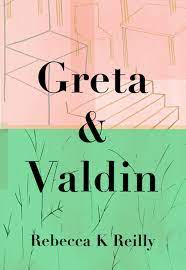
Greta & Valdin by Rebecca K Reilly – 2021

“I look through all the photos and they’re all really bad – poorly framed, bad lighting, someone about to fall over – like all our family photos are.” Greta & Valdin is about the extended Vladisavljevic family, and, as depicted in their family photo album, the family members are chaotic and haphazard – but they are also totally enthralling. The central focus is on Greta and Valdin, siblings and flatmates – Betty, their mother, is Māori from Aotea / Great Barrier Island, Linsh, their father, is Russian from Moldova when it was a Soviet republic. Valdin and Greta are striking, insecure, and staunch – and both are looking for love.

Valdin has OCD, is accident prone, and he didn’t speak for much of his childhood. He was a physicist for 7 years, until he had a breakdown over the ending of his relationship with Xabi, his uncle’s husband’s brother – or maybe his relationship foundered when he had a breakdown over not wanting to work as a physicist anymore. He is now the frontman for a TV show, and getting a name for his outspoken ad-libbing. He still loves Xabi.

Greta is tutoring at Auckland University, where Valdin worked in the physics lab, and where Linsh is a professor. She relishes the idiosyncrasies of language and custom and is multi-lingual. She is finishing her literature Masters, and is floundering in the romantic doldrums. She hazards online dating, and then thinks she might have met the love of her life in Ell, a woman she first became aware of when a friend at a party described a woman she has just walked in on in the loo as “your type”.

Greta and Valdin learn of aspects of their family history and heritage at the same time as the reader, and also pick up on the present goings on amongst family members. They know how lucky they are to be part of their family, they know that despite how lonely and desperate they get, there will always be someone they can eventually talk to. The Vladisavljevics are liberal, flawed, and kind. “Being gay used to be fun. And illegal and dangerous. Now it’s just about being romantic and sad.” But the siblings are not naïve – they know that elsewhere – in their family history and in their present relationships – homophobia tears families apart.

The siblings are both tall and attractive, so Greta is assumed to be bi-, as being attractive means attractive to men, Valdin is just assumed to be gay – they recognise sexism. And they are well aware of how racist Aotearoa can be. Homophobia, sexism, racism – none of these social issues are pushed in the novel, they are just there as realities; Betty calmly saying “He didn’t have the fear that I had that someone would take my baby away because of my race”. Betty and Linsh’s relationships with their children are extremely gratifying. Through the novel, all of the family members are growing and changing and finding out things about one another – and introducing more fascinating people into the fold.

There is a handy list of characters at the beginning of the book, that I made use of quite frequently – it reads like the cast of characters in a Russian novel. Names are full of the history of place, and the Vladisavljevic family have friends and relatives who travel freely around the world. “Almost every place I go in the world is nicer than I expect. Stupid Western media.” The only characters whose names are constantly forgotten, are the Anglo ones: “… there’s no way I’m going to remember Kieren.” Despite their eclectic family, both Greta and Valdin express a strong identity with Aotearoa – Greta grumbling about unnecessary American perspectives on New Zealand life and literature; Valdin using his TV show to point out what he sees as inappropriate and ignorant land use.

There is a lovely generosity about the book, identity is a broad capture. Valdin is taken aback before boarding a plane to Queenstown when his crew ask him if he wants to lead them in a karakia, he does know that Russians sit down before leaving on a trip. Linsh forgets that, being of Jewish heritage, he shouldn’t be eating bacon. Greta is worried that Te Reo might be the one language she can’t pick up with ease. The Vladisavljevics are imperfect but centred. they are open and honest about their mistakes. Casper the elder brother on raising his children: “… we love them, and we don’t let them go hungry, so it’s fine.”

Greta & Valdin is written in the first person, alternating between Valdin and Greta, with a few other characters chiming in at the end. It is well-plotted and has a solid and funny sense of place. It has a pleasant dramatic arc, and a tidy ending. But honestly I could have happily read the novel if it were just the characters sitting around talking – they are that fascinating. “It’s like when my dad tells a story that relies on the listener understanding the concept of local informants, or when my mum tells a story and you really have to hold seafood in a high regard to get it”, Reilly has presented us with a complex and oddly intertwining array of characters who are all unknown but who all feel familiar. And we get a hint of their future directions too, with members of the next generation making appearances. A sequel would be very welcome, I would love to eavesdrop on the first meeting of Freya and Ernesto – read this wonderful book to find out who they are!

Posted in Book Review | 3 Comments

Nothing to See by Pip Adam – 2020

The aftermath of abuse – of alcohol, from the hands of men. The aftermath lasts decades, lasts a lifetime, is slow, is boring. It changes lives, it changes life. It never ends, it colours everything – you must stay vigilant. It is the life of Greta, of Peggy, of Margaret … just some of the women. All who are living in the aftermath recognise one another; they all cope in different ways. They support each other, keep each other out of danger, tell each other they are lucky to still be fighting, help each other try to make sense of their lives.

But their lives don’t make sense anymore. I can’t say how all the women are connected – their lives are the result of trauma when things fall apart, of the occasional moments of feeling safe, when things fall back together. 1994, 2006, 2018 – Greta, Peggy, Margaret, they age, survive, tell each other it is worth it: “She’d thought she was living a life – she’d tried to tell herself that – but really it was nothing.”

The important thing for the women is routine: going to AA meetings, learning to take care of themselves – to cook, to clean, to keep busy. Greta and Peggy get volunteer work in an op shop, they get work in a call-centre. Working from home is ideal for Margaret, moderating Internet sites, doing some programming. A Tamagotchi appears and provides some anxious company.  

The women have a flair for IT work, but their lives and their backgrounds mean they have problems with getting jobs, with getting social welfare, with getting credit cards from banks. They are always on the outside, always trying to fit in – learning language and responses that will make the least impression. When they are young, they are heartbreakingly naïve. You feel sorry for them but don’t want to leave their presence.

As they age, they manage better, go to a different city. But evenness has its downsides; when things come together, the clarity makes them lonely, bone-achingly lonely. They have Diane, their long-term AA support person, who always manages to calm them down. But their social circle is very small, the possibility of returning to alcohol is a constant. Over time there is just Heidi and Dell, and Heidi goes to extreme lengths to look different, not look like a woman living in the aftermath, “They hugged each other and Heidi poked her finger gently into Margaret’s forehead. ‘Don’t let them live rent-free in your head’.”

Nothing to see is hypnotic, it gestures to so many things. It is about anyone who is living a marginalised life, whose group is seen as homogenous, who are not seen as individuals. It is about lives defined by alcohol or abuse, those who are non-binary and don’t fit the social norm, those ‘on the spectrum’ who find life online more calming than life-in-person … And it is about a person’s relationship with themselves during the long post-trauma journey.

The novel is a tense read, even though the lives it describes are predictable. The women must constantly be on guard against alcohol, against any man who walks behind them in the dark. Their lives are boring but exhausting – and their IT skills puts them in a distant virtual, manipulative, and dangerous universe. The transitions in the women’s lives are brilliantly written – both mundane and spectacular.

Despite the sombre themes and sad lives, there are moments of beauty in the book. Greta and Peggy talking small delights in the world. Their enjoying playing world-building games together. Their wondering if they are living in a simulation – it would explain so much: “The simulation was flawless, but the narrative was full of causal fallacies and cliché.” And wondering, if it is a simulation, who are the non-player characters?

Nothing to see is sad, engaging, original, and has some of the most compelling characters I have every read. Superb!

Posted in Book Review | 2 Comments

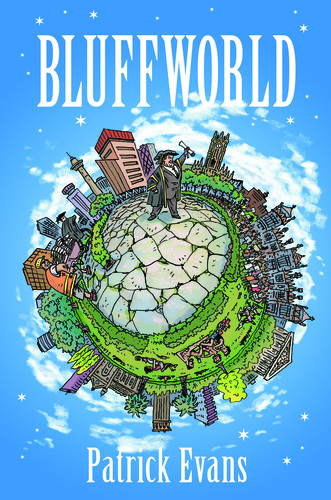
Bluffworld by Patrick Evans – 2021

Bluffworld is a funny, horrifying, thought-provoking read, set in academia in an alternate Christchurch. If you have ever experienced the liberation of information-free decision-making, wait till you read about the helium float of meaning-free discourse! Thomas Flannery, our narrator, sits on the toilet writing his personal bildungsroman Bluffworld – although there’s not much personal development to report. We follow him through his career and along the way we learn the difference between bluffing, bullshit, and horseshit.

The English faculty of the College of Arts, where Flannery works, is the epitome of colonial snobbery and sloth. The hierarchy threads through the faculty, continues offshore, and peaks at the “fantasised Oxbridge life”. When the university builds a new campus, the faculty academics are delighted to stay in their “diminutive mock-Gothic” Oxford, they are a “strange combination of gentlemen’s club and sheltered workshop”. Flannery exists among, and by, bluffing and skiving, and the disparaging of indigenous writing and knowledge – a vilified faculty member dares to champion “Pacific writing”.

The faculty is predominantly male – and puerile ones at that; the book is smeared with scatalogical references and off-colour humour. A colleague says of Flannery’s trick of lecturing on the classics using only the first chapters, paragraphs, or, in the case of Moby Dick the first three words, that he had “turned ejaculatio praecox into a mode of literary criticism”. It’s not surprising it was written on the toilet, many key scenes occur in the loo, and the end of life for the books is … well read Bluffworld. 

It need hardly be said that the blokes are a misogynistic lot. When Flannery makes a serious misstep in judgement, he is puzzled why the women of the faculty are as angry as the boys – “I hadn’t had a relationship with any of them, had I – ?” It is only at a distance we read of a woman aggrieved, a woman despairing, and in one case, Sally, a woman having a successful career and relationship post-Flannery.

Appropriately, Bluffworld is full of plagiarisms, the cover is à la Discworld, the section headings are all stolen. It has copious footnotes, by a second narrator, which are disparaging, pointing out examples of plagiarism and bad grammar (our man has problems with direct and indirect pronouns). They explain references and words to the reader – often fussily and unnecessarily: ‘Meccano’, the card game ‘Snap’. They mark non-English works as those to “Ignore”.

The writing is reminiscent of other styles as well, the English faculty has the quirkiness of the academia of Robertson Davies, and as the book progresses, and things get more bizarre, we end up in a Soviet era style satire, with the university buildings shapeshifting while inhabited, and committees and subcommittees being formed with the members having no idea what their mission is. With the dissolution of the faculty, the staff pose in academic gowns for tourists, take guided tours, sell baked potatoes from a cart, and lecture standing on a box outside Cathedral Mall. Flannery helps a colleague, Bevan, in his bookshop, selling books from the faculty library – their stock gradually becoming overwhelming and giving them rashes and coughs. 

Somehow Flannery has absorbed enough knowledge to bluff a few book sales, “like Post-it notes that had stuck to me as I passed” – after all he did unwittingly absorb some Hungarian while having an affair with Lára, the Hungarian wife of a colleague. But basically, Flannery’s career is a steal. He also lives in other people’s houses, and he feels himself turning into various of his colleagues. He looks in the mirror and sees “not Everyman but Anyone”, he catches his reflection in a dark window and looks “Like a narrator, like a writer. So Jeremy Irons”.

There is a good deal of mistaken identity throughout Bluffworld, one possible reason for Flannery’s success is that it isn’t really him who is meant to advance. The reader starts to wonder if some of the characters even exist – is Flannery’s fellow student Manatine real? He is and he isn’t there a lot of the time. His association with drugs adds to the confusion, and his name suggests the manatees who confused sailors when they were seen to resemble mermaids. Manatine “made sense, as long as he was speaking. When he stopped, he made no sense at all.”

“Has anyone ever said anything original?” Amidst the fun is the message about knowledge being a cumulative process; building on previous thought, adding to it and re-shaping it in a new environment. Enriching ideas with indigenous knowledge, with new experiences. Plagiarism is theft, and when what is being plagiarised is European writing and you are in a far-flung colony of ‘home’, the theft unmoors the works from their meaning and context. People will start believing in anything once communication stops gesturing to the “Lacanian Real” – once it becomes untethered from an underlying reality.

Flannery is the villain of the piece and also the victim. There is a parallel drawn between the academic split with relevance and the followers of the Heaven’s Gate cult, who committed suicide so they could be taken up into a spaceship that was travelling behind the Hale-Bopp comet. Flannery becomes seduced with the “vision going forward” “scholar-managers” nonsense of Super-Iggo, the Vice-Chancellor brought in to corporatise the university. Listening to Super-Iggo’s stoner-type verbiage gives Flannery a hard on, the jargon enters the sex talk between him and Sally. But it isn’t Super-Iggo who actually does the reorganising, it is a small drab man with food stains on his tie who does the dirty work. 

Bluffworld is laugh-out-loud funny, but despite its ridiculousness and its cynicism, it has a serious theme. Sally ends up fronting a show for Viscera Entertainment, and in one relentless grilling of a former colleague of Flannery’s, she explains the demise of the humanities is due to bad communication, because “no one reads the stuff, no one practises what it preaches anymore”. She points to the National Library’s culling of over 500,000 of its humanities holdings. The suggestion is that we are losing links to our literary heritage by failing to carry that heritage into the present time and place, a move which would have enabled the people of Bluffworld to adapt in a wise, not meaningless, way – to not end up with a university totally comprised of administrators.   

“It’s our heritage.” Flannery witnesses books going to be pulped, there is a moving honour roll of titles soon to be gone: Pacific, European, American – Art, Poetry, Philosophy, Literature. Once written knowledge is devalued, all that is written becomes suspect. Flannery knows he is guilty, knows what a loser he is; when Sally is interviewed on U.S. TV about a book she has written, he knows it will be about him, and knows how awfully he will be depicted, because he knows how awful he has been. When he hears there will be no more in-person lectures at the university, he mourns the loss of the intimacy of student/teacher relationship – something he never bothered nurturing.

We leave Bluffworld with Flannery ready to take off in the helium bubble of administration, untethered, but far from free. As I say, Bluffworld is a funny, horrifying, thought-provoking read – and possibly set in a not so alternative reality!  

Posted in Book Review | Leave a comment

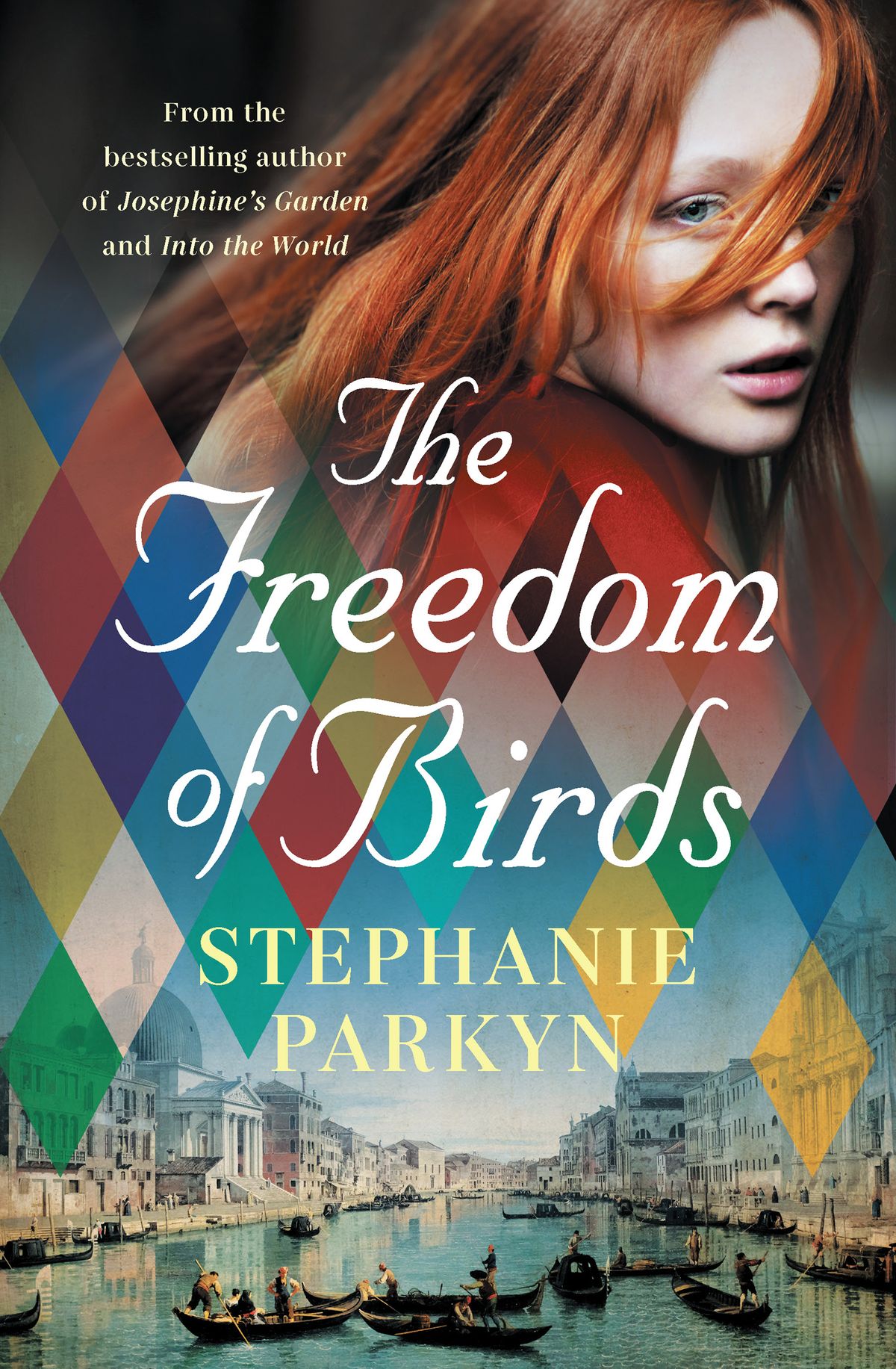
The Freedom of Birds by Stephanie Parkyn – 2021

Europe, the beginning of the 19th Century. Hopes of an enlightened age arising from the French Revolution have been dashed by The Terror. Napoleon has forced the French domination of most of continental Europe. The lands are far from settled – the citizens not agreeing that “the French had given them equality and freedom”. The unrest means Napoleon’s army is always on the hunt for more men and boys. Amidst this backdrop of colonial unrest, emerging nationalism, and bloody conflict, three young people are growing up, searching for who they are and to whom they belong.

Rémi and Pascal have spent most of their lives in the Comédie-Italienne in Paris, orphans who looked to Gianni, master of the commedia dell’arte, as their father. Pascal is a costumier, set-maker, and lute-player. Rémi is an aspiring actor – those readers who know the author’s Into the world, will recognise Rémi from the brand on his arm, inflicted by his mother Marie-Louise before abandoning him, as proof he was her son. Marie-Louise has returned to Paris, and she seemingly kidnaps the boys and throws them “into a den of wolves”.

Saskia is a contortionist in a Russian circus. Abandoned by her mother, she looks to bare-back-rider Svetlana for comfort. Saskia is kidnapped by a priest, “Father”, and held in slavery. When the boys are released (they had been hidden from those searching for fresh troops for Napoleon’s army), they flee Paris. When Saskia gets her chance she also flees, and the three meet up and become travelling entertainers: a storyteller, a contortionist and a lutist: “You couldn’t get more freedom than the life of a travelling storyteller.”

The three performers have political and civil unrest roiling around them, they are telling French tales to increasingly nationalistic audiences, and Rémi is always pushing the boundaries with his storytelling. It is also the time of “these word thieves” – the Brothers Grimm. Stories being set down in books is a threat to storytellers, and it determines which stories and which version of those stories will persist. “We must be able to perform our stories or how will we remember who we are?” However, Saskia finds the concept of stories in books alluring, it would mean she would no longer be dependent on men to tell her tales, she could read them herself – if only she could read.

Saskia doesn’t know where she is from, and when she does discover the truth about her parents, it brings no peace. Like the boys, she has a facility for taking on personas, sometimes she is Sebastian, well aware of the dangers of being a young woman on the streets. She is tough and adapts to wherever she finds herself. Although Saskia doesn’t know who she is, whose tales are hers, she does recognise Little Red Ridinghood as “A lesson for girls not to stray” and she wonders “where were the tales for young boys, warning them not to become wolves”? Once she learns to read and write, she determines she will write her own stories.

Women’s art features a lot in the story, full of rage, betrayal, and ongoing struggle. In Venice, the wealthy and political Colombina re-stages The Taming of the shrew to highlight the subjugation of women, casting a bearded actor as Kate, making him bow down in submission at the end. She alters the end in her staging of the Italian version of Romeo and Juliet, asking if blood feuds can ever be overcome and true peace be achieved – resonating with those wondering what the splitting up of the alliances shoring up Napoleon’s empire will bring. The boys are used to being Frenchmen in French territories, but slowly they start to be viewed as colonisers – Napoleon’s fortunes are beginning to turn, “All my life I had lived in a world where Frenchmen were hated and feared, but never powerless.”

The story ranges across Europe: Paris, Marburg, Venice, Milan … In Venice each of our characters finds love, and each finds conflict in their relationships. Although Rémi is one of our heroes, he is also an egocentric child in many ways. He sits for Colombina to paint him, and feels embarrassed and belittled by what would be a common arrangement for a girl sitting for a male artist. He is shocked that Colombina would put her politics ahead of her romantic feelings, put her love of place, people and heritage ahead of her love for him. This after his seeing the gaps in the city left by Napoleon stealing artworks and irreplaceable manuscripts. Given Rémi’s abandonment it is easy to understand his self-absorption.  

A theme through the book is the abandonment of children. There are mechanisms to enable women to leave their children where they will be found by churches. Young boys are routinely rounded up as fodder for war. “Some noble families married their unwanted daughters to God”. In Venice “The hospital has been taking foundling children for hundreds of years”. Sometimes the mothers left signs with their children, hoping for a later reuniting – a card ripped in half, a brand …

The characters are rounded and interesting. Rémi’s tale is written in the first person, Pascal and Saskia’s stories in the third person. Pascal is more sympathetic than Rémi, his main interest for many years being Rémi not himself. When Pacal does find someone else to love, circumstances tragically intervene. And there’s Saskia – always dreaming of the circus, until her dreams finally pack up their tents and “She saw the wagons rolling away”. Saskia who has more courage than all of them, putting herself in terrible danger to save the one she loves.

“We are cowards … we do not want to go to war”, comments Pascal. But Saskia does go to war, as do other young women for one reason or another, and they see the horrors of the battlefield first hand. Rémi, Pascal and Saskia each dream of ideal pasts: in the Russian circus, in the Comédie-Italienne. But as they grow and find out the truth of their childhoods, their dreams fade. All three eventually realise how unfair they have been in their disappointment in their mothers, their realisation that mothers have reasons for their choices, if they have a choice at all – women too want agency and freedom to move.

The Freedom of birds speaks of amazing women who the young people meet along the way, each of whom deserves a novel of her own: Katherina in Marberg who had sung for Mozart; Columbina in Venice a painter and director; Margot in Paris with her tragic history and eternal hope; Natalie in the French countryside helping a waif who washes up at her door. There is a great use of anthropomorphism in the novel too; the “skinny dogs” and “goats” who would gather to hear the stories in the town squares, the priest is a “crow” or “raven”. Colombina’s paintings are of therianthropes, half human, half animal. Saskia longs to be a vila from the tales Svetlana would tell her – a woman who can shapeshift into a falcon or owl. The reader worries about Henriette the horse.

The writing is plain and simple storytelling, much as Rémi would perform, allowing the story to entrance the reader: “Besides a story was so much more than truth.” The evils of colonialism are laid bare, despite a few good outcomes there is the plundering, the massive loss of life, and the imposition of an alien set of values: “Napoleon may have emancipated the Jews in all his territories, but overcoming prejudice was a slow business.” A subjugated people will always rebel. And the novel emphasises the importance of art and storytelling in rebellion: “If we lose our art, who are we”. It is stories that give us hope when all seems lost: “The Innamorati were always reunited in the end.”

There are some genuinely moving pieces in the book, such as the denouement of the performance of Guilietta e Romeo, starring Saskia and her lover Cristo. And there are the horrific scenes of war. There are the tensions and squabbles between the three young people, their reunitings, and their partings. Those readers who have read Josephine’s garden will recognise the setting of Versailles and the background of Malmaison. And if they are anything like me they would have gasped at the exquisite reappearance of the “orange ape”, she too deserves a novel of her own.

“The question for me has never been: Where do I belong? It has always been: Where will I go next?”, The Freedom of birds is a sweeping picaresque novel of political turmoil, the desire for freedom, the role of art, and most of all it is a tale of friendship. It is a standalone novel but is enhanced by having read Into the world and Josephine’s garden.

Posted in Book Review, Historical | 1 Comment

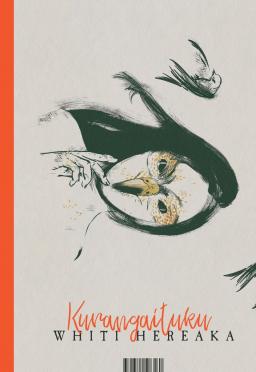
Kurangaituku by Whiti Hereaka – 2021

Kurangaituku graces us with the story of Hatupatu and the bird-woman from the female perspective. It tells of the coming into being, and fading from existence, of the universe, the natural world, and the individual. It asks why we learn about the death of Maui and not the violation of Hinenuitepō; why we are taught history from the male point of view. It demonstrates the power and destruction of language and shows how ‘love and creation’ are just ‘revenge and destruction’ seen from another perspective. It is one of the most beautiful books I have ever read.

Kurangaituku emerges from the void of Te Kore into the dark of Te Pō. With the cleaving of the sky from the earth, there is light, and she exists among the birds of Aotearoa, the birds whose consciousness sang her into existence. With the Taupō eruption, she is entombed. She emerges after millennia to find another type of creature has arrived in the forest – the Song Makers – the Māori. “I had admired the birds who had adapted to their niche in nature, but the Song Makers could adapt the world to suit their needs.”

Lurking near the edges of human society, Kurangaituku learns to weave and to carve, not recognising the rules of male and female. She experiences language, and although “… it is an act of love to learn a language, an act of becoming”, she is re-formed by those from whom she learns her language. As the birds sang Kurangaituku into existence, so too the language of humans starts to agonisingly transform her into the pain-wracked female form. Her transformation is both physical and literary – her claws that are ideal for weaving are told as claws for attacking; she is portrayed as a warning.

The Song Makers don’t grasp “that all creatures that dwell in the forest do not just live there, but they make up the forest”. Kurangaituku’s eating of the brains of birds to understand their experiences is seen as monstrous, whereas hunting and eating birds for food is seen as necessary. The collective existence of the forest is riven into those with power and those without, those with standing and those without, the concept of Mōkai, slavery, emerges. The relationship between Kurangaituku and Hatupatu is complex, loving, abusive … “He named me Kurangaituku. And I was undone.”

Kurangaituku proceeds as in a love story, but she is an innocent, unused to lying and deceit: “How could anyone treat a person that way, with so little regard? If I had been a person that would have made him monstrous.” She recognises Hatupatu as a thief and a murderer, he inflicts on her the most horrific death – but she struggles with desertion. “If only our relationship has been hunter and mōkai.” She exists in the love of their meeting in the forest – “But that is an illusion, a game we all play – the idea that any of us can truly understand what it is like to be another … Just as this story was never really mine. It can only ever exist in the space between us.”

There are many times in the telling of her story when a sphere, a rock, an eye, expands to encompass everything and then contracts to be an individual. The geography of the land is a part of Kurangaituku, as it is with the patupaiarehe, those beings akin to the corporeal and ambiguous Sidhe of Scotland and Ireland and not to ethereal butterfly-like creatures called fairies. There are many types of creatures, all part of a whole. But as Kurangaituku is entombed, so too is Hatupatu, there are many times in the telling where there is a searching for cracks in rocks, many times a searching for entrances to new realms. And in those realms we discover new creatures, and experience the loss of others.

“Perhaps if I wasn’t so inquisitive, if I didn’t have a need to accumulate knowledge” – in another wave of exploration Kurangaituku forges into the afterlife to seek an explanation for her experiences from Hatupatu. In this ouroboros of a novel this is both before and after her time in the forest. We travel through the geography of Māori cosmology, and through the geography of the female body. Kurangaituku is a stranger in a strange land – there are none like her to welcome her to the underworld – but there is beautiful Hinenuitepō, who re-shapes her in human form, and with whom she sits in the waters of the womb.

When Kurangaituku reverses her journey time has passed again, colonisers have arrived in Aotearoa. They have made a monster of Hinenuiotepō, and her children no longer go to her after death: “I could have wept for her then. Not because she had lost her power, but because she believed she had, that she no longer had any control of her narrative.” This novel is all about the real power of words, how they create, how they destroy. We talk ourselves into being through our stories. The author addresses the reader as a lover – a creature feeding on the stories the author has presented.

“Would Te Kore have evolved into Te Pō without the potential for more?” There is the urge to keep moving, but within the swirling events there are moments of quieter research and reflection. There is the examination of the woven panels and the carvings of the whare, the consideration of creation stories and the placing of characters. But the story can’t not be told, “… life doesn’t seem to respect dramatic pauses.” In passing there are the cries: “If only, if only, if only.”

The physical book Kurangaituku is beautiful. It is printed tête-bêche, and the central tellings of Hatupatu and the bird-woman interweave as they pass each other from opposite directions. In whichever order you read the book the story works, and whichever way you read the events the story changes. The proof of Hereaka’s words is in the readers’ hands: words are power, Gods are immortal until men stop telling their stories.

As Hilary Mantel did for Thomas Cromwell, Hereaka has given the opportunity for redemption to a usually reviled character. Like Ursula Le Guin with her The wife’s story, Hereaka has shown us the depths of our preconceptions. But Kurangaituku is so much more than objective observation. As I read, I was reminded of the whakatauki: E koekoe te tūī, e ketekete te kākā, e kūkū te kererū. There are many voices, many points of view. And the tragedy at the heart of the novel is the silencing of the voices of the birds, of the women, of the colonised: “It is a privilege to be heard – and not one many are allowed.”

“I had come all this way following Hatupatu, hoping for a chance to balance our story. To avenge my own death by his hands, to satisfy utu. And now I was left here on my knees with a mouth full of dirt.” I don’t have the words to express how good this book is – read it!

Posted in Book Review | 4 Comments

She’s a Killer by Kirsten McDougall – 2021

Our protagonist is a woman in her late thirties, whose name we know only from the sleeve notes – Alice. We learn through the novel that Alice has had a not-too-unusual upbringing, that she is a very bad judge of situations, and that as a child she had an invisible friend called Simp – the kind of friend who advises eating all the chocolates, or burning down the house. Simp has returned – Alice’s boyfriend has left her, her best friend Amy is starting to drift away, and Alice is facing the question that we all face: “Yes, it was a mountain of shit and it was avalanching down on our heads. But what was I to do about it?”

Alice lives in a future adjacent to ours – there is a king, there are only two universities left in Aotearoa, water is severely rationed. The inevitable result of the inability of wealthy nations to tackle the climate crisis has led to world-wide disaster. The New Zealand Government has been almost ruined by the last pandemic and has agreed to accept huge numbers of ‘wealthugees’ – those privileged enough to escape their own countries, and too selfish to use their wealth to help anyone but themselves. The population of Aotearoa has increased by half a million in the last eighteen months.

There is rioting in Palmerston North, people are being killed, the wealthugees are ‘assimilating’ by creating a parallel Aotearoa and bunkering down in it – extolling the culture, environment, and safety of their manufactured paradise, deforesting to build ideal fenced forests. The Government has agreed to sell a piece of DOC land in the Wairarapa to developers – ancestral Māori land. The developers are the same company responsible for the destruction of Juukan Gorge in Australia, and who use child labour to mine for cobalt for iPhones in the Congo.

We first meet Alice as a bored employee in a university enrolment department, where she has worked for fifteen years. “I’m not an activist, I’m an observer”. She acts out her boredom by spilling sauerkraut on people, basing her right to criticise others on her confidence in her own superiority: “The power imbalance was like sniffing petrol fumes – bad but so good.” She fantasises around her own compulsion to hurt people. She is surrounded by students from “the most anxious generation the world had produced”, she works alongside new employees who want to quickly advance to positions of power. She sits stagnating in the middle, finding it impossible to do small talk in the time of apocalypse. She is one point off being a genius, and lives with the albatross of unfulfilled potential hanging around her neck.

“This was the world now, a living cartoon”, Alice is at once obsessed with eye makeup and the well-being of the plant growing through the crack in the bench top in her grotty house. She lives downstairs from her estranged mother, separated by a sheet of plywood – they communicate using Morse code. Her friend Amy, whose life she prides herself on saving, is an overachieving mother of three, a prolific fruit preserver, and exercise fanatic. Amy’s husband has become involved in the Wairarapa bunkered community development – an association Alice cannot fathom.

Then Alice meets an unusual wealthugee, Pablo, who wants to enrol in the long-gone Russian Literature course at university. They become involved, Alice not sure if she should worry about his tendencies to strangulation or saying things like “We’re going to kill them all”. It appears Simp was paying attention during Alice’s abandoned psychology studies, and she provides a soundtrack of possible diagnoses. Alice is more sociopath than psychopath, there’s a good amount of laziness to her condition. Then Pablo’s fifteen-year-old daughter arrives. She is like Alice but over the threshold of genius – Erika is aware and active. Alice finally gets the trigger she needs to develop a real personality – but “Hang on a minute, you never said anything about bombs”.

She’s a killer is a brilliant analysis of the present condition of cognitive dissonance. All those who pretend things are normal when they are patently not; hanging onto things known to cause others damage, whilst expressing deep concern for the damage done to others – “No one wanting to take the blame.”

Alice mentions starting to read Anna Karenina from the epigraph, and the epigraph to She’s a killer is a key, Jung defining fate as an exterior expression of an unconscious inner situation. Alice’s lack of empathy and lack of urge to fulfil her potential can be seen as the general malaise that allows global crises. For much of the book the urge to make a difference is framed as pointless and unnecessary – and then Alice starts to wake up: “… it felt like I’d been asleep for a very long time.”

It might sound like She’s a killer is a weighty read, but it is very funny. For those from Aotearoa, the reference to the aging politician who is still around, and who is in fact a cloned “puppet belonging to the dying generation of boomers” will resonate. The drama school students bowing down before the acting deities. The extreme scenarios are funny, yet they are worryingly believable – Pablo having to return to China to help negotiate with rogue Chinese dissidents to free his ex-wife, a sex-blogger, who is being held hostage as she is suspected of being part of the government’s propaganda ministry – an inventive way to get Alice alone with Erika? Or all part of the conspiracy?

The two-degrees-of-separation of Aotearoa makes the coincidences in the plot believable – a key player ends up being a person we meet in Alice’s first job – but also adds to the sense of manipulation. You feel, like Alice, you are being played. And the book makes you feel, like Alice, defensive: “Well, I’m glad my personal failure is of use to someone.” Whilst asking the hard questions, the novel is also liberating: the runner who realises she can just stop training; Alice realising what a gift of privilege it is to live long enough to develop lines on your face; accepting that much can be explained by “Most people are scared of free will”.

Erika is a great foil for Alice, she is what Alice might have been, may yet be, had she been one point more intelligent. But is that a good thing? – “I wondered what else was in there. Curare-tipped arrow? Garrotte?”. Is what Alice has become involved with “… just another self-interested interest group – with guns”? This is one of the central questions of the novel, are there such things as “Ethical killing. Expedient violence”, or are they yet another expression of colonial oppression? What other solution is open for those “running from their lives, then wondering where their lives went”.

She’s a killer portrays us as “the predators – outside the predator proof fence”, even more of a statement given I read the book as COP26 failed to make any meaningful plans to rescue our planet. There are descriptions in the book that gesture to what is at stake, not for humans of privilege, but for the earth – a sighting of a stag in the night; the description of a fragment of virgin forest: “Those hills were still fully possessed of themselves.”

In many situations fences are a declaration of war – but what will Alice do about it? Her life is flashing before her, Erika points out a passage of Tolstoy: “I have discovered nothing. I have only perceived what it is that I know” – but what will Alice do about it? A superbly challenging book – read it!!!

Posted in #yeahnoir, Book Review | 3 Comments