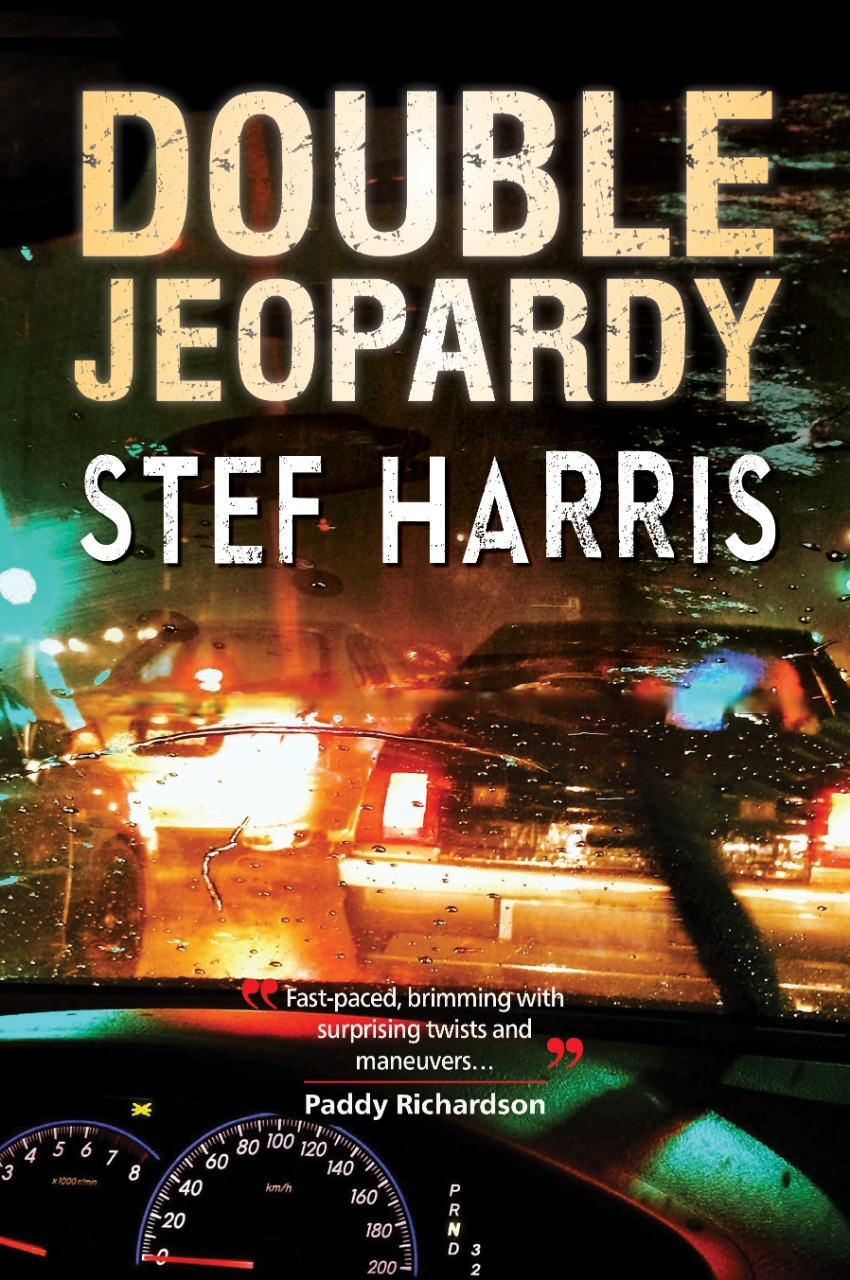
Double Jeopardy by Stef Harris – 2023

Frank Winter is a grumpy cynical ex-sheriff who has been working as a cleaner for the last fifteen years. He likes his drink and he “looks like Johnny Cash on a three-day drunk”. Detective Nunzio Arabito is a twenty-nine-year-old strategic analyst for the Boston Police Department, moonlighting one night a week as an Italian chef. He is responsible for the Prevention First programme and is idealistic about minimising crime and preventing recidivism.

Frank and Nunzio come into each other’s lives when, after twenty years, Barry Krupke is paroled from prison. Krupke has been serving time for the murder of one woman and the abduction of another; he was found not guilty of the murder of a third woman. Nunzio is keeping an eye on Krupke, making sure he stays out of trouble. He is also keeping an eye on Frank, because one of the likely sources of trouble for Krupke is Frank, the third woman being his daughter, Evie. When the verdict was passed, Frank was filmed on national TV, in his police uniform, waving a firearm and saying he’d gun down Krupke if he ever got out of prison.

Needless to say, that incident put Frank on the road to becoming a humble cleaner – although he says the booze was sending him that way anyway. But when he hears Krupke is out, and when he loses his cleaning job over an altercation about his suddenly non-existent pension fund, Frank has free time to consider whether to act on his historic threat or not. And Nunzio is savvy enough to guess where those considerations might lead.

Frank is racist – would never buy a Japanese car because of the war, assumes a black man would steal a camera. He is sexist, grumping that women wouldn’t do as they were told, using language such as “titty bar” and “two-bit street whore”. He is homophobic, feeling uncomfortable around gay men. But he loves his dog to bits, is relaxed with a transexual woman, and as we learn his back story, his behaviour towards his estranged wife Mary is tender and moving.

Frank becomes quite protective of Nunzio: “He should be a social worker – he certainly wasn’t cut out to be a cop.” Nunzio is a delightful character. He is humble, putting up with the banter coming his way at the station, and with being treated like a dogsbody. But he is persistent and very smart. He is also self-deprecating, recognising that he was being brave at one point because “the fear of being ridiculed overcame his fear of sudden death.” Despite his bravado he knows he looks “about as intimidating as Tintin”.

Krupke studied while in prison, stopped drinking, took a course on empathy, and worked out to peak fitness. He also started an online business: “Just like Amway, but with guns”, and is making good money. He’s clean, sober, and knows he can’t be tried again for the events of twenty years ago. But then he discovers Frank is still holding a grudge – and things start going seriously awry. Krupke has one thing in common with Frank – both “always had a tendency to rush in a little heavy handed”.

The plotting of Double jeopardy is great, leading up to a thrilling denouement, that makes Frank have second thoughts about at least some of his prejudices, and about his fitness. All three main protagonists develop through the book, some courage seeping from Frank to Nunzio, and optimism flowing the other way. Krupke realising the difference between the performative radicalism of his United Militias of America, and the messy reality of the field. And there are great secondary characters, and indications that some of them will return if Frank and Nunzio ever get together again, which would be a very good thing.

Posted in #yeahnoir, Book Review | Leave a comment

Queen, King, Ace by Olivia Hayfield – 2024

“Britain needs someone to believe in right now” – its citizens still reeling from the aftermath of Brexit and the badly managed Covid-19 pandemic. Ace Penhalagon, who has risen to Wimbledon and Olympic glory, appears to be their knight in shining armour – “But yet again, time and fate were playing their twisted games.”

Queen, King, Ace is another wonderful mash-up of romance, history, social commentary and #YeahNoir, following on from Wife after Wife (Henry VIII), Sister to Sister (Elizabeth I) and Notorious (Richard III). Ace Penhalagon is “a little Cornish boy who knew nothing of his roots”, fostered by the mesmerising magic-wielding Merle, and with troubled foster siblings Lockie and Faye. Yes, this time we have King Arthur and his entourage mixed in with the lives of the modern Tudors, with a smidgeon of Plantagenet thrown in.

Eliza Rose, now CEO of Rose Corporation, with Harry acting as Chairman and ‘consultant’, is still grieving and guilt-ridden over the murder of her “soul mate” the “enfant terrible of the arts world” Kit Marley. Kit is still a smoky lingering presence around Eliza, and she is heavily dependent on Kit’s lover, Will Bardington, for support. Will also shelters her when she becomes involved with Ace, the online trolls and offline stalkers making her life a misery.

Eliza falls for Ace, and vice versa – both wanting to use the publicity power of Rose Corp to further Ace’s messages of tolerance in an increasingly divided society, and of positive action in a time of ecological disaster. Ace is keen to use his recently gained high profile for good, knowing the public have given up on politicians, yet still crave someone to give them hope.

Ace and Eliza’s plans are a worry for Harry, who fears Ace’s messages may get too political and put Rose Corp businesses at risk, especially when they are still recovering from the impact of Covid lockdowns. The tension between those who want to give the planet a break, and those who believe the only way out of the mess is to keep the accelerator on businesses to fuel the economy, is woven into the story, as is the anonymity of the internet facilitating the terrorising of individuals, especially women.

Queen, King, Ace is not all social commentary, it is a glamourous romance – there’s even a trip to the Met Gala, that annual bizarre fantasy parade. Much is made of the human tendency to hark back to a ‘golden age’, one that probably never existed apart from in nostalgic tales of history. Eliza and Ace want to (re)create a time of harmony and inclusiveness, complete with a “round table” of similar-thinking influencers, reported loudly by the media as a “QUEST TO PUT THE GREAT BACK IN BRITAIN”, but was there ever a time when Britain was great, or at least a time when it was great for everyone?

The plotting of Queen, King, Ace is very clever, especially if you are familiar with Arthurian legend. When a child, Ace (Art, Arthur) easily takes an ancient bronze sword out of a secure display cabinet. His sister Faye, a “neo-pagan and a wiccan” with a conduct disorder, falls in with the conspiracy theory crowd, she has a son called Dread. Lockie is a spookily beautiful surfer with a troubled past who took off for the antipodes – and who returns to appear to Eliza as a ghost on the beach, with a bit of a Kiwi accent, and a few words of Te Reo.

Once Eliza and Ace head out of London into “King Arthur Country”, the weather becomes atmospheric and drives the mood of the story: “Droplets of mist were swirling in the air, clinging to their hair”. They are drawn to a denouement in a cottage not far from Tintagel, and to a fate that recreates events through time. The speed of the recreation takes even the characters by surprise: “I just didn’t expect it to happen so quickly.”

Queen, King, Ace is a compelling read. I would recommend reading the previous books first, to enjoy the continuing stories of the characters. However, this instalment can be read as a stand-alone, with some backstory provided. It is both an intimate and a majestic read, with the mists of time resolving into an eternal pattern, which for Eliza was “as if she were seeing it all play out from the sidelines, as if she’d left her body.” And the resolution hints of further fateful mischief to come – here’s hoping!

Posted in #yeahnoir, Book Review, Historical | Leave a comment

Gunflower by Laura Jean McKay – 2023

Gunflower is a collection of stories written by Laura Jean McKay. The collection includes stories written over two decades, there are short stories, short short stories, and flash-fiction-length stories. They are grouped into three sections: Birth, Life, Death, and they range from laugh-out-loud funny to truly devastating. They deal with the arbitrary relationships between humans and non-human animals, between humans and humans, and between humans and nature.

Birth. Why do we buy houses and coats for some non-human animals, and eat others? – “By the time Jeffries leaves it’s almost nine. Ed hasn’t defrosted the foxhound or fried the pony.” One story describes the ghastly lives of those condemned to a battery farm: “In the last days, the giddy, heady urge to birth slowed and then stopped and we shed hair instead.” There are stories of lost children – lost in the back of hooning cars, lost at birth: “Cara’s hair and fingernails can continue to grow in the hospital only kilometres away.”

Life. What do we deem important, what do we fight for? How do we fight when our governments take away our choices? – “Who hadn’t decided to haul-arse over three nauseatingly hot states to flag down an abortion ship?” And as governments take over control of women’s bodies, trainees are taught how to torture animals to make examining them easier: “The animal bucks against the stall. Melissa frowns at the cow. ‘I don’t know why she’s so unhappy today.’”

Death. The extinction of wild animals: “I stopped sleeping in the summer we went to the reef.” The extinction of domestic animals sinking under floods. The extinction of respect, the blurred line between the treatment of a wild boar and Sarah, a woman who goes on a boar hunt: “Ripping hooks.” The extinction of community, the Covid lockdown testing people’s willingness to protect each other. The inevitable extinction of all, yet meanwhile the exhausting cycle of trying to be on top: “When you’re in the state I’m in, the local waterhole is a good and a bad place to go.”  

Written by the author of the wonderful The Animals in That Country, Gunflower is a stunning collection of stories showing how cruel and selfish humans can be. The stories allow the reader to see familiar things in a totally different light, and to ponder that there must be a better way to proceed. Highly recommended.

Posted in Book Review, Short Stories | 1 Comment

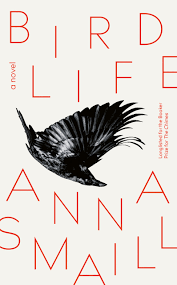
Bird Life by Anna Smaill – 2023

Dinah Glover has fled to Tokyo from Oamaru, Aotearoa. She is living in prime real estate Itabashi, yet her apartment building and surroundings are weirdly deserted. Yasuko Kinoshita fled to Tokyo from Sapporo years ago, she is beautiful, immaculate, and stylish, yet also rude and coarse.

We first glimpse the two women in an extraordinary prologue describing various people in Ueno Park. We see the two women, both in distress, yet somehow privately coping. We know they will meet; we know they are separate, yet they will be drawn to each other. “How terrible it is, suddenly, to exist in a story.”

Both women work at an engineering and science university, both teaching English as a second language. Dinah is one of four native English speakers, who are kept quite separate from the Japanese ESOL staff. She dislikes the work, and is offside with the English language administrator. But all that changes when she is befriended by Yasuko.

Dinah and Yasuko are both dealing with loss, and neither are initially completely forthcoming with each other about the nature of their loss. The reader gradually discovers the burdens the women are living with as their stories unfold. They are both fragile and tragic: “There was not much holding a person together”, yet they are incredibly strong.

The women cling to their daily patterns: “Routine was a kind of second-order magic” – Dinah sleeping outside in a park each night; Yasuko carrying tinned salmon in her Louis Vuitton handbag so she can feed stray cats. It was a cat who first spoke to Yasuko when she was 13, “‘Silly girl’, the cat said” – the beginning of her strength and her despair.

The men around Dinah and Yasuko are a source of threat, disappointment, and grief. There is Dinah’s twin brother Michael, who is an integral part of her. There is Yasuko’s son Jun, who she similarly sees as part of herself, and there is her untrustworthy and untrusting father. Tokyo is full of dangerous or unpleasant men, especially when clumped together in groups: “Yasuko was so tired of them. Deeply tired. In her body. She was tired of all the extra, entitled parts of them …”

Each person suffers in their own way, yet how miraculous it is when they manage to help each other; when they see others as useful, or at least as benign. The plotting of Bird Life is careful and rewarding, the reader finding out information at just the right time. The beating heart of the novel comes from the rhythms of the two women.

One of the great characters in the book is Tokyo, with its crowded subway stations and its empty parks. Its shiny basement food halls and its dingy hole-in-the-wall eateries. Its designer departments and its homeless. Its beautiful sunny days and its casual earthquakes. The contrasts are echoed in the contradictions and jarring swings of Yasuko’s demeanour, and in the confusion and insecurity that are part of Dinah’s strength.

Bird Life is an achingly beautiful description of how people deal with grief, with neurodiversity, with negotiating others; “Here we all are, sending up this light and warmth. It shouldn’t be hard just to leave everyone to get on with it by themselves.” The book conveys the enormous energy it takes to live with having lost someone, or something: “You could fall into despair about having lost a gift so young.” I really can’t recommend this book highly enough.

Posted in Book Review | Leave a comment

His Favourite Graves by Paul Cleave – 2023

Sheriff James Cohen is struggling with an aged and impaired father, a recalcitrant teenaged son, a wife who loves him but who has left him, and growing legal and financial woes. Then local crime-writer/heavy-drinker Peter Conner calls in to say his son, Lucas, is missing, and Cohen’s life starts tipping into a black hole.

In His Favourite Graves, Cleave takes us back to Acacia Pines, U.S.A., the setting for his Whatever it Takes. Acacia Pines rivals the number of murderers in Midsummer with the number of its psychopaths. And the plotting of Cleave’s latest offering is, as always, complex and blind-sides the reader over and over again.  

Also as usual is that the moral flexibility of Cleave’s characters is contortionist-level. Motivation for bad deeds is presented as pecuniary, genetic, or medical. I was thinking Cleave had gone one twist, and one element, too far, in His Favourite Graves, until I looked that one element up, and as is often the case with crime fiction, the author had just done his research.

His Favourite Graves is not for the faint-hearted, its depiction of school bullying is extremely disturbing, as is the other violence that occurs through the text with increasing frequency. The novel includes teenage suicide and sexual violence.

Cleave manages to present the tragic side of events as well, the devastation of losing loved ones, especially children, to violence and the sadness of losing parents to Alzheimer’s. There is the irony of some crimes preventing others, or of some successful interventions causing worse crimes down the track.

The amplification of crime via social media, used as a means of bullying, but also as a threat to keep quiet, is cleverly plotted, as is the anonymity provided by the Internet, and its availability to those who know their way around a smart phone. The theme of intergenerational abuse is entwined with the complicity of some in the crimes of their family and friends. There is also the awful, and justifiable, lack of faith that adults will provide any protection for kids against the dangers of the world.

Cleave creates great atmosphere, there’s a large dark root-bound forest, a dank, abandoned sawmill, a small town full of the memories of past tragedies, a building storm, and an eventual deluge. “The hospital hallways smell like science class during chemistry and look like science class during biology.” The thoughts of characters, warped though they often are, make disturbing sense: “The world balances out by having only good things happen to some people, and only bad things to others.”

His Favourite Graves is a masterclass in letting your reader know what your protagonists don’t, letting them sit back and watch as the characters get into trickier and more dangerous situations. It is a stand-alone thriller, but those familiar with Cleave’s earlier work will pick up on recurring themes, and he has sprinkled his text with gestures to the titles of some of his previous books. He also plays with how crime writers get, and use, their ideas. If you are into hard-edged thrillers, read His Favourite Graves!

Posted in #yeahnoir, Book Review | 1 Comment

Audition by Pip Adam – 2023

“I tried to sigh,” Alba says. “But that banged my head into the roof.” Alba is not in a good way – she is squashed into a small space getting increasingly smaller. She is with Stanley and Drew, who are each in different cramped spaces – the three can only communicate through walls and vents. They are not sure if they are alone in their plight – they do know they are on a spaceship called Audition, and that: “This is a beautiful ship”.

The ship is propelled by amplified sound, “It had only been used as torture before but it worked for travel as well.” They decided to rebel, to stop making noise to propel Audition, that’s the mistake they have made. “We were stupid to stay quiet”, because that means they have started to grow again – it isn’t their spaces that are getting smaller, they are getting bigger. And they were giants to begin with, that’s why they have been shot into space.

The reader pieces together Alba’s story, and that of Stanley and Drew. There are many others, other giants, other ships. It becomes clear that their original stories are buried beneath layers and layers of implanted thoughts, many from romantic comedies. “Does anyone know where we are?” Stanley says. “Like in the scheme of things.” They have spent time in an indoctrination facility, the classroom, heavily sedated. Learning to think of themselves as stupid, learning to “push the switches and pull the levers and read the meters”.

But life before the classroom is a blur. Until it isn’t, and the reader learns the awful truth. Alba and Stanley had fallen into state custody, Drew is connected to their stories. But regardless of their background, they and all the other giants are seen as different, so they are judged to pose a threat whatever they have done. They are being sent off-world. If they find another planet, they will die on it or conquer it in the name of an unknowing home-planet. Those left behind will be relieved either way, relieved to have been freed of an inconvenient problem.

Alba is a tragic figure, condemning herself, holding out no hope. “She knew she was frightening, was she more or less frightening without hope?” Despite her nihilism she yearns for connection, but who can she trust? “There seemed to be no end to the men they were left alone with who would rape them”. She blames herself for her situation, she feels guilty about her despicable treatment of Stanley and of Drew, but she sees all events, past and future, as inevitable. Audition is about how that needn’t be the case – maybe the system can be organised so it is not Alba who has to change, it is her environment that can change to be a place where “Everything is in hand. Nothing can do any harm”, and she can relax enough to feel hope.

Audition is a mesmerising read, shockingly violent occasionally, and wonderfully inventive.   

Posted in Book Review, Science Fiction | Leave a comment

Some Things Wrong by Thomas Pors Koed – 2023

Is the narrator imprisoned? Infirm or otherwise incapacitated? Is he mentally compromised? Is he a detained dissident, a barefooted tramp, or has he been imprisoned for fratricide? He seems aged and frail, we know he absconds at one point, towards the coast: “Any road’s a way out with a bit of persistence.” Or maybe we are reading his imaginings as he lies dying, or recently dead?

Maybe the main narrator in Some Things Wrong stands in for any one of us, stumbling through life without the confidence of commitment: “Shambling on out of little more than habit. Or lack of imagination”? The character is a figment of the author’s imagination, but maybe too of the reader’s – whose instinct is to reach out for a protagonist with a story to tell.

Beckett shines through the prose: “A road, a tree, a country road.” And Some Things Wrong reminded me of The Unconsoled by Kazuo Ishiguro, a flow of events that the reader makes fleeting sense of to form a story – probably a different story for each reader. In Some Things Wrong, I read of helpers, maybe carers, possibly warders. The helpers are distant, for we fear becoming the people we help. I read of a woman, also a helper – but is she of the same ones, or is she different? She has required medical care, and maybe she hasn’t made it.

While she is taking our man for a walk they meet another man – it is awkward. “The possibility of there not being a door is infinitely smaller than the possibility of there being a door” – did our man expect her to always be there to look after him, is he grieving? There is a dog, there has been a dog. Throughout the book there is reference to the fine line between what might have been and what is.

“There can be neither release nor escape”, our man seems tired of life and its business, or maybe resentful of them, but feels powerless to change his circumstances and lays a “curse on their prolongments”. However, I found moments of humour while reading – especially from the two people spying on the man and woman – are they the author? The humour not being in what they (he) observe, but in their pragmatism of describing it: “Some kind of hat” “With a brim?’’ “No. Not this one.” “Like a fez?” “Unlike a fez.” “A night-cap?” “No. Not a cap” “Then?” “He’s bare-headed. Stretched out on the cot ….”

“But nothing is more ludicrous than these attempts to take it all seriously.” The book has a narrative arc and leads to a denouement – whether that takes place on a beach, in the mind, or in Hades, I think is up to the reader. As is whether we exist in the same way characters in a book do: “There is no way that I am. There are only the ways that I am seen.”

I found a lot of Koed’s prose captivating: “The absence of a dog beneath the tree. A collarless dog. Unless absence can have a collar.” I enjoyed reading Some Things Wrong, and I encourage you to read it too … and see what stories you make up as you read.

Posted in Book Review | 1 Comment

Taken by Alex Stone – 2023

Four stories narrated by four individuals, each on a continent far away from their homeland. Each story from a different time and place. The narrators are all forced to endure life rather than enjoy it. Three of the stories appear in the dreams of the fourth narrator, who passes them on to the reader along with his own. The stories are deep, ponderous, resonating – they are stories told by captive elephants.

Taken tells the story of Biligiri, one Indian elephant among many, all forced into service for the British military. They are part of an expedition into the highlands of Abyssinia (Ethiopia) in the mid-1800s, ostensibly to free British hostages being held by Emperor Tewodros. It also tells the story of Pulmulla, one of four Indian elephants being marched across Tanzania to help log the forests of the Belgian Congo, one more unbearably sad tale relating to that place, already under the de facto control of “the distant, uncaring old King Leopold”.

Then there is the story of Tant-Meisie, an Indian elephant who is part of the endless cyclical procession of a travelling circus in apartheid South Africa in the 1950s and 60s. And Taken is also the story of Hannibal Solo, an African elephant, ex-circus performer himself, who is moved to a sanctuary in Kentucky by PhD researcher Cat, who is exploring “the elephant’s secret sense”; the ability to read vibrations in the earth. Hannibal Solo: “I remember flat-topped trees, long thorns, mud fragrant with ancient life and the farts of crocodiles”.

Taken is about the importance of storytelling, more specifically, who tells the story; whose perspective endures. “So that we may not be forgotten” – each of the elephant narrators wants their story remembered, for it is in their nature to remember: “Lists are part of our being.” The elephants divert themselves by reciting their lists throughout the stories. And the stories meander from those of the main narratives: “But I digress. It’s an elephant thing …” They relate tales they have been told along the way, tales of historical and fictional elephants, and the tales told by the “djinn incarnate, a whirlwind that of its own volition has become embodied in one man” – Captain Tristam Charles Speedy, who is also enlisted on the gruelling trek through Abyssinia.

Speedy is one of the humans in the stories who is accepted by the elephants whose story he joins, as is Willie, Tant-Meisie’s companion in South Africa, and Sam the researcher in Kentucky. Speedy is disturbed and conflicted by his mission, as he was by a previous mission to “the soggy isles of New Zealand” – his misgivings serve as a contrast to the pomposity of his fellow military men. The four stories of the elephants are full of human stupidity, avarice, cruelty, and malice. “More to the point, we need ask: was cruelty ever out of fashion?” 

The elephants have their own hierarchies, and don’t have much time for other non-human animals, goats and horses being held in the most disdain. But the elephants are much greater beings than the humans portrayed, they have a weighted presence – “That is why we are called on constantly to bear witness and to anchor significant ceremonies of passage: your allegiances, your marriages, your births, deaths, farewells, homecomings and victories.”

Taken is a long read. But that is because it is told by large creatures going on long journeys. “That’s what stories are for, aren’t they? Modes of transport, they are, ways out, and ways in.” During the time it took me to read it, I became drawn into the rhythm and despair of the narrators and their fellow elephants. You read of acts of utter desperation – “Do you think he went in style?” Of the overwhelming frenzy of experiencing musth in captivity. Of the difficulties of sharing space with those not only not of your family, but not even of your kind.

There are also exquisite descriptions of acts of kindness, and gestures of gentleness – extended to elephants and humans alike. Comparison is made between the care taken with human bodies and the disrespect, even desecration, of elephant corpses. The device of having one elephant who appears in two of the stories somehow gives dimension to all the characters – and by the end of the book, I felt so sad for those lost, and I regretted leaving those still living. Much of the descriptions are richly olfactory, given as they are by elephants, who can smell emotions, intentions, and deceptions, as well as weather, flora, food, and farts.

The text of Taken is illustrated and full of fine detail of the logistics of elephant transport and servitude. One theme is that of the tyranny of guns. Tewodros took hostages so they could make him armaments. At the final assault on the gates of Maqdala, Biligiri watches from afar realising “when grasping a weapon, other senses must go, as if actively banished from further reasoning”. Armaments are left behind by the expeditionary force, “a deadly discarded litter for others to make evil mischief with”. In Tanzania Captain Carter “is more in love with the firing pin of his hunting rifle, than anything else on this earth”. In South Africa guns are in the hands of thieves in the night. And in the United States they kill children in a school shooting.

A child also dies in a random accident, and one from disease in cold damp England, far from the land of his birth. Yet, these children are honoured, even remembered, unlike the elephants who die of heat, altitude sickness, overwork, despair, plummeting from vertiginous heights …  

“We listen; that has always been our strength – or at least one of them”, and I guess Taken is saying if only we were wise enough to listen to elephants …

I loved reading this book.
Posted in Book Review, Historical | Leave a comment

Ritual of Fire by D.V. Bishop – 2023

Ritual of Fire continues the exploits of Cesare Aldo, an officer of the Otto, a criminal court in 16th Century Florence. The stench of the city and the corruption of the wealthy have followed Aldo out to the nearby Tuscan countryside. He has been in part banished, and in part has chosen to go, as his partner at the Otto, Constable Carlo Strocchi, struggles to accept Aldo as he is. Strocchi has declared either he or Aldo must leave Florence.

Added to the stench and corruption is the sweltering heat – both from a relentless summer, and from the roaring flames engulfing buildings and bodies. There are horrendous murders taking place, both in Florence where Strocchi works, and in Aldo’s village of San Jacopo al Girone. Are the murders connected? And if so, how? And are the notices being posted around the city linking them to the return of the 40-years-since martyred monk Savonarola – “the best and worst thing that ever happened to the city” – a clue, or a distraction?

For the masses, “roasting beneath the remorseless sun” and suspicious of their new young ruler Cosimo de’ Medici, the notices are tinder that sets them alight with religious fervour. As the sun boils the city and the countryside, Aldo and Strocchi race to solve the murders, and to stop more taking place. It soon becomes apparent that the victims are all linked – to members of a banned confraternity with which readers of previous books in the series will be familiar, a confraternity that had the dastardly Girolamo Ruggerio as one of its founders.

The plotting of Ritual of Fire is tight, and it is complicated by both the political ostracization of Aldo, and by Strocchi’s stubbornness in refusing to include Aldo in his investigations. Strocchi has hardened a bit since earlier instalments, and he is on his way up. But he is a walking zombie for parts of the story, having a 6-month-old baby keeping him awake at all hours. And when Aldo does return briefly to Florence, escorting a thief to the Otto, he finds he has lost his slick city ways, alienating both his superior, Massimo Bindi, and potential information sources. And then there is the complication of Aldo’s bond with Dr Saul Orvieto – their relationship at once a haven and another problem to be solved.

Despite neither Aldo nor Strocchi being at the top of their game, and the fact that “conscience and guilt were a swollen river between them”, both men do make progress. And the reader picks up clues as the story moves to its gripping denouement. The writing is a little repetitive at times – we are frequently reminded that in Florence, information and secrets are more valued that gold – but it is very atmospheric: “Ruggerio had sensed a gathering threat, like the first aroma of burning as sparks catch hold of tinder.”

One of the themes in the story is the danger of enlisting groups of young men to causes. No matter how worthy the cause, once young men are put in positions of power, bad things will surely follow. The resolution to the mystery is as disturbing as it should be given the horror of the crimes. And there is hope that Aldo and Strocchi will soon be once again pounding the beat in the political tinderbox of Renaissance Florence. And I look forward to reading more of their adventures when they are.  

Posted in #yeahnoir, Book Review, Historical | Leave a comment

Turncoat by Tīhema Baker – 2023

Kytoonoo 1 Daniel is an idealistic young man on Earth – a planet colonised by the Noor from Owteer, who have colonised many planets throughout the solar system. Daniel has decided he will help his people, Humans, from inside the bureaucracy of the Alien Hierarch. He will work hard to ensure the Covenant of Wellington, the document signed in the “birthplace of modern Earth”, is honoured.

Daniel is privileged among the oppressed, his mother is the Leader of New Zealand. Daniel sits with her in Parliament, imagining its former glory, when members were “engaging in intelligent and respectable discussion”. Now the parliament buildings are worse for wear, and Common Transfer, the Human language, is struggling to stay alive. Daniel is slowly learning to speak and write Common. It is a difficult task; Noor Transfer is mind to mind via brain implants. Some words, including Turncoat, have lost their original meaning over the years. It is a lovely touch that Human words are written in Comic Sans in the book.

Daniel is used to being patronised by Aliens, and their endless Aliensplaining, but he does get annoyed that the Aliens are always saying Human names are impossible to pronounce; he is forever being called Denial. But he finds some allies in his new job in The Chamber of Covenant Resolutions, where he will help with negotiations with the wronged countries of Earth. The countries have a wide variety of reactions to Alien colonisation, and they are burdened with always having to prove the status of their leaders, and their right to negotiate on behalf of the people in their ancestral homes.

Daniel is half-Noor himself, and he appears Alien.  He strikes up a relationship with sympathetic-to-Human-concerns Neekor. And as the novel progresses their relationship highlights the difficulties with cross-species partnerships; two people from different cultures may love one another, but can they ever really understand one another? In contrast to Daniel’s struggles, are those of his friend Hayden. Hayden is a more representative example of how Humans are routinely discriminated against. He uses drugs, gets involved with the Mutt Pack, and is a constant worry for Daniel, and an impetus for him to succeed in his crusade.

Daniel is surrounded by tokenism in the bureaucracy, but he starts to rise in Rank – the only measure that matters to the Noor, with your status being incorporated into your name for all to see. Daniel is put in charge of the Irish problem, and he eventually becomes part of organising the “now-famous Road Trip” around Earth. It is designed to gain support for the establishment of yet another bureaucracy, and pitched as an open discussion, but it has a pre-determined agenda and outcome. Daniel has some major victories, but the reader knows bureaucracy won’t change easily, and what Daniel is up against is a mindless self-protecting machine.

It may sound as though Turncoat is a heavy read, and it does deal with serious and disturbing matters – but it is also laugh-out-loud funny, and I just loved it. The situations and problems depicted are prevalent all around the world, but there are references that make it especially relevant/funny for Aotearoa readers. For example, the re-branding of the Victorious University, the throwing of dildos at politicians, blowing on the pie, and Alien servants holding weekly anthem practices, singing God Save the King, with no comprehension of the words. And as for “New Zealand’s greatest icon”, well, you must read Turncoat to find out what that is.

“But perhaps holding on to what made us Human sometimes came at the expense of asking ourselves what parts were worth keeping.” Daniel is a wonderful character, and despite the allegorical presentation of his story, the other main characters are not mere cyphers. Turncoat is funny, tragic, moving, and disturbing: “I shouldn’t have to educate you about anything. It’s not my responsibility to educate you on what you took away from us.” Highly recommended!

Posted in Book Review, Science Fiction | Leave a comment