James Cook’s Lost World by Graeme Lay – 2015

lost worldJames Cook’s Lost World is the final in Lay’s trilogy after The Secret Life of James Cook (2013) and James Cook’s New World (2014). The novels cover Cook’s three voyages of discovery, and most readers would know how the third voyage ended for Cook, and if not Lay starts the third volume with an Introduction that talks of ‘violent deaths on the fatal shore of Kealakekua Bay’ – so we read with a sense of impending doom.  In my review of the first two novels I wrote “despite … Cook coming off a little bland in the first volume, Cook’s story is compelling – and by the second volume Cook does shows some welcome weakness, self-doubt and humour” – well by the third installment we get a very flawed and vexed James Cook indeed!  He is ageing and unwell; he knows his wife Elizabeth is deeply unhappy he has left his comfortable shore job to lead the third voyage; and the expedition is sailing in vessels that are well below standard due to miserly cost-cutting – a cause of constant anger and frustration for Cook.  Ostensibly a journey to return the Ra’iatean Omai to Huahine, the voyage is actually a mission to look for a trade passage from the North Pacific to the North Atlantic.  So the leaky vessels travel from the tropics to above the Arctic Circle.  In my earlier review I also commented that “within the constraints of the prejudices of his time, Lay’s Cook is liberal, fair handed and possessed of a fine moral imagination”.  You can’t say that of the Cook in the third volume – apart from his having a moral imagination, which makes his lack of scale and judgement regarding punishments meted out to his crew and to the inhabitants of the islands he visits all the more shocking and ghastly.  And he realises this himself – being haunted by visions of his cruel and unreasonable self.  But for stubborn reasons of hierarchy he is not able to admit that the lieutenants who try to reason with him are right.  It is a tragic story, and not lacking irony: the worst offense in Cook’s eyes is the thievery they encounter as they sail around claiming any land they happen upon for the King. James Cook’s Lost World is a harrowing yet engrossing read. It is full of conflicted ideas: James King, one of Cook’s lieutenants, reports to the Lords of the Admiralty on his return:  ‘Yes, he was at times a tyrant.  But he was our tyrant.’  A great conclusion to a fascinating trilogy.

Posted in Book Review, Historical | Leave a comment

Starlight Peninsula by Charlotte Grimshaw – 2015

starlight‘I just want to be able to say I asked’ – Eloise Hay is reeling after her husband has left her for a younger woman; lacking in self-esteem she is seeing a shrink and the bottom of a lot of empty wine bottles.  She fixates on an earlier time when her previous lover, journalist Arthur Weeks, was found dead – a death that was determined to have been accidental.  Eloise, who ‘prided herself on being observant’ becomes not so observant of what is happening in the present, but increasingly aware of subconscious things she ‘knows’ about the past.  Feeling guilty about her failure to ask more questions at the time of Arthur’s death she starts asking now – about the initial investigation and about what Arthur may have found out about the lives of New Zealand’s rich and powerful.  Starlight Peninsula is a joy to read on so many levels:  It reprises characters from Grimshaw’s previous novels The Night Book and Soon – Eloise works for TV Journalist Scott Roysmith; Roza and David Hallwright (now ex-Prime Minister) are the subject of Arthur’s research etc.  It draws heavily on real political events in New Zealand politics – Kurt Hartmann is an obese German computer game champion, who made millions from a file sharing site and who has been spied on illegally by the GCSB at the request of the US.  So it is set in a familiar world – both real and imagined, and also refers to a familiar cultural heritage: Eloise finally picks up the classics Arthur always encouraged her to read – she is up to Chekhov at the time of the novel, and she quotes Yeats to Simon Lampton – a gynaecologist (and friend of the ex-Prime Minister) who becomes central to Eloise’s mission.  Amidst this familiarity Grimshaw is able to let things get pretty creepy – and for us to experience Eloise’s paranoia; due to her drinking and her feelings of guilt we often recognise oddities before Eloise does – drawing us not only into the unravelling of the mystery but also into sharing her – possibly – distorted view of events.  Starlight Peninsula is a great comment on our current political times – it talks about involuntary behaviour, individuals who think they are making decisions but who are actually acting according to group dynamics – Eloise even ends up researching mass hysteria.  ‘I just want to be able to say I asked’ – but when we get the information what do we do with it?

Posted in Book Review | Leave a comment

Rich Man Road by Ann Glamuzina – 2015

rmrSometimes I read a novel which makes me realise just how privileged my life has been – and Rich Man Road is such a novel.  It is not a literary masterpiece but the parallel stories of Olga and Pualele, two girls from different countries who end up as migrants to New Zealand – and who later meet in a Carmelite Convent – are totally compelling.  Olga was living in a Dalmatian village in World War Two during German occupation.  A misunderstanding (for which she will forever feel guilty) sees her and part of her family fleeing their home, spending time in a refugee camp in Egypt, and eventually joining up with her father and brother in Auckland.  Her story is told through her diary – which Pualele reads after Olga’s death.  Alternating with Olga’s story is that of Pualele, who reluctantly travels to Auckland from Samoa as a child and who struggles in her new country at a time of racism and dawn raids.  The two stories echo each other as the young girls struggle with guilt, a loss of identity and separation from their mothers – one physically that other psychologically.  Glamuzina has captured the innocence, goodness and strength of the two girls, and despite both of them questioning their faith it is believable that both of them would seek refuge in convent life.  The title is taken from a lovely misunderstanding; when Pualele first arrives in Auckland she is fleetingly optimistic when she hears she is going to live in Rich Man Road (Richmond Road).  It is a sad and lovely read.

Posted in Book Review | Leave a comment

In the Neighbourhood of Fame by Bridget Van der Zijpp – 2015

FameOh dear, having read reviews of In the neighbourhood of fame after reading it, it would appear I am out of step in thinking it not well constructed and over-written.  It deals with fame, what it is, how it affects people and how damaging it can be when the media and social media become involved.  A great idea, as is telling the story from the points of view of three women who are circling around ‘fame’ in the form of Jed Jordan, a once idolised rock star, now a pepper grower and in-the-shed music tinkerer.  The three women are Evie, recently returned to the neighbourhood along with her teenage son Dylan; Jed’s wife Lauren, the manager of a theatre, a job she got through her father-in-law.  And finally there is 15 year old Hayley, who meets Jed at the local park while they are walking dogs.  The voices of the three women are distinguished by writing style – but quite intrusively. Evie’s sections are straight first person, Lauren’s in an odd third person view “”You understand what he is really suggesting, and you know too that …”, and Lauren with an annoying and inconsistent lack of personal pronoun: “ Say: ‘I’m fine.”  Although the interweaving of the stories is clever, the ‘message’ of the book is spelt out rather than emerging from the narrative, and it wasn’t clear why each of the strong women revolving around the passive man had to be horribly taken advantage of by various men throughout the novel.  The writing is overworked: “This morning as you’d stood together at the window watching your awkward boy stooping in a vaguely incompetent way towards discovery, poking about with a stick like a half-blind peasant woman grubbing around for the season’s last potatoes, the tentacles of your heart flailed wildly towards what was in front of you”; “… it’s like I’ve accidentally kicked over a nest of irrational wasps and I‘m trying to get away from them, and just when it seems I have, I look back over my shoulder and there they are, busy creating a new kind of havoc”.  I often found the dialogue unconvincing and thought it very odd that one of the crucial conversations – where Evie finally becomes honest with Jed about their shared past – is glossed over, being reported in just one sentence.  But that’s just my view – I would be very interested in other readers’ thoughts …

Posted in Book Review | Leave a comment

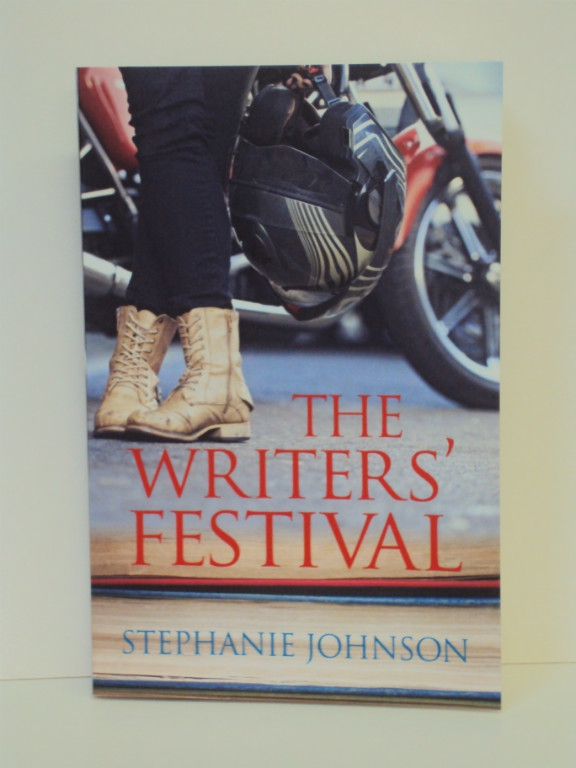
The Writers’ Festival by Stephanie Johnson – 2015

writersfestivalThe Writers’ Festival is a rollicking good read about the six months leading up to an Auckland Writers’ Festival, the Festival itself and then the aftermath.  It is a stand-alone novel but does include some characters from the author’s previous The Writing Class.  The story is told from the point of view of the Festival Director, Rae, and that of various writers – some invited to the Festival, some not.  There is an ‘Opus Prize’ too, which is judged during the novel as it is to be awarded at the opening of the festival.   Festival Director Rae’s life is a crazy whirl of negotiating across time zones: when she tells her Mum she is going crazy with the endless communicating – saying she is constantly on the phone and can send a hundred emails in one day – ‘That’s daft’ says her Mum.  Of the characters from The Writing Class we have the pathetic Gareth Heap – an Opus judge – the flibberti Jacinta, and Merle the ex-creative writing tutor with her depressive husband Brendan.  One of the Opus nominees is Adarsh Z. Kar, a gay Fijian Indian New Zealand author living in Delhi, and a previous student of both Merle and Gareth.  So there is plenty of material for politics and intrigue, and discussions of originality and nepotism within a relatively small community.  Also plenty of opportunity for Johnson to have at it at various real life authors and styles – cheekily putting extreme views in the mouths of her characters: Gareth – “he could never read those pulp writers who make millions, the droning Dan Browns and Bryce Courtenays and Di Morrisseys.”  And having the Opus Prize allows her free reign to pass comment on the existence and judging of literary prizes.  She puts together a great festival – including Frans de Waal talking about primate altruism, George R.R. Martin ‘beaming in’ to Thronies, Richard Dawkins providing nostalgia with his ‘endearing and old-fashioned’ atheism, a whole new genre of ‘rap novel’ and even a medium channelling authors long dead.  It is a self-referential and celebratory novel – and bounded by the plight of a dissident Chinese writer, a device which nicely puts the chaotic hotbed of free literary emotions into perspective.  A great read.

Posted in Book Review | Leave a comment

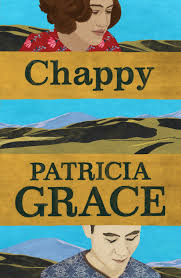
Chappy by Patricia Grace – 2015

chappyChappy is a family saga spanning the decades from the 1920s through the second world and into the 1980s – detailing lives, loves and losses.  Daniel is a young man feeling out of place and context in the ‘stoniness’ of Europe, although fluent in four languages he feels isolated and one night smashes his car into a wall.  His mother sends him back to his ancestral land in New Zealand to sort himself out.  The novel is Daniel’s documenting of his family’s history in an attempt to understand who he is and where he came from.  The story is told mainly in the words of his Grandmother, Oriwia, and her translations of the words of his ‘twice adopted’ great Uncle Aki.  But that is far too clinical a précis of this warm and complex novel.  Despite a strong connection to land and place the family are a patchwork and polyglot lot – including at least one member of a different and once enemy tribe, Hawaiian members from Aki’s marriage, Daniel’s Danish father, some Germans who were included when times went hard for them during the war –  and Chappy, Oriwia’s Japanese husband.  Chappy is adopted into the tribe after Aki and an Indian shipmate bring him to the marae after seaman Aki discovers him as a stowaway on one of his voyages.  Whakapapa is important, but what others bring into a family is important too – new skills, new knowledge …  and it isn’t surprising that the first skill Chappy brings to the family is bamboo weaving – Chappy is a narrative about how lives are woven out of found materials – be they people, things or circumstances.  Or that the last skill he brings is creating a garden of peace – the earth and its produce; animal, vegetable and mineral, are another constant motif.  Whakapapa is important – but go back far enough and Aki’s whakapapa, heard while a kid with his ear being held to keep him in place, becomes the same as that of his Hawaiian family – perhaps if you go back far enough all the threads will eventually merge.  The refrain: ‘Who is your mountain? Who is your river? Who are your ancestors? What is your name? Who are you?’ becomes a set of questions for us all.  Chappy is a terribly sad novel; the discrimination against Maori, both personal and institutional, is a constant backdrop.  And as well as the local German family being rounded up by authorities during the war, after Pearl Harbour Chappy too has to flee.  After incarceration Chappy ends up back in Japan – a country he fled in opposition to its militaristic policies – and he feels the need to stay and help build the new Japan – or does he just want to keep his New Zealand family safe?  Questions of motive and rationale are throughout the book, and difficult choices have to be made when love and loyalty enter the picture.  Yes it is a sad book, but also joyous in the warmth and inclusiveness of the characters.  Chappy has passed away by the time Daniel visits, and remains slightly out of focus.  But this is not a criticism, is adds depth and texture to the writing; the reader too is trying to interpret this person – and it allows for a wonderfully open ending for both Daniel and Oriwia … A wonderful New Zealand novel!

Posted in Book Review | Leave a comment

The Hiding Places by Catherine Robertson – 2015

Hiding PlacesThe Hiding Places is a study in grief and penance – for losses and crimes both real and imagined.  I loved Robertson’s romantic trilogy starting with The Sweet Second Life of Darrell Kincaid – a series of elevated genre-referential funny romance novels. The Hiding Places is a romance novel as well, but it is also so much more.  April Turner is living a life of self-imposed bleakness in New Zealand – living in penance for her imagined part in the death of her son, Ben.  She teaches part time at a community education centre, where the students are transitory, and has only a nodding acquaintance with neighbours.  Then a ‘private individual’ knocks on her door to announce that April has inherited a country estate in Buckinghamshire, complete with a long-abandoned mansion – Empyrean. April travels to the UK with a return ticket firmly in her hand, to finish the necessary paperwork as quickly as possible and return to her two-dimensional existence.  She doesn’t want to do the organising ‘remotely’ as she doesn’t want the possibility of imagination entering her life – she wants to see the reality and be done with it.  As to be expected of Roberston’s novels, April ends up amidst a gaggle of interesting characters and events.  She is forced to prolong her stay – and the English seasons, history and folklore take over the structure of the novel.  April’s experiences are evoked through the passing of the seasons, helped along by passages from The Popular Encyclopaedia of Gardening.  As she works on getting Empyrean in order for sale, helping the mischievous but ‘man with secrets’ Oran; spends time with the irascible octogenarian Sunny and the dapper lawyer Edward Gill; and with the mysterious ‘man of the woods’ Jack, she continues to battle the surges of life and colour that threaten to break through her penitential façade.  Her story is interwoven with events from Sunny’s past – the story of Sunny’s childhood friends Lily and Rowan – and James, the son of the tycoon who built Empyrean.  It is a mystery story of sorts – April even has a map to help her unravel it.  And it is about the mystery that April is to herself – as she ponders her faithfulness to her vow of penitence she – and we – realise that even at her bleakest times in New Zealand her vitality and warmth were not completely lost – her students at the community education centre complain when told she might not return, and she continues to support an ailing neighbour throughout the novel despite being at the other end of the world.  Amidst all the high drama and emotions Robertson’s touch can be light – such as the lovely way she allows April to finally be able to talk about Ben’s father.  Yes The Hiding Places is a study in grief and penance but it is also an affirmation of the insistence of life, the power of new growth – the continually waxing and waning of the power within nature, and within us all.

Posted in Book Review | Leave a comment

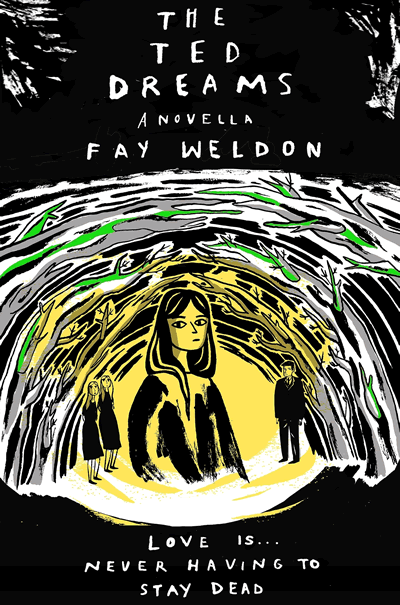
The Ted Dreams by Fay Weldon – 2015

teddreamsThe novella The Ted Dreams first appeared as an eBook and is now included in Weldon’s selection of her own short stories: Mischief.  The novella is about Phyllis, a woman with psychic abilities; a luridly tragic past and spooky identical twins. Her husband Ted has died in his sleep but Phyllis has quickly moved on and is married to an attractive American who works for the mysterious Portal Inc.  The ‘Ted dreams’ are her disturbing dreams of Ted stumbling through a dark wood where he is apparently ‘stuck’.  As the pace of the narration picks up it becomes apparent that many of the protagonists are on weird new pharmaceuticals produced by Portal Inc – and that the drugs are being developed as part of a NSA backed subjugation and interrogation programme, mixed in with the desires of a rich elite to live forever – either through medical intervention or through opening the doors of perception and breaking down the barrier between life and death.  Portal Inc is interested in Phyllis and her psychic powers – and her paranoia builds as she realises just how wide the plot might be to lure her into their programme.  Not only that: Ted seems to be about to fulfil the elites’ hopes and move back into the realm of the living.  All crazy stuff, but Weldon is not crazy – she writes about grief,  lack of power, the pull of the unknown and the insecurity of women and their sexuality.  And Phyllis, no matter how insightful and unusual, ends up just making the best of her life, lying when she feels it prudent to do so and living where: “It is one of the rules of modern society that one does not joke with officials”.  And yet she is the one who let Ted through the portal …

Posted in Book Review | Leave a comment

Nobody is Ever Missing by Catherine Lacey – 2014

nobodyCatherine Lacey was born in Tupelo, Mississippi and has taught Creative Writing at Columbia University in New York.  I have reviewed Nobody is Ever Missing here because it is set in New Zealand, and also because it is extraordinary.

Elyria walks out on her seemingly comfortable New York existence and gets on a plane to New Zealand.  She has an address a lauded writer gave her once – along with an invitation to come and stay with him on his Golden Bay farm.  But it isn’t really towards Werner, the author, she is moving – and oddly she acknowledges there is not that much to be running away from – apart from an odd form of nightmare violence from her husband, and a marriage that has deflated after the passing of the blush of shared grief that first brought Elyria and her husband together.

Elyria’s sister Ruby, a Korean adoptee, has committed suicide: Undoubtedly a pivotal episode in Elyria’s disassociation from life, but not the only cause of her self-absorption.  There is a hint of instability about her – but this isn’t a book about mental illness.  It is a novel about what it is to exist – about what our basic needs are – other people? love? memory? Elyria hitch-hikes around New Zealand meeting people and echoing back what she suspects they want from her.  Her two attempts at fitting in with others in their living spaces, although satisfactory for her, end in her being rejected by the incumbents.  She spends nights in bushes and garden sheds; there is a series of her rising early and leaving quickly.    Lacey’s writing is meandering:

“The sky was brightening slowly as I walked into Taupo, past a parking lot full of boats, down a high-way just east of the lake, and though I can sometimes think back and romanticize this moment, the sheer morning glow, the cloudless sunrise, I know that all I was really thinking about in that objectively beautiful moment was whether I’d even had a choice when it came to leaving my husband, and whether we are, like Ruby once said we were, just making decisions based on inner systems we have little to no control in creating – and I thought of that professor who became my husband and  thought of the sensation that came after he put a hand on my shoulder, a sensation that had turned me more human, put me in contact with what I think I was supposed to be feeling, and how it allowed me to be destroyed by the leaving of Ruby because being occasionally destroyed is, I think, a necessary part of the human experience.”

Despite her discovering the title of the book – no matter where you go there you are – at the end Elyria has almost reached the ‘bliss’ of non-existence: “No one is anything more than a slow event and I knew I was not a woman but a series of movements, not a life, but a shake …”  But at this point she says she has ‘nothing to say anymore, not yet …”  And so in a way the book is about what happens after it has finished.  For Elyria at some point later tells us her story.  A thought-provoking and powerful read.

Posted in Book Review | Leave a comment

The Chimes by Anna Smaill – 2015

the chimesThe Chimes is a debut novel set in a dystopian London where society has fallen back into medieval struggle.  The ‘Order’ has wiped, and continues to wipe, memory from the general population under the guise of paternalistic caring – violence and hatred arise from memory – and they have created a population of totally conforming or totally unaware ‘memorylost’ citizens.  There is nothing new in these ideas – nor in the presence of a non-conforming rebellious few – but what is really novel and a joy to read is the musical basis of Anna Smaill’s storytelling:  The regular ‘memoryloss’ sessions are caused by The Chimes of a giant musical instrument, and the narrative is peppered with musical terms – people move ‘lento’ or  ‘presto’, quietness is ‘tacet’, and talking of the times before the ‘allbreaking’ is ‘blasphony’.  I wasn’t surprised to find that the author is a violinist.  We find out about this confusing world and go on the journey of rebellion with a young orphan called Simon – who has to struggle to remember enough to string his thoughts together as he goes along, his remembering is initially aided by his sack of ‘objectmemories’.  Simon falls in with a band of ‘pactrunners’ who survive by retrieving pieces of ‘mettle’ sunk in the Thames mud, which the Order require to maintain the controlling instrument.   And he partners up with the band’s leader, Lucien, to take their hope of overturning the regime to the very heart of the Order – in Oxford.  The treasuring of past grievances is a destructive force, but the message of The Chimes is that to forcibly remove the underlying memories of grievance means also removing the complexity, beauty and sadness of the mess of human relationships and experiences.  Smaill’s writing is quite haunting at times: “Where’s the basso profundo for a dead baby, darling? What’s the discant for the mess of loss?”  I was quite anxious a few times reading this book, wondering if the author manages to maintain the world she has created through to a satisfying conclusion – she does – a great debut novel.

Posted in Book Review | Leave a comment