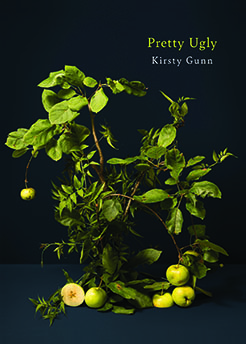
Pretty Ugly by Kirsty Gunn – 2024

Pretty Ugly, an oxymoron or a qualified adjective? Fourteen short stories exploring the origins and boundaries of ‘a person’. Each story is surprising, some are entertaining, some disturbing, one devastating. They all ask whether the continuity of personality depends on the person, on those around them, or on their surroundings.

Where do writers’ ideas of identity come from? Are they stolen, created? In one story there is an author writing to a successful formula, her adoring fans clamouring for more. But what happens to the stories she wants to write, the results of decisions that she wants to make by herself, for herself?

One of my favourites is a story about characters – those taken on by actors, created by authors. All of us are performing, determining how we should be seen – and some perform magnificently. The story brings in the ‘meta’ of a writer writing about writing. The Afterword to the anthology reveals how an author can always squeeze more out of their stories, their book launches, their criticisms, their accolades and bouquets – they can even make something out of mouldering flowers.

The children in the collection are those finding out the extent and definition of their families and how they fit into them. Those misunderstood by all, so turning to words. Those whose sense of security and reality is whipped away in a flash. Those caught up in thrall to the heroic lifestyle – to become abruptly aware of how some personas are a veneer caused by cruelty.

The reader too has their preconceptions abruptly cut through: is a cluttered house due to contraband or a hoarding disorder? What is the clutter expressing about the personality of the occupant? And what are young men mistreating a puppy expressing? Can a writer’s consideration of life’s “pulse moments” help?

So many great stories, great ideas. In some stories the influence of the environment on personality is pondered. What happens to a human psyche when the land is covered in windfarms and there’s no wildlife, or when the highlands are depleted, the carers moved off, the wildlife not cared for.

And then there’s All Gone, a story that I read with dread. A woman who finds solace alone “she would go into the cupboard to sit on that little stool and close the door and stay there, quietly, on her own, for some time in the dark”. A woman whose world diminishes to only her needs, isolated, only wanting a world that reflects herself. A terrifying metaphor for the rise of extremism, and the demise of people capable of healthy inclusive relationships.

I loved reading Pretty Ugly. Some of the stories have been previously published, and their collection in this anthology brings out common themes and emphasises Kirsty Gunn’s beautiful rhythmic writing. Highly recommended.    

Posted in Book Review, Short Stories | Leave a comment

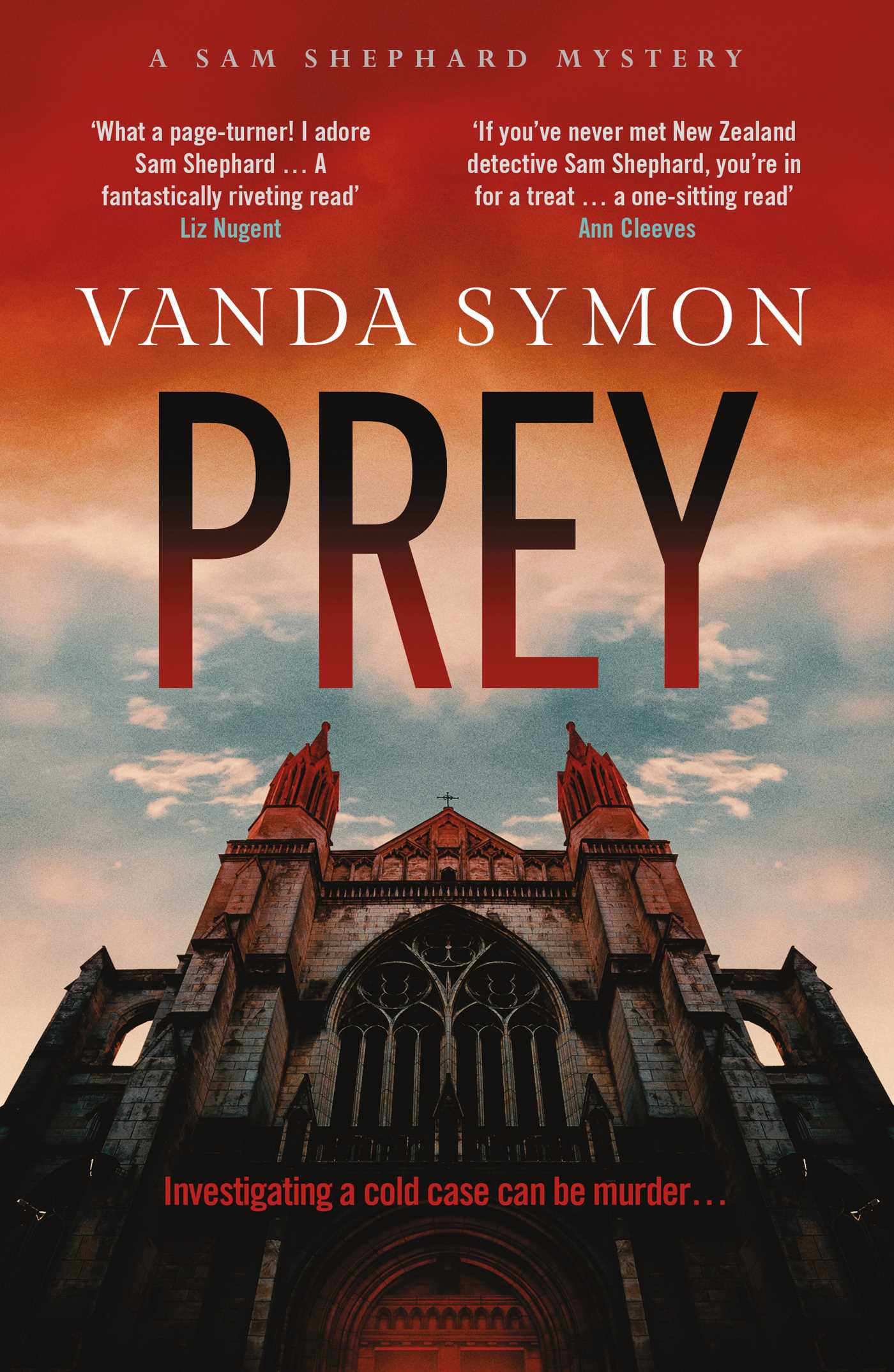
Prey by Vanda Symon – 2024

Detective Sam Shephard is back at work after six months maternity leave, now mum to baby Amelia. She is immediately given a cold case from 25 years ago: an “attack against a man of God on the steps of a cathedral on an ungodly winter’s night”. Sam doesn’t know whether her nemesis The Boss, DI Johns, has given her the case because he thinks she can solve it, or as part of his ongoing game of “Slam-a-Sam”. All she does know is everyone she talks to about the crime is “being economic with the truth”.

Sam must work out whether the original investigation in 1999 missed anything, and/or whether those still alive know anything about the case that they would finally like to share. What makes her job more than tricky is that The Boss was not only on the original investigation team, but he is now married to the daughter of the victim, who was 15 years old at the time of the killing.     

What Sam uncovers is a morass of mis-directions about events surrounding the death. The scene of the crime is very triggering for her – and she becomes aware that the church can be as sexist and suspicious of anyone not regarded as ‘normal’ as many in the police force: “humans with dicks and balls seemed to have special privileges as far as The Boss was concerned.”

Two people who were originally seen as suspicious by both church members and police were Mel Smythe, who “pushed boundaries on what was proper”, and Aaron Cox, an ex-gang member who was friends with the victim. Sam sees through these prejudices and gives everyone the benefit of the doubt and a fair hearing. She does start to wonder if she’s lost the knack of making people open up to her when stories start to sound a bit off, not quite fitting together. However, that could be due to her having to manage poopy nappies, breast pumps, sleepless nights, daycare drop offs and pickups, as well as the cold case. A cold case that suddenly has the addition of a new murder.

Fortunately, Sam has her mate and Amelia’s dad, Paul, to help, and her friend Maggie as moral support. And she needs sounding boards when her suspicions veer from abuse in care, to blackmail, to mistaken identity. As always with Symon’s Sam Shepard mysteries, the book goes to some very raw places, and Sam has some confronting conversations, leading to affecting moments.

The characterisations in Prey are complex and interesting – genuinely good people behave appallingly, and some who behave appallingly do so to protect others. Sam is heartbroken that acts intended to safeguard victims, hurt them even more, and that people have slunk away rather than stepping forward to help when they have had the opportunity.

Symon has again crafted a well-structured, intriguing mystery. The addition of Amelia to Sam’s world, and her stable loving relationship with Paul, makes her aware that she needs to address some of the trauma of her own youth – adding further texture to this great #YeahNoir character.

Posted in #yeahnoir, Book Review | Leave a comment

Kataraina by Becky Manawatu – 2024

Kataraina is breathtaking, swirling around a repeating incident, given form by the collective memories of members of the Te Au family. Stretching from the distant past, through colonisation, to their uneasy present: “How did the world become so devoid of magic?”

Kataraina Te Au is a child who brings peace and hope to her grandparents, Liz and Jack, yet later feels guilty “that her silence might have allowed Jack to be violent”. She is a girl who researches “how wetlands store a sort of historical knowledge”. She is a 15-year-old young woman at “the original splitting of herself, the moment she was made vulnerable to men forever after”.  She is a woman in a coma, dreaming: “She’s bawling in that coma.”

Kataraina is about the fracturing of women. There is the story of one literally cleaved in two by a jealous husband. There are those split between how they must behave to placate men and their inner turmoil, those pretending to be “happy as a plastic duck” to hide their sorrow, those who must leave their chores half-finished to be at the beck and call of their husbands. The split between a self who knows what will happen and the self who is heading into danger. And there are intergenerational links of trauma – as Kataraina first splits, “Nanny Liz’s faux-fur jacket watched like a cat”.

Kataraina is mesmerising in its distress, in its looming cruelties. Men’s actions made worse by their moments of kindness and caring, women’s bottled-up frustration occasionally exploding and leaving them wondering at their own culpability. People are at the mercy of their (usually white) bosses, their (usually white) rich neighbours, their (usually white) ‘saviours’, or of those bigger and stronger than them. And the land is also at the mercy of others, the land that was obviously terra nullius, belonging to no-one – until the surveyors came.

As well as the anchor of the repeating incident “the girl shot the man”, is the geographical anchor of the kūkūwai, the swamp. Drained a century ago, but refusing to leave, it is now filling up again – with salt water, with tears? There is an area where “just looking at the ground made you feel confused”. It defies fencing, a puzzle as there’s no reason for the lines “to lose their purpose, to become pliable as a silver chain necklace”.

The swamp hides past incidents and is home to the one with “inky-golden eyes, a pelt of eelgrass”, a danger that has become a source of hope. Meanwhile “a kuia’s cup of tea had a snake’s ghost spilling out to see the fuss.” And Kataraina is searching for something that will make her feel less like a person, to not be “this nervous system held up by bones and muscles, kept warm by fat, firing on oxygen and glucose”.

Kataraina is full of extraordinary characters, those who have read the author’s Auē will remember many of them. For example, the kids Ārama and Beth, much more self-aware than in Auē, and at one time mistaken for ghosts. The refuge that is Tom Aitken: “Didn’t kill anyone last night, did you, Kat?” And there is Nanny Liz, who walked barefoot to the swamp at night “and hoped a fistless monster would come and swallow her alive”.

And there are new characters, such as Cairo, part of a research team investigating why the swamp is rising, quoting Hone Tuwhare as she works. She is drawn by the ghostly smell of speargrass, leading to evidence of the violent history of the area. There is the question of what to do with the findings of research when intergenerational and lived experience is a part of it – can that ever be conveyed?

Kataraina is extremely tense in places, with its constant threat of violence, but it is also full of the love and support people, and the land, can extend. Both Nanny Liz and the swamp are talked of as being purifying kidneys – her for other people’s troubles, the kūkūwai for inorganic impositions. The novel has a chaotic structure that is easily navigable, with its strong recurring themes, its temporal moorings to the incident, and its geographic mooring of the swamp. It also has a useful family tree of characters at the beginning.

I found Kataraina a wonderful book, and I’m sure it will be as successful as the multiple -award-winning  Auē.

Posted in #yeahnoir, Book Review | Leave a comment

The Life and Opinions of Kartik Popat by Brannavan Gnanalingam – 2024

Kartik, a millennial hailing from Zimbabwe, migrated to Aotearoa as a child with his Gujarati father and Bengalurean  mother. His parents, wary of events in Uganda and later Fiji, steer Kartik towards a low-profile mid-level life by way of a private boys’ school. A loner at school, Kartik learns how to tolerate the bland food and unsanitary habits of the white majority: “St Luke’s idea of biculturalism was to stream Māori in the cabbage classes regardless of their academic ability.”

His parents also support him through university – hoping for mid-level professionalism and an arranged marriage. However, Kartik knows he is capable of more ambitious goals. He thinks, perhaps justifiably, that he is smarter than everyone else, and these thoughts turn to disdain and arrogance. He finds some connection with the Debating Society, realising you don’t need opinions just contrary arguments to debate – a skill that makes socialising a lot easier.

What Kartik really wants to be is an auteur film maker – chasing jobs with elite firms to earn money to fund his breakthrough masterpiece. His self-esteem is expressed as snootiness towards those who have had some measure of success, especially “bland signposted genre stuff that we typically made, destined for bargain bins in Germany and used as calling cards for careers in making fifth sequels in tired action franchises”.

As for politics, Kartik’s political choices are random and self-referential – he didn’t support Labour’s idea of helping students with interest-free student loans as his parents were supporting him through university, but later wondered if it was in fact a good policy when he secretly takes out a loan to help with his film. “I remain firmly of the view that you’re more likely to be a success in politics if you aren’t dogmatic, because it makes it easier to adapt to the particular circumstances of the time.”

Kartik stumbles into working for The Party by way of some weird Mormon sex and a willingness to do anything, sexual or otherwise, no questions even popping into his head. He is again an isolated loner, spending time reading about cryptozoology, when he and The Party discover he has skill with social media influencing. Just as capitalism gives people the justification for greed and absolute prioritising of the individual, politics confirms for Kartik that nothing really matters as long as you are controlling the narrative: “I think an underrated fact about New Zealand was, most people didn’t care about politics at all, and therefore there was no reason why our politicians needed to care either.”

Traversing the major events in Aotearoa from the 1980s to 2024, The Life and Opinions of Kartik Popat, is a chilling telling of the development (or lack of) of an individual and how social media has turned bumbling selfish politics into an incestuous free-for-all. Complicit are the  parliamentary press gallery. Not that there were grand conspiracies, just that “there were journos with political leanings, who were happy to interpret things coincidentally in the same way we did” – the dissolving barrier between content and news.

Following Kartik’s various roles in parliament, we see the worst of politicians, the only decent one we encounter is soon scuttled, as she is not young, therefore not attractive, and doesn’t speak out about issues not in her portfolios. We witness the childish behaviour of international advisors on overseas junkets: “Say six, say six, hahahaha”. And Kartik starts to think he could be a successful politician, better than those he knows in The Party, and surely better that the “Liberals and their belief in incremental change without any leg work.”

Throughout The Life and Opinions of Kartik Popat are illustrations of casual racism and bigotry, but racism and bigotry are never casual – it takes some energy to be so cruel. Kartik resents “the idea that we all supposedly think the same way”, whilst complaining at one point: “where was the servility towards people in authority that our people usually had”? And there are the trends in politics with waves of ‘inclusion and diversity’ followed by reading the room and “wanting to capture the anti-govt anti-woke brigade”. There is also the amplification of non-white voices in support of alt-right, pro-heteronormative, and contrarian views – which allows for the calling out of any objectors to the views as racists.

Kartik glides through various crises with detachment – knowing the furore over the Christchurch Mosque Shootings will soon die down, as the victim aren’t white. As for sea rises and new diseases: “my natural instinct to such hyperbole was to ask for proof and then ignore whatever was provided in response.” But then comes Covid … and the mandates, the lockdowns, the vaccine, the Occupation – with Kartik at home and online. From here the book becomes more than just a tale of ‘this is all your politicians are’ …

The Life and Opinions of Kartik Popat is a brilliant political satire, but it is also a chilling cautionary tale – one that for most of the world will come too late. It ends with an incident of horrific irony, and the numbing feeling of repetition and the ongoing imbalance of power. I hope everyone reads this book.

Posted in Book Review | 6 Comments

A Better Place by Stephen Daisley – 2023

A Better Place, is a relentless, ghastly depiction of warfare: “Have you ever seen what a grenade can do to someone? What they reveal?” Young boys constantly witnessing the gruesome deaths of their colleagues, affecting an immunity to the nightmare none of them owned: “It was best to wash the blood off as soon as you could. It gummed up the working parts of your rifle.” The story is mainly that of Roy Mitchell, who on top of the horrors, becomes burdened by guilt when he abandons his brother, Tony.

Roy and Tony are identical twins, almost: “‘Do you think we held hands as we swam together in our mother’s womb?’” – Roy “looked like he wanted to be sick”. Roy thinks Tony is touched like their father, who had never been the same after returning from the First World War. He was a broken man, an embarrassment: “The coward father who could not speak without weeping.” Their mother left once the boys were teenagers.

The brothers were managing well after she left: “All right those Mitchell boys. Quick learners and cheerful when the going got tough”. Then in 1940, when the boys were nineteen, they were signed up to the New Zealand Infantry Brigade, 22nd Battalion, to go and fight in their own world war.

In Crete, Roy and Tony are both sent to man a forward listening post – they shouldn’t have been together, but Manny Jones had been arrested and Tony took his place. Manny is a character many readers would happily see joining the list of the fallen, he is a disgusting man who features in the story to show the insanely low levels men are reduced to in war – and perhaps for the telling of his one heroic deed, and the story of one who perversely pays him respect and holds his hand at the end.

A Better Place is full of  perversity: leaders not able to lead, those of lower rank who find themselves suddenly having to take charge: “C’mon boss, we got no choice here.” There are the completely mad, the temporarily insane, and the many who have been there before and can’t wait to get back where they would be able to  “feel their hearts beating at the ends of their fingertips again.”

Roy’s guilt is due to his running away from the listening post when Tony’s foot is blown off – not only guilt of the act, but of knowing Tony would never have abandoned him. Roy does go back and bury the foot, but by then Tony is gone, presumed dead. Roy’s guilt is just part of the mess he and his mates are in; they are being killed, and they are killing. Death and agony are indiscriminate, all types, both sides: “The devastation a human body suffers when a tank runs over it is quite horrific.”

The Kiwis are as bad as the Aussies, as bad as the Yanks, as bad as the Germans. Stealing from the people they were supposed to be helping, beating and raping them: “many of them had come to enjoy the savagery they had been licensed”. There are no differences in the kindnesses or the cruelties of the various groups, the only difference noted is that between the quality of their toilet paper.

The reader follows Roy from Crete to Egypt, then Sicily, Italy, where a beautiful historic village is bombed out of existence, along with some of the inhabitants and some of the troops. The reader follows another journey, of prisoners of war being transported to Upper Silesia. The unrelenting heat of Egypt, where the Kiwis talk of John A. Lee, and have differing opinions on politics, on land ownership, is contrasted with the unrelenting cold of Silesia, where a German Marxist helps the prisoners stay sane.

One of the prisoners has talent and a love of art that allows him some perspective: “He nodded towards Bell on the left. ‘Guernica is sitting beside me.’” The prisoner remembers his childhood, the friends he’s left in his Battalion, especially David Brookes, the one Manny called Sister. Roy Mitchell would meet David again many years later in Auckland, a meeting that could redeem him, but which just sends him back to his lonely farm – where the reader first meets him as a 78-year-old unmarried shepherd.  

A Better Place is a beautifully written book about the ugliest of things. As well as the harrowing scenes of war, there are mesmerising sequences such as Roy working his way back to the land he has been allocated by the government. Land in the “cold, high country of the Central North Island”. Land adjacent to the farm he grew up on, which had been given to his father in the same manner: “Tony had said once that it was the best land anyway. Because nobody else wanted it.” The book is about war stealing not just the lives of the dead, but also of some who survive, and those around them.

A Better Place is a tough read; the reader can’t help but consider the plight of the young soldiers being forced to commit atrocities in Ukraine and in Gaza, and elsewhere where sanity has lost its grip – can’t help but wish they were all in a Better Place.

Posted in Book Review, Historical | Leave a comment

Home Truths by Charity Norman – 2024

“… attempted murder, do you find the defendant guilty or not guilty?” Home Truths takes the reader back in time to follow the falling dominoes that have led to Livia Denby standing in a dock waiting to hear her fate. It is a tale of ‘for want of a nail’ – one small act leading to devastating consequences.

Livia is a probation officer, her husband Scott is a teacher at the school their daughter Heidi attends, and there is their delightful 5-year-old son Noah. On Heidi’s 13th birthday she and Scott go for a bike ride, then return to discover Scott’s brother Nicky has died. The dominoes start falling, Heidi turns sullen,  and Scott, whose “life shattered like a glass on a concrete floor” starts falling down a rabbit hole in his grief.

“Close one eye and squint, you’d think everything was hunky-dory” – Livia tries to hold her family together. Professionally she can spot a person in danger, but closer to home she just wants Scott to get over it. And surely Heidi is just becoming a surly teenager? However, as Scott’s delusions escalate, she tires “of being bloody Tigger to everyone else’s Eeyore”.

Home Truths is about conspiracy theories, and how compelling they can be when fabricated from truths and half-truths. And Norman’s writing draws the reader in in a way that makes Scott’s descent totally believable. Home Truths is also about how difficult it is to save someone you love once there is no common ground from which to discuss things, and how quickly that ground can crumble beneath you.

It’s true that ghastly things happen, and are often orchestrated by agencies, even governments, but Norman shows the reader another evil; the manipulation of the vulnerable by those who crave money, or self-importance. The cowards who offer their followers a false sense of belonging and purpose – and even worse – offer them a plan of action.

For Scott his beliefs are not just one aspect of his character – as his belief in herbal remedies once was – they have become his whole life, and those who don’t agree have become the enemy. As with all of Norman’s books, the characterisation is complex and nuanced – the person who becomes the greatest support for Livia is one of her cases, ‘the Garrotter’.

The power of guilt and grief is well portrayed, how both can bring on harmful addictions – and an unbearable longing to belong, to be forgiven, to find someone, or something, external to focus on. And the reader feels the same – when I had a suspicion what might be going on, I questioned whether I too was seeing conspiracies where they didn’t exist.

Home Truths is a thriller, with nail-biting dangers, and tension is added by the timing of the triggering incident being prior to the Covid 19 pandemic – the reader knowing, and dreading, what is to come. The book also reads like a horror story: “He looked like Scott, he spoke in Scott’s voice. But this wasn’t Scott” – and the task of exorcising demons is slow and difficult.

The plotting is great, with the structure of the book the falling dominoes, bracketed by the court case. The story is told mainly from the points of view of Livia, Scott, and Heidi. The reader understands Scott and Heidi, but Livia’s predicament is the heart of the novel, “After so many years together, silence was communication”, and if Scott really believes the insanity isn’t he right to act? – but what if action leads to extreme harm?

Home Truths is such a good read – thought provoking, and so very very relevant.

Posted in #yeahnoir, Book Review | Leave a comment

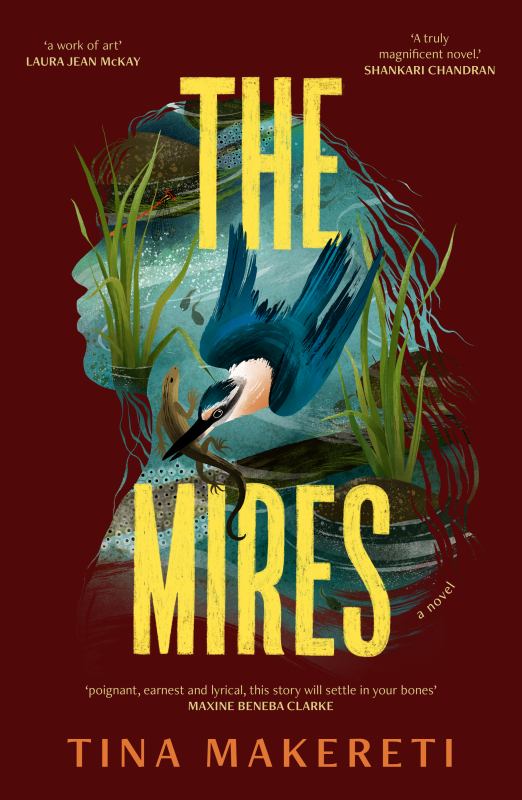
The Mires by Tina Makereti – 2024

How small people are and how “they only mean something in relation to each other” – when they connect like streams of a river it is a glorious flow, when they separate and become more and more isolated from each other, it is tragic, for them and for their environments. The Mires captures this message through the stories of three families.

The area they live in, on the Kāpiti Coast, is near a swamp, whose waters once flowed freely through the area, and will do so again: “We are too old and wise and deep to trouble ourselves with the impermanence of your wood and concrete and steel.” The eldest daughter of one of the families, Wairere, has matakite – she sees immensity that can’t be put into words. She can sense the inner turmoil of others, which is: “Exhausting and confounding”. She often visits the swamp for some peace.

Wai’s mother, Keri, is a solo mum who is constantly trying to engage in a meaningful way with teenager Wai: “How can they manage to be so clever and so scathing and so harmful and so vulnerable at the same time?” Keri is kept very busy looking after her young son, Walty, a delightful character: “The boy fills her with sweet joy and dread at what the world might do to him.”

Keri negotiates the hurdles of the social welfare system: “There’s never a crossover period between when the food runs out and when the money comes in.” She must conform to policies that probably make sense on paper when applied to everyone, but that create a sense of helplessness in individuals in differing circumstances.

Janet is one of Keri’s neighbours, Keri thinks of her as “prejudiced but alright”. Janet has freed herself from an abusive relationship, and she is enjoying the freedom of being able to say whatever she wants, no matter how hurtful those utterances might be to those around her. After a family moves in next door, uprooted due to climate disasters: “they’re lucky … most New Zealanders can’t afford to travel anymore, but they’ve hit the jackpot – they got to travel the world and settle here.”

The new neighbours are Sare, Adam, and their daughter Aliana. They have finally arrived in Aotearoa after many traumatic years trying to achieve refugee status due to the relentless heatwaves and regular wildfires that have made their Mediterranean home uninhabitable. Adam is one of the few decent blokes in the story, and his name seems no coincidence, first man, untarnished by society or politics. Sare does not feel as settled in their new home as Adam and Aliana do – however, she and Keri find they have a lot in common: as Keri points out: “We’re all just being processed, aren’t we?”

Our bodies are made of water, and all water is connected, so we are all connected – Wai becomes aware of a darkness entering the area when Conor, Janet’s adult son, turns up two years after he last visited. Janet is pleased to see Conor, but soon realises he has changed: he sports a buzzcut, and when not locked in his room with his computers, he exercises, a lot. And then she enters his room and glimpses what is on the computer screens.

The Mires is a tense read, dealing with vulnerable people facing multiple threats. Aotearoa is regularly experiencing its own extreme weather events. Sare’s family is already experiencing racism in their new home, despite their simple aspiration being for a measure of autonomy “The best thing would be a choice”. And the reader reads of Conor and his increasingly warped views: “This is why the world has to change.”

Makereti does a great job of trying to understand men like Conor, he isn’t painted as a mindless thug. An incident early on with Keri doesn’t spiral out of control. As he reads more and more propaganda, Conor feels doubts and uncertainties, but he pushes them aside in favour of the feeling of belonging offered to him if he espouses the right views. He is so inner-oriented that he doesn’t notice that his ‘kind’ already are dominant and powerful, and that they are so at the expense of everyone else.

The plotting of The Mires advances towards an epic denouement of acts of destabilisation, torrential rain and flooding, a missing child, an overrun Police force, and an imminent danger about to affect all three families. And there are friends working together to hold things together. Water can be gentle and soothing and can also arrive like ”the foot of an elephant”. A young woman can be awkward and insecure and can also be a formidable power for change and disruption, backed up by ancestors, and vengeful ghosts, both Māori and Pākehā.

The Mires is a thoughtful book, and I think many readers will relate to the choice imagined for Janet: “Whether she will be able to sustain the unease for long enough to become something more than she is, or whether her discomfort will cause her to weave elaborate narratives as a protective shield.” A great read that flows like the waters that feature so prominently.

Posted in #yeahnoir, Book Review | 4 Comments

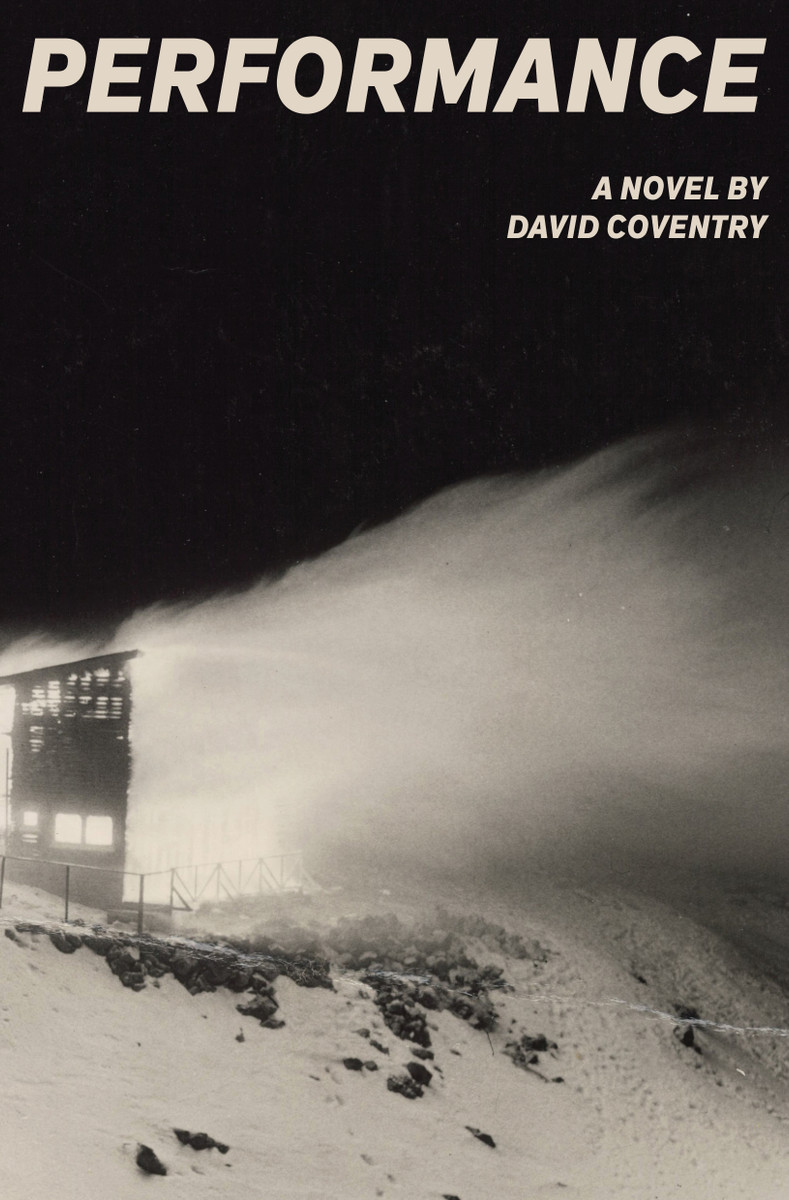
Performance by David Coventry – 2024

David Coventry is from a family of mountain climbers, like Edmund Hillary: “someone whose body seemed permanently full of oxygen.” Coventry used to be fast, “I had speed, just a natural event amongst my genes”- then he was struck with depression, and then Epstein-Barr, and eventually that “cracker of a disease” myalgic encephalomyelitis, ME. To this dismal cocktail add ADD and you get a life that doesn’t cohere, a parallel life to that of the counterfactual Coventry, a doppelganger who remains able: “I can’t imagine illness without my twin. I just can’t do it.”

Performance is Coventry’s life story to date, or a version of it. It is made up of his memories, and his experiences of living with his conditions. It includes anecdotes of his travels around Europe, to literary events and to visit the places of his colonising forebears, and of his travels with a punk rock band. The travel sequences reminded me of W.G. Sebald’s The Rings of Saturn, in which a depressed Sebald wanders around Suffolk, ruminating.

Performance is a jumble: the Acknowledgements, Notes, and List of Illustrations all appear before the end – it is as confused as Coventry’s life is, a life with which he has a love/hate relationship, as he does with language, and with being an author. A life entangled with the perversities of ME: “The cranium awash with a viscous brine.”

A few parts of the novel are written from the point of view of his wife, Laura, the woman who helps him persist, and who herself has recently fallen ill. And others from that of Rachel, his cousin, who also is living with ME. As is often the case with the chronically ill, Coventry pays close attention to the deaths and sicknesses that surround him. Friends, relatives, acquaintances are all struck down. Strangers who give you a lift, passing drivers, mates waiting in vans, all die unexpectedly in front of you.

Coventry deceives the reader, killing off characters for a while just to see what it does to the narrative, and in some of the anecdotes swapping the main players with those he would rather write about. Two whole sections are repeated in different voices long after they first appear. The book is like the author’s fractured life, his inflamed brain – it won’t draw together. Coventry writes as though bordering on Cotard’s syndrome – not believing he is dead but believing he can “die just by thinking about it”. Both Coventry and another character voice the thought that “to die unwillingly, it seems such a waste, you know, of volition”.

Performance details the known science of ME: abnormalities of the brain, blood, gut, genes, and muscle. But this knowledge refuses to coalesce into a ‘known’ disease, into a cure, even into how to alleviate symptoms in a systematic and reliable way, “There are still no doctors for this.” The disease isn’t even named yet – one offering, CFS, chronic fatigue syndrome: “Which would be a fine term if it were merely fatigue that affects us”. Another, myalgic  encephalomyelitis: “almost as cruel in its medical appellation as it is in physical form.” There are other options out there, not yet adopted. Coventry quotes psychiatrist Bluma Zeigarnik: “when one refrains from naming a phenomenon, the idea of it stays dynamic in your thoughts.”

The incessant chatter of the scientists, including those who dismiss the disease as a form of female hysteria (the majority of those living with ME being women), carries on behind Coventry’s conversations on trains, planes, beaches, in pubs … All his conversational partners are bestowed with Coventry’s own eloquence and fascination with disease and death. The life of a person living with ME is one of being overwhelmed by the condition, or the relief of feeling able to do a little, but always fearful of the next descent into pain and “obliterating tiredness”.

At one point Coventry wonders, since people comment that he seems well when presenting his books to the public, whether he would be “no longer sick” if he were a more prolific, or better, author. He is closer to his doppelganger’s reality when performing like this, whilst knowing performing will have the consequence of experiencing the grim reality of his illness. He worries whether using a wheelchair at an airport to avoid severe symptoms, rather than because he is experiencing them, is a performative manipulation of the strangers who sympathise and are kind to him.

Many of Coventry’s family and friends are understanding and supporting – he doesn’t appear to have the problem of many with living with ME of family and friends being sceptical, constantly asking ‘are you better yet?’ – finally giving up and drifting away. In the strange void he lives in, there are those who talk to him, remember with him, even those who share his illness. Despite the dismal subject matter, Performance is a mesmerising and at times beautiful read, albeit tragic.

A consistent trope throughout Performance is that of falling – falling off mountains, off cliffs, off a red Vespa, down stairs, off steep paths, or off flat paths. Or the falling sensation of “height vertigo” – viscerally and vicariously falling whilst observing high-wire artists or “a person climbing to lofty spaces”. Even the disease: “The materials of living matter in free fall from some height.” And the ever-present expectation of falling into the dimness of ME: “hanging in the air, desperate for handholds, no hope of traction.”

The reader too feels a sense falling into Coventry’s world as they read this extraordinary book. Coventry looks out at the Remutaka ranges: “I stare out there each day, promise myself that when I’m well I’ll climb it.”

Highly recommended.   

Posted in Book Review | Leave a comment

Going Zero by Anthony McCarten – 2023

An utterly compelling read that drags the reader through the dangers of invasive information-gathering, the “erratic, unstable, passion-ruled soul of man”, and the determination of a wronged woman. The ride starts with the beta testing of a state-of-the-art surveillance system, where ten subjects are instructed by Fusion, the agency that will search for them, to ‘go zero’ – to completely disappear for thirty days.

The ten participants are a mix of five professionals and “five representatives of ordinary, uninformed credulous America” – at stake is a US$ three million reward. Thus, Going Zero starts with a familiar, straight-forward plot illustrating the weaknesses of various evasion tactics and the invasiveness of surveillance systems. Fusion is planned to be a “fusing of government intelligence with free market ingenuity” – there are plenty of opportunities to point out the dangers that that combination may pose.

The government agencies involved see buddying with Cy Baxter – the brains behind Fusion – as a way to become active on U.S. soil in ways that their government mandates forbid. Baxter just wants access to the vast swathes of government surveillance data. Neither side are honest with, or trusting of, the other – both believing there are “the abiding benefits of keeping whatever the hell you actually do way, way, way under the radar”.

As the participants are found one by one, another theme starts to emerge; another level of complexity enters the story turning this straight-forward plot into an extraordinary read. Going Zero has some out-of-left-field twists, which have the reader and Baxter flummoxed, and a flummoxed genius is not a good thing. Baxter’s descent into megalomania is both frightening and believable. The reader also must cope with continual information reveals regarding the “book person, an antiquarian”: Zero 10, Kaitlyn Day.

Baxter insists his system can prevent tragedies such as September 11, or the never-ending mass shootings in the U.S. He believes innocent citizens would be happy to sacrifice their privacy for “greater security, peace, law, and order”, suggesting “we aren’t as complicated as we thought we were. We were just pretending to be complex. Really, we’re a herd”. Going Zero argues both sides of this proposition.

The Zeros are captured due to simple mistakes and common flaws. Those vagaries and urges of the human psyche are also what tips the project into chaos, and yet allow hope to enter a bleak scenario, with “the unseen shift by the state from monitoring to control”. The story at one point becomes almost farcical, with the rapid manipulation of data, the size of which would “make Wikileaks look like the midweek gossip column in the Fuck Knuckle Times.”  

The characterisations in the novel are solid, with some being purposefully stereotypical yet believable – the garage geek turned IT powerbroker, the menacing government official … Others are unpredictable and intriguing; the chameleon-like Kaitlyn, and those within the system who have hidden agendas. And then there are those who drive the story without making an appearance – or if appearing are “Systematically ruined”.

“What chance could an algorithm have against all that inner chaos?” asks Going Zero – and a final twist in the novel has the reader routing for chaos. An excellent read!

Posted in #yeahnoir, Book Review | 1 Comment

End Times by Rebecca Priestley – 2023

Two fifty-something women going on a road trip to engage with their ancestry, their past, home-baked pies – and to visit the “coal face” of today’s biggest existential threat: global warming. Rebecca Preistley is “a writer and academic who writes about climate change”, her life-long friend is Maz (Marianne Rogers) a civil engineer, once a mining engineer. End Times is a work of autofiction, and is sad, funny, scary, and educational.

Maz is the extrovert of the pair, and more laid back about the world racing to environmental collapse – or, as they are on the West Coast of the South Island, the chances of their being engulfed in a crevasse, buried under liquefaction, or drowned by a tsunami – all resulting from a long expected catastrophic movement of the Alpine Fault. Preistley is the narrator, an introvert and less sanguine – alarmed to hear the fault runs through the Franz Josef Mobil station, the closest they get to ground zero if a quake were to happen.

End Times alternates between narratives of the road trip and memories of the women’s shared past (they’ve been friends since toddlers) – especially their once earnest commitment to evangelical Christianity: “Now that we were baptised Christians, our mothers persecuted us even more. They would burst into – ‘Onward Christian Soldiers!’ – followed by a cackling laugh. Sometimes we wondered if they were demon-possessed.” The saddest part of the book for me was the description of the heartbreak of losing living faith.

The women grew up at a time “when we didn’t know which would come first – nuclear annihilation or the Second Coming of Jesus”, but Preistley now contemplates “global warming, melting ice sheets, rising sea levels, all of which are scarier than stories about lakes of fire and pitchfork-wielding devils”.

End Times is about where anxiety comes from, and what it is that makes people motivated to do something, not only something to alleviate the anxiety, but something to ameliorate its causes. Preistley finds her youthful angst returning in today’s time of global pandemics, the rise of conspiracy theories and related dissemination of disinformation, and the seeming intractability of patriarchal power structures and the subjugation of women: “Lately, it feels as though the End Times have arrived.”

Given the fields of expertise of the two women, the reader learns of the history and geology of the magnificent West Coast as they travel: the Natural Flames near Murchison, the structures of the Ōpārara Valley, and the over-long-periods-of-time sculpting of the southern terrain by glacial flow. And there a wonderful moment in front of walls of glow worms: “That’s why I do this kind of shit, I remind myself. It’s almost always worth following a trail, saying yes to an adventure, for what you might find at the end, and people are mostly good and kind and fun.”

Offsetting the precision of the scientific information is the funny yet terrifying interview Preistley has with the (then) Westland Mayor, Bruce Smith – who offers lived experience as a counter to scientific research on several topics. The author comments about needing to balance researched knowledge with continuing openness to new information, so as not to fall into rigidity. Yet she points out the dangers of just accepting that some people have, and act on, beliefs that are endangering all life on the planet. She and Maz consider the incredibly hard lives of their female forebears, compared with the comforts they themselves enjoy – but also the threats that are facing them and their descendants, of which the colonists would have been unaware.

The book does not present answers and attempts even-handedness: “Responding fairly to climate change, though, will mean that those of us with plenty might need to learn to live with less, and sometimes that’s the hardest sell.”

End Times is a great depiction of a slice of time from the viewpoint of one human – the fun, the craziness, the sadness, the triumphs – and how you unravel a bit on a long road trip. I really enjoyed (if that’s an appropriate word in the face of environmental collapse!) this book.

Posted in Book Review | Leave a comment