 Janice Redmond has had a terrible childhood; neglectful parents, constantly being moved from one school to another, being abused by various men, and nowhere she lived had a fridge …
Thirty years later, Janice, along with her big green fridge, is on her way to an Arts New Zealand awards ceremony, where she will receive her Antarctica Writers Residency, which she will take up the next day, and for which she was waitlisted and is a late recipient. Janice is used to this, used to residing in “makeshift liminal spaces”; she was waitlisted and then a late admission into her creative writing class. She is used to not being the first choice and narrowly missing things. She narrowly misses out on receiving a break-up settlement by one day, misses out having her first work, the spineless Utter and terrible destruction being considered ‘a novel’ by one page.
But Janice is a “glass-half-full kind of person” and tries to see all her setbacks as opportunities to nurture her writing. And she embarks on documenting her gratitude to the various people in her personal and literary life in the Acknowledgments for the novel she will write after her time on the ice, but which she has already written: The ice shelf. And that is where The ice shelf starts, middles, and ends.
The ice shelf is a wonderful piece of metafiction, telling us about Janice’s history, her warped sense of herself and others, the snobbish and cliquey New Zealand literary scene, and the continuous low level angst of living in a New Zealand where the weather is being disrupted by climate change, and “a piece of ice shelf the size of New Zealand falls off the polar cap every day.” Janice gets her only sense of self-worth through social media, her minute circle of ‘likers’ and ‘RTers’, and she posts and tweets in an upbeat way throughout her various disasters – many of which are of her own making, fuelled by vodka and orange.
As Janice battles through windy Wellington with her fridge, and recalls and experiences her life, she starts to edit The ice shelf, gradually whittling away her work and herself. Her narration of her painful childhood, and her existence on the far edges of the literary scene, are funny but tragic. Her naivety is the source of much of the humour in The ice shelf, making her an unreliable narrator: “If the Meeting was populated only by men, that wasn’t the result of any kind of prejudice, it was just because the women hadn’t finished the washing up yet.”
And so, it is a bit of a shock when you end up feeling sorry for Janice, seeing the cliques that shun her through her eyes, and along with her “begin to cruise among the angular haircuts and commonplace objects pinned to lapels” in the Kōwhai Room of the National Library, waiting for the awards ceremony. You are concerned about her as she prepares herself for Antarctica “the cold expanse that lies not too far away from our islands and perhaps even closer to the New Zealand psyche”, as she gets inspiration about the New Zealand character from The cinema of unease, as she worries that she might have warmth that will threaten the ice, or that the ice will take her last piece of warmth.
Janice has no community to bounce ideas off to get a sense of who she is and why she writes, and as often happens with excluded people, her whole life has become this one thing, trying to validate herself as a writer. And through the novel we tragically see that validation melt away like ice on a warming planet. I loved The ice shelf, see what you think.
 Chrissie has got everything: a devoted husband, three lovely children, her health and a self-owned business. She coaches her daughter’s netball team, is a martial arts practitioner, and has lots of friends. Hardly the person you would pick as a meth addict, but a moment of insecurity and weakness leads to a downward spiral that ends up ruining her life and the lives of all those around her.
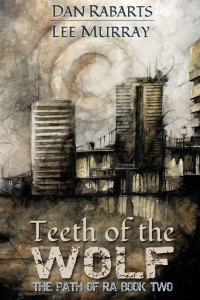 What a great genre mix-up: police procedural, horror, urban fantasy and cli fi all bundled together with a bit of romance thrown in!
 Bailey and her young sister, Tilly, have been taken by their Gran to multi-generational Pine Hills Resort to try and get over a traumatic experience. They could stay in a cabin together, but Bailey opts for splitting up by demographic, and she enters the world of teenagers on their annual break – bitchiness, crushes, pranks and jealousies. But Bailey also has her young sister to worry about, and the lasting effects of that terrible night …
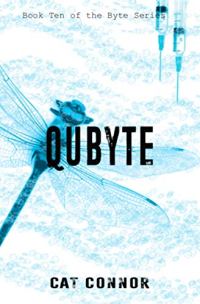 Connor’s Byte series, QuByte, which deals with biological terror threats.
 Cassie Clark is an eighteen-year-old university literature student with a depressed mother, a prickly younger sister, a great friend called Jackson from Jackson, Mississippi, and a bodyguard. She is still recovering in hospital from being knocked off her bike when Cam, the bodyguard, tells her that her Speaker of the House of Representatives father has gone missing.
 Lucy has a mixed life: She is more-or-less the only capable adult (at age 15) in her family, living with her aging-rocker Dad and ex-prize-fighter Grandfather, who is living with Parkinson’s. She has some mates and manages to negotiate the bullies and avoid the lecherous older boys and teachers. But one day her life takes a massive veer off course, when she is abducted into a cult.
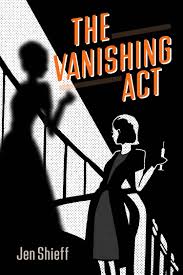 Art teacher Rosemary Cawley has been exiled to Auckland, New Zealand, due to her upper-class British family not coping with her accidentally-discovered erotic poetry; it is the 1960s – the Vietnam War, toothpick-skewered cheese and gherkins, an almost Victorian-era sex culture … and Rosemary gets close to one of her Elam colleagues, Judith Curran, who along with her “best boyfriend” Istvan Ziegler, isn’t above a bit of amateur sleuthing. But when someone is murdered and others go missing, things get a bit out of hand, and just about everyone becomes a suspect, as “greed is such a monstrous thing.”
 Shadows of the mind is the second book in Clough’s Whispers of the past trilogy. This installment follows the story of Samuel McInnes (Mack), who was bundled away from New Zealand on the HMS Esk while still unconscious after an affray in Auckland in 1863. He regains consciousness on board as Lieutenant Samuel Mack, with no memory of who he is or where he is from, with an unidentifiable accent, a head full of peculiar vocabulary and extraordinarily prescient ideas.
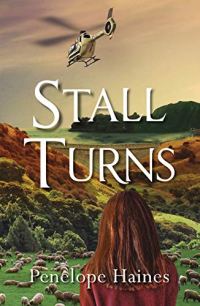 Stall turns is the third in the Claire Hardcastle mystery series and starts with Claire and her detective boyfriend Jack Body having a well-earned break. They are on their way to help with the Labour Day Weekend sheep muster on Jack’s uncle’s remote sheep station in the King Country. Sounds fun, but what Claire hadn’t envisaged was the dead bodies, the earthquake, the flood, being buried alive, being drugged and left out in the bush to freeze to death or having to pilot a sabotaged plane!
 alysontheblog