Soldiers by Tom Remiger – 2020

A group of New Zealand soldiers during the Second World War, we follow them from England to their deployment in Crete – in boredom, in terror, in transit, in confusion. Before leaving England, one of lower-rank, Cousins, is killed during a training exercise. Was it an accident, a suicide, or murder? A middle-ranked soldier, Breen, becomes determined to discover the answer – but has a crime been committed, or is Breen just trying to make sense of events in a world where “We take decent ordinary fellows and we train them to kill other decent ordinary fellows”? Breen pursues the case while drifting into a relationship with higher-ranked Sinclair.

Soldiers is a beautiful, disturbing, and visceral read. The long periods of inaction, with the soldiers longing for action but also not wanting anything to happen. The presence of Anzacs who served in the First World War, experienced but not welcome, “the Anzacs had grown old and fussy”. The reputation of the New Zealanders not being great from the earlier conflict: “They were not kind”, “Your fathers were not gentle.” And the situation Breen finds himself in; discovering that Cousins had written a letter before he died “The bastard topped himself … Now, who made him do that? And what the hell am I going to do about it?”, and when he finds himself attracted to Sinclair, “I didn’t even know it could be a thing … Not really. Buggered if I know why people joke about it”.

All the characters are similar in their trauma but unique in themselves, Tiger: “self-belief, luck, and an eye for the main chance”, Sinclair: a coward or just human believing “It’s no one’s duty to die”? Clark: a gambler, in debt to one of his men: “We’re a classless society” … “Sure we are”. Most of them are situated in a religion, but even the Catholic Father Emmet is a man in a war, is he protecting the seal of confession, or expressing his own opinion, when not helping Breen with his investigations? For Breen finds many motives for murder: sex, money, threats to prestige. He thinks he knows the culprit at one point, and leaves the suspect to the Germans rather than helping him, believing “… he had restored some sort of justice in the world”, but then he realises who the killer really is, as he believes he has witnessed him trying to kill someone else.

How reliable are Breen’s suspicions? He is drifting, “I don’t know that it’ll ever be over”. He is bone weary, he is forgetting things, “it was a long time since Breen had seen what trees were like at home”, he is feeling distanced from his fellows, “… they lay smoking in the dark, laughing at jokes that Breen could not understand”. And he becomes like another soldier he had earlier talked to, finding killing a man, “didn’t feel any different from shooting a rabbit or watching a man fall down a hill”. No-one supports his theory of murder, and the disagreement gets in the way of his relationship with Sinclair. His mates still support Breen, they just ignore his pursuit of Cousin’s case, advising  “You’re struggling, but you want things to fit into a pattern so that the world is in your control again and isn’t a place where people just die for no reason”.

All the soldiers are in a surreal environment. In England birds were active at night due to the light from a burning London. They remember Burnham as “Queues and unfamiliar bugle calls”. The reader is reminded occasionally that most of the boys are very young, what Sinclair later remembers of Breen is the “1939 appeal in his smile”. Breen and Sinclair both see mirages in a waterfall. The wearier Breen becomes, the more he “felt like a lost dog willing to obey any commanding voice”: “It would be so easy to sit in one place and wait. To hear unworried orders felt like listening to the heavy radio at home.”

What happened to Cousins drifts and wavers, when his brother writes to Breen, is he just wanting to hang on to the connection to a dead brother? Or is it more evidence? And we see crimes being committed and being left as “They didn’t have time to sort it out”. Breen is perplexed, “You’re saying we can’t have justice because justice is not a military necessity”. And what is justice during a war? Men who are not heroes are named heroes; it happens so often that it makes accepting undeserved medals acceptable. And those that get home take their secrets with them, “The soldiers came home and each of them wandered away from the others, looking for an emptier horizon and – some of them – with things to be ashamed of”.

They had lives before, they hope for lives after, “… what happened in this strange time didn’t really count”. But of course, things are never left behind. We read of Sinclair’s wife, eventually burdened with all his secrets, thinking of the women who must now be expecting their sons to be taken away when the next war breaks out. The women who know “We cannot simply do what we will, and so we are left to do what we can”. I coincidently yet appropriately read Soldiers over Anzac weekend and I absolutely loved it. Read it and see what you think.  

Posted in #yeahnoir, Book Review, Historical | Leave a comment

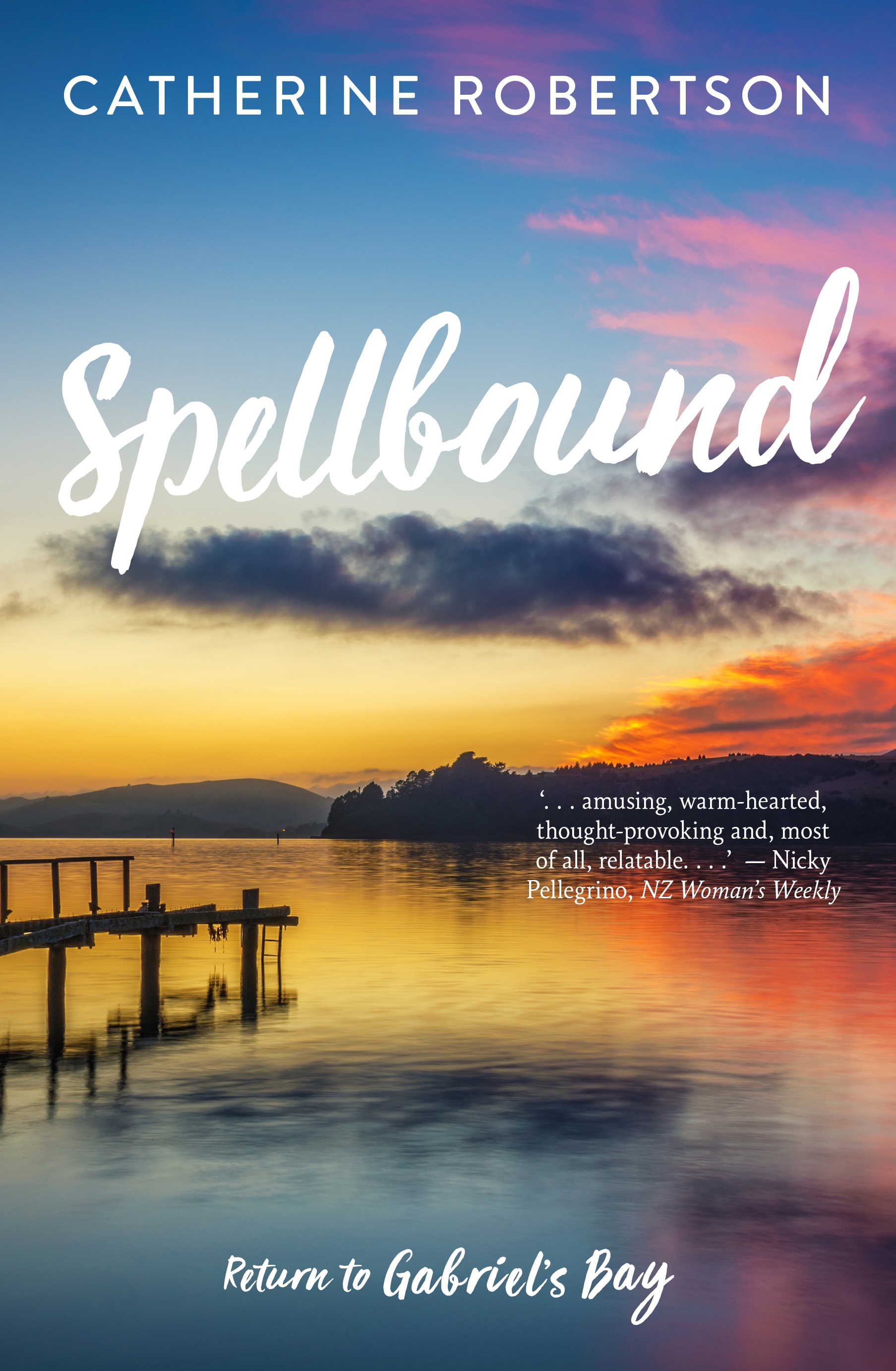
Spellbound by Catherine Robertson – 2021

A return to Gabriel’s Bay, and this time it is not a dog or a moose who welcomes and farewells us, but a cat, Brian. The local politicking around getting the tourist attraction Littleville off the ground is still the centre of concern, along with how to replace the Love Bus, which Mac Reid uses to ferry the elderly to Hampton once a week. But Spellbound is also about male insecurity, aggression, and vulnerability to suggestion, “The sensitive male ego had a lot to answer for”. But luckily Gabriel’s Bay has a formidable band of sisters, and some good blokes who support them, to tackle the growing problem.

Most of the characters in Spellbound are well known to those following the series: Sidney is still with Kerry, and she and Sophie (Jonty and Meredith Barton’s daughter) are now both heavily pregnant. Dr Ash is still besotted with Emma (Jacko and Mac’s daughter) and constantly worrying she will move on to a more exciting life. Barrett is living with salt-of-the-earth Vic on a farm, and he is struggling with how to be himself. And there is the irrepressible Mac, with her range of medical-prophylactic-advertising tote bags.  

When Ash becomes concerned about one of his patients, he discreetly asks for Patricia’s help, as she works with a women’s charity focused on domestic abuse. Patricia is shocked when Reuben, the child she and Bernard fostered for a while, is expelled from his primary school for showing up with a hunting knife. And Sidney is concerned about the behaviour of her eldest son, Aidan – is it related to his growing up, or has it something to do with his temporary martial arts instructor, Dale?

The book explores the dangers of online and offline recruitment of young boys into the spurious ideologies of the ‘disenfranchised and disrespected white male’, and the dangers of the remnants of the white patriarchy, those males who control and expect total obedience from their wives. The reaction to finding out about domestic abuse is varied, those on the outside asking, “Why didn’t she leave?”, those on the inside worrying why they didn’t see what was happening.

The arc of the novel is provided by the politics, the ongoing battle between Bernard and his nemesis on the Hampton Council, Elaine. Questions push the plot along, like who has made the anonymous donation that will solve Littleville’s problems? How will the new Chinese investor fit into the picture? And is recluse Magnus a secret white supremacist or a potential asset to the community? And as always, the children are respectfully portrayed, Reuben being entranced by The Hobbit, and Aidan stepping up when Sidney goes into labour.

Spellbound is funny and moving, and at times quite frightening – when Mac, Patricia and pregnant Sidney launch an intervention, things get tense when a rifle appears. There are poignant moments, such as when Bernard wants to reach out to comfort Patricia but finds himself incapable. And surreal ones, such as when Barrett, struggling with how to be gay in a predominantly straight environment, hesitates in a borrowed car, plucking up the courage to go out clubbing, and finds himself listening to Sondheim’s Send in the Clowns.

Spellbound is a treat to read, one that makes you laugh and makes you think. It can be read as a standalone, but if you haven’t read the previous two books in the series, Gabriel’s Bay and What you wish for, you should.

Posted in Book Review | Leave a comment

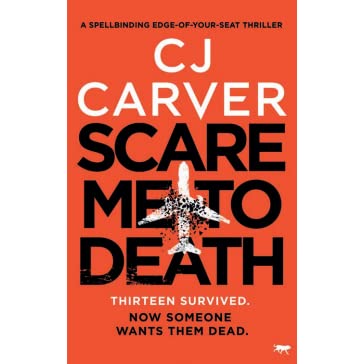
Scare Me to Death by CJ Carver – 2021

Well, overactive, synesthetic Detective Constable Lucy Davies and shonky memory “attracted danger like blood attracted sharks” Dan Forrester, are back. And they are in a ripper of a thriller, dealing with bombs on planes, public hysteria, and shocking family secrets.

The story picks up not long after their last adventure, Know me now, with Lucy still suffering the effects of being kidnapped, but she now has DI Faris MacDonald, ‘Mac’, for support. Dan is still with Jenny, and with Poppy the dog, daughter Aimee, and Lucy is now godmother to their baby boy, Mischa.

Lucy declines when a friend of her Mum’s asks her to help her son Ricky, who has been arrested for murder. But then the friend offers information about Lucy’s long-scarpered father in return. Lucy still can’t get over her father running off with his yoga instructor many years ago, and then, after a few e-mails, completely ending all contact with his daughter. The chance to find out more about him is irresistible.

The police call Dan in for an interview when it appears the dead woman Kaitlyn, who Ricky is accused of murdering, knew Dan. But with his loss of “great chunks of his memory” Dan doesn’t remember her. But then a nightmare reveals Dan had saved Kaitlyn’s life in a catastrophic air crash 16 years previously, and the life of her younger brother, Josh. Josh is now permanently in care due to injuries sustained during the crash.

Lucy and Dan soon realise Kaitlyn was on the trail of finding out the truth behind the crash, which had killed her parents and permanently damaged her brother. And that she had entrapped Ricky. But what had she found out, and how is Ricky, an accountant, caught up in it? Ricky’s client list gives some of the answers, as at least one is on the wrong side of the law, that one being Teflon Tom – an old school friend of Lucy and Ricky’s.

Lucy and Dan’s independent investigations lead to Morocco and a conspiracy with the potential for international carnage. Although a high-up Moroccan politician is involved, there appears to be a mysterious British mastermind behind it all, “ruthless as a crocodile and as cunning as a snake”.

Meanwhile Lucy is getting more and more unsure what to believe of what she is finding out about her father – is he a spy, a criminal, an undercover cop, an anti-racism campaigner, or just a jerk who took off and left his wife and daughter? And it doesn’t help that her mother is being particularly unforthcoming. Lucy doesn’t know which, if either, of her parents to believe. She ends up quite at a loss, “She wondered when she’d laugh again. It felt like an alien concept”. She also ends up quite sloshed at one point, and thankful that Mac and Dan have her back.  

Dan continues getting into trouble at home and abroad, worrying about Lucy while he does. When an airline flight attendant he knows comes down with symptoms which are initially thought to be caused by aerotoxicity, a poisoning caused by breathing contaminated aircraft air, another strand of the story emerges – the rapid spread of fear amongst the public, and those willing to encourage that spread to make a buck, or a million.

The story rips along, despite Lucy and Dan continually banging into brick walls, as people are too scared to talk for fear of the consequences – it is no coincidence that Kaitlyn ended up dead. When you do find out what is going on, and it is all nicely linked, poverty and a disastrous upbringing are given as the reason behind appalling atrocities, and the lack of loyalty to long-time partners. But this is adroitly countered by Dan refusing to put a boy he has only just met in danger, and Lucy determined to find justice for a woman she has never met. And it is encouraging that some crimes are even too despicable for criminals to tolerate.

Scare me to death is full of great characters, some of whom are the same character changing their names over time. The coincidences we are used to from the series are here again, this time explained by “six degrees of separation” and the Lord working in “mysterious ways”, they add texture to the plot. And Lucy is interestingly conflicted between being a cop and regaining her lost time as a daughter – there is a finely depicted scene where her parents finally meet again.  

The novel is full of mysteries and thrills, and there is even a hostage swap. Lucy, Dan, and their relationship are all holding up over time, those following the Dan Forrester series will be satisfied with the story arc, and those new to the series can read it as a standalone. And there is a hint about future installments – excellent!

Posted in #yeahnoir, Book Review | Leave a comment

Southern Cross Crime by Craig Sisterson – 2020

Craig Sisterson, founder of the Ngaio Marsh Awards, journalist, reviewer, administrator of the Crime Watch blog, organiser of book events and festivals  in Aotearoa and elsewhere, tireless supporter and promoter of works of #YeahNoir – has given us a three-for-one in Southern Cross Crime. It is a handy well-informed reference book, a book to dip in and out of to cheer yourself up if you are feeling a bit bored or uninspired, and best of all, it is a luscious read from cover to cover.

Southern Cross Crime is gloriously egalitarian, describing works of lesser known, and sometimes single title, authors with as much care and gusto as those of well-established authors and literary greats. It describes cozy reads, hard boiled reads, novels with serious social commentary, straight forward whodunits, alongside raunchy reads and even horror – the only commonality being a criminal streak. The book is arranged thematically, looking at urban reads of the antipodes (Mean streets – big city crime), rural and outback reads (In the wop-wops), international settings but antipodean authors (Home and away), historical reads (Back in time), titles for young adults and juveniles (Start ‘em young) and there is a section on movies and TV programmes with themes of antipodean crime.

The descriptions of the works are set in their historical context (e.g. “While others help set the dynamite, it was undoubtedly JANE HARPER who lit the fuse …”) and in their international context (e.g. “While there are nods to Chandler and Hammett …”). Despite the huge number of entries, they manage to be exquisitely and sensitively written: “Switching between past and present, and Winstone’s fantasies and reality, Moir delivers a disturbing novel that is both subtle and hard-hitting, full of angst and breathtaking beauty” – from the description of one of my favourite novels The legend of Winstone Blackhat by Tanya Moir.

The reader also gets notes on the backgrounds and motivations of the authors, and there are in-depth interviews with a few of them at the end of the book. If you are in any doubt about the health, range or quality of antipodean crime writing, this book will sort you out – the wealth of material is added to at the end of each section with lists of further titles to explore. Southern Cross Crime is well indexed (making it just as useful as a reference book as if it had been arranged alphabetically), and includes a list of winners of antipodean crime novel awards.

I was trying to find descriptions of some of my favourite books, only to realise that they had been released since the publication of Southern Cross Crime – perhaps we can look forward to a second edition sometime in the future? At the time of writing this blog, Southern Cross Crime had been shortlisted for the H.R.F. Keating Award, to be announced at the International Crime Fiction Convention, CrimeFest, in May 2021. Kia ora!, Mr Sisterson!  

Posted in #yeahnoir, Book Review | Leave a comment

Dance Prone by David Coventry – 2020

Con Welles was a punk rocker in the 1980s, touring the U.S. in a van and bludging food to stay alive. Most of his friends from that time, later became professionals: lecturers, lawyers, artists … But Con had been left in a hiatus, never knowing who had violated him, never knowing why his friend Tone Seburg shot himself the same night – his life defined by “what occurred there in Burstyn in ’85”.

Dance Prone ranges in time, from periods in the 1980’s through to 2019, and drifts geographically, from the U.S. to Northern Africa, Croatia, Spain, New Zealand… It is written in a poetic, hypnotic cadence, like a never-ending song lyric. The young characters talk in that slightly wanky way of well-read youth, which slides into a form of short-hand communication as they age. Years pass between Con’s meeting with one or other of his friends, years between the sharing of shards of information. As you become immersed in the lives of the characters, you start to see images from the past coming into focus.

The novel is about the unreliability of memory, the fact that history and explanations are all invented narrative: The oldest form of violence.” Con watches videos of events he has no recollection of attending. His on/off/on girlfriend, Sonya, lies about their past, but does it really matter? In one awful moment of revelation, Con realises he had unwittingly burdened another woman, Miriam, with his angst at a time she was dealing with her own horrific experiences.

Coventry’s wonderful debut novel, The Invisible Mile, had the same mesmeric technique of using one event, in that case the Tour de France, to explore the confused experiences of one man, and his attempts to make sense of his experiences. In The Invisible Mile, the stones of Carnac eerily and ambiguously emerge from the mist. In Dance Prone Conrad comes upon a “strange array of columns …, seven lined across the centre of the field. Thirty feet high and waiting on something”. Coventry is a master at making the reader see significance, make their own narratives.

I think how Angel’d said once how it takes up the same amount of memory recording nothing as it does an orchestra”, the vagaries of time, the pointlessness of art. There is a nihilistic thread through Dance Prone, “I thought every instant was a version of the end” – but then it is told from the point of view of post-traumatic confusion. Con and his friends consider the destruction of the Bamiyan Buddhas, the money spent on plans for restoration “as Afghans starved, as the poor suffered in drought and crop failure”. But the punk generation was about creation – Con is in the mountains near Marrakesh, witnessing the completion of an enormous artwork conceived by one of the many peripheral characters, Paloma: on the cliff face, enormous painted reconstructions of the blasted alcoves, “Blackened Buddhas caught in time”.

“‘The teenage versions of us used to be hardcore. Now we’re something else,’ Angel said”, punk rockers trying to make a difference: “I was just kicking my guitar around on the floor, watching it bang and clatter, how the strings were always hunting out harmony and how harmony happens to change its rules at the highest volumes. Feedback and flight: the great gifts of the twentieth century.” The reader can hear the feedback, smell the van, feel the cold of unheated travel, the fug of dingy accommodation, and fear those with “something compelling them to explore the output of violence and stupidity”. And amid the travelling, the band break-ups and the reunions, Con is always trying to find answers.

There are other tragedies besides Con’s in Dance Prone, major events and developments that the reader puts together. All the characters are keeping secrets, all carrying burdens for each other. All feeling, as Miriam does, that “There’s no such thing as random, and there’s no determined events, she’d told me, just a kind of nervousness for spectacles we can’t control or account for. There are those who know what happened in Burstyn in ’85”, and who the actors were, and they are damaged by knowing. The novel is meticulous, all mysteries are solved, all things explained. But the reader is still left with the uncertainty of history and sadness of damaged lives:I could no longer hear the interior monologues of others, just the ever-shifting shape of my own silence.”

Dance Prone is just superb – read it and see if you agree.

Posted in #yeahnoir, Book Review | Leave a comment

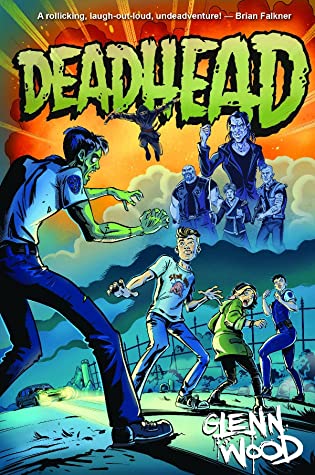
Deadhead by Glenn Wood – 2020

Spencer is a teenage genius, he makes a bit on the side to help his solo Mum pay the bills, by procuring things for school mates, or by providing them with answers to upcoming exams. But one job goes awfully wrong – a job for a student who has started up the Burdale Yakuza. Fearing retaliation, Spencer enlists the help of his friend, Regan, and they disinter a body so Regan can remotely control it to act as Spencer’s bodyguard.

The body happens to be that of Constable Garret Hunter, killed while on a lone stakeout aiming to catch the notorious Undertaker, an evil crime lord who uses a local bikie gang as muscle. When Spencer decides to use Garret to rob the Stamport Savings Bank, comparing himself to “Robin Hood, robbing from the rich – the bank – to give to the poor – his mum”, Garret has to make a hasty exit and he gets electrocuted, and things take a turn for the weirder!

Meanwhile Constable Cadence Green has been trying to work out what happened to her ex-partner, Garret Hunter – she doesn’t trust the official version of events regarding his death. And Carl, the head of the Burdale Yakuza discovers he hasn’t done due diligence to see if there were any other Yakuza chapters already in the area – there is. The heads of the two major crime organisations get into a turf war, both thinking an army of re-animated corpses would benefit their cause.

The ensuing mayhem, with kidnapping, torture, murder, and explosions, entail various parties forming alliances – with teenagers on both sides. Amid all of this, Regan and Cadence form a friendship and Regan starts to think she might have a future after all. Cadence and Garret re-establish as much of a friendship as is possible with one party rotting away. And Spencer must use all his considerable intelligence to hold things, and bodies, together.

Deadhead is text interspersed with comic strip illustrations, and the narrative is in the comic Kersplatt! style, with lots of people being hurt, dying, and being heroic. And there is lots of gruesome corpse goo. It is also very funny, and it has a theme of loyalty and responsibility. The characters are engaging: Spenser who is brilliant but also just a kid who misses his dad and worries about his mum; Regan with no use parents who has found a second home with Spenser and his mum; Cadence the cop who is staunch and brave, and who still has a soft spot for Garret, and Garret who is starting to get lots of soft spots and who goes through lots of personality changes during his post-death experiences.

Deadhead is a YA novel, but I think adults will really enjoy it too!

Posted in #yeahnoir, Book Review, Graphic Novel, Science Fiction, Young Adult | Leave a comment

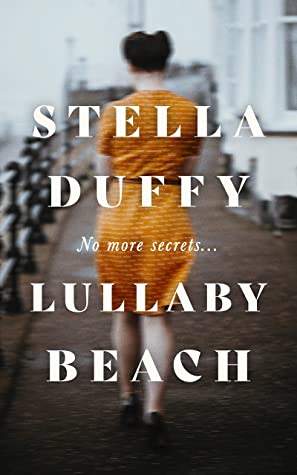
Lullaby Beach by Stella Duffy – 2021

Lucy is a “fourth-generation child of Westmere” weighed down by a burden of secrets. Beth, Lucy’s mother, and Lucy’s Aunt Sara are both living with sorrows of the past. All three have always found solace and comfort in Kitty, the sisters’ great aunt. But when Lucy goes to see Kitty in her cabin at the end of the bay, to ask for help, she finds her body. Kitty has committed suicide.

Beth and Sara are sad and angry, angry that Kitty has left them with no farewell or explanation. But Lucy has even more secrets; she has taken a note left by Kitty on which are four dates. Through Lullaby Beach, the reader finds out the significance of the dates, and the three women finally open up to each other so they too can piece together the abuse endured by all of the women, including Kitty: “All this crap has been going on for years. Long before us.” And the perpetrators of the crimes have all been from one Westmere family, the Nelsons.

Lullaby Beach is the cabin that Kitty has lived in since her return from London in the 1950s. It was an extension of the family run B&B in the small seaside town. And it is now coveted by Nelson Construction, as their foreshore tourism development requires land for an eco-friendly carpark. The Nelsons stand for white male privilege, they assume ownership, of business, of land, of people.

Danny Nelson, who is now in his 80s like Kitty, was an abuser, an horrific combination of violent abuse, childlike contrition, and business-like pragmatism. His grand-nephew Mark takes after him. Danny was always distraught that the only time his mother intervened in her husband’s violence was to protect the family dog, not her son. He too protects a random dog, but there’s no-one to protect Kitty. Sara worked for Nelson Construction, prior to going to university in Newcastle – that’s where she met Mark. 

Beth is jealous of Sara, jealous of how Lucy confides in her rather than her Mum. She thinks Lucy is just going through a stage of teenage surliness, until she learns what she has been dealing with. Through the book, Beth and Lucy are associated with fire, while Sara loves swimming in the cold sea. The sisters clash over what to do about the cabin now that Kitty has gone. Until they discover Kitty’s story, and the constant pain and ongoing harassment to which she has been subjected. The stories of male violence and cruelty persist, “She said to love him anyway, love him out of his moods when words wouldn’t work”.

Kitty’s funeral is sad, Sara’s eulogy very moving – Lucy’s little sister Etta, Beth and their father, having to support her. Afterwards, Lucy takes selfies of herself as a corpse. Kitty’s suicide has been exact, her nursing background ensuring she got the doses just right. Both Lucy and Beth lie about what they have taken from Kitty’s cabin, both wanting the power of knowing a secret.

And the secrets of women are what Lullaby Beach is about, the secrets of abuse, rape, violence, abortions, blackmail, still-births, depression … The continual stifling of women’s lives. Even Yulia, at one time Sara’s flamboyant lover, liked “to dress in neutral colours, quiet clothes, to get through the night in the bar as a server of drinks, not someone to be interested in, looked over, reached for”, and Kitty after returning from London, feels liberated when dressing in her mother’s clothes to hide her pregnancy, liberated from attention that might inexplicably turn to violence.

“I said no. I. Said. No.”, But who listens to women? Everyone is judgemental of a woman who decides to stand out, speak out. Even a random cabbie is critical of Kitty in London when she is returning from helping along one of Danny’s schemes. And when one of the sisters decides to make an historical rape allegation, she knows it will do nothing but protect Lucy, there will be no justice for her. But “The trolls were both worse and far more relentless than she had expected.”

Lullaby Beach is a sad read, there is an awful abortion scene, and later the sad consequences. But there is also the security of the sisters’ friendship, and their determination to honour Kitty’s life of sacrifice, after realising women so often forget that older women have had their own tragedies. After the crucible of events there is the relief of the two sisters swimming in the cold sea. I would definitely recommend this book!    

Posted in #yeahnoir, Book Review | Leave a comment

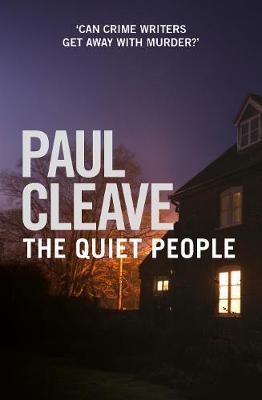
The Quiet People by Paul Cleave – 2021

Cameron Murdoch is living a reasonably successful life as a crime writer, writing in collaboration with Lisa, his wife. They live in Christchurch and “In the books we used to pretend that Christchurch was Dante’s Seventh Circle of Hell, but it turns out we weren’t pretending at all.” Cameron’s life starts spiralling into hell after an unfortunate sequence of events at a bouncy castle.

I can’t give much of the plot away, it is so twisted and tangled that the tension of reading the book is in large part from not knowing what is going on. It does concern the horror of losing sight of a child, for a moment, for a week, forever. We think we know from the Prologue what has happened to Zach Murdoch, Cameron and Lisa’s seven-year-old son – but nothing is straightforward in The quiet people. Cleave is a confident enough author to play with the reader, and the plotting is superb. When you do discover what has happened, the clues were there, you just didn’t know where to look – and neither did the police.

The narrative alternates between Cameron in the first person, and a third person view of Detective Inspector Rebecca Kent. But Cameron also has a second person ‘Mr What If’ inner narrative going on, and at one point a spooky 1st & 3rd person point of view when he is in shock. All this aids the liveliness of the narrative. Kent is a great character. She is confused, swayed, kind, pissed off – and represents a police force who are totally human and who often make dumb mistakes. “This case … everywhere she turns, just misery piled on top of misery.” Cameron is brilliantly written – he is traumatised, angry, numb, drunk, calculating, and every now and again Kent glimpses the nice guy he might actually be.

Cameron agrees to pray with his mother, enters into a blokey agreement with his father-in-law, is falling apart yet coldly holding it all together. He personifies the oxymoronic Kiwi nature that Cleave talks of in the book: kind and good natured yet “we’re also a nation where more babies and children are beaten to death per capita than any other country”. This contradiction is echoed by the Greek Chorus of public and media outside the Murdoch’s house, one minute brandishing hateful placards, the next laying teddy bears and candles.

The quiet people toys with meta-fiction; there are characters and locations from Cleave’s previous Christchurch noir books, and the narrative often refers to Cameron and Lisa’s publicity quips about ‘killing people for a living’, and ‘getting away with murder’. Once Cameron’s reality is akin to one of his and Lisa’s plots, he finds himself reacting like one of his characters. And it is probably not a co-incidence that one of the sleazebag characters, blogger Dallas Lockwood, is a failed novelist. There are lots of comments about what goes on in the mind of a thriller writer – “Maybe that’s the thing about crime writers – you just can’t trust them”!

The name of the book refers to what neighbours always say when they hear people in their street have committed a violent crime: that they are shocked, they are such ‘quiet people’. There are awful people in the book, but there are also those who find out how quickly things can spin out of control. How mistakes and misinterpretation can lead to tragedy, and how trying to balance one tragedy can cause a worse one – an unconscionable one. It is a roller coaster of a read. With moments of great sadness, the time warping of disaster, incredible tension, and adrenaline pumping action.

Although The quiet people makes reference to earlier works, it is completely stand alone. Grab a copy and have a read pronto! Available in New Zealand from 8th April 2021.


Posted in #yeahnoir, Book Review | 1 Comment

Neands by Dan Salmon – 2020

Charles Feynman Rutherford, the son of scientists, was named after scientists, and was expected to become a scientist. But Charlie is growing up in a world were science is being taught less and less. Science is being replaced by Christian Living classes, “… all about fear and flat earth, and we were taught that evolution and dinosaurs were dangerous theories”. And he is growing up in a world where people are changing.

His father has been investigating the changes to humans, the accelerated alterations to their DNA which is making them muscle-bound, smelly, and keen on physical sports and evangelical church meetings. But when Charlie’s father dies under suspicious circumstances, Charlie is left alone with his distraught mother. School is a nightmare, home is bleak. And then his mother disappears.

His mother’s disappearance isn’t that unusual; people are disappearing all over the place. Charlie decides to keep his head down and carry on alone. But then he is visited by Ngaire, a woman who claims to have been friends with Charlies’ parents. She persuades him to go and stay with her and her husband, Alan, and two other rescued teenagers; Ivy and Pru. Charlie once again experiences a kind of family-life. He starts surreptitiously making notes from Alan’s computer, trying to continue his parents’ work working out what is causing the changes in humans. He feels paper will be a more reliable record, as electronic information about the human change is disappearing, with the Internet getting smaller by the day.

Charlie, Ivy and Pru find that school is a nightmare of violent bullying, and there are fewer and fewer human kids to blend in with. Charlie sees that when change happens relatively slowly, odd things can start to feel normal. At his old school people were in denial about the human change, in his new one there is open talk of ‘the Neanderthals’. And it isn’t only the outside changes in Charlie’s world that are bothering him, his hormones are getting jittery, as he is constantly near two young, interesting, women.

The world keeps changing for the threesome, they consider ‘passing’ as Neands to be less of a target, they even wonder if just giving up and becoming Neands might be that bad. They experience the most heart-breaking incident at a zoo.  Charlie realises that if you don’t intervene as soon as you know something is wrong, you start being part of the problem, and “I got that if everything went wrong, sometimes it stayed wrong”. But they also become aware that there are still people secretly working to rectify the changes. When things take a turn for the worse with Ngaire and Alan, the three take off together.

As well as the genetic changes around them, the kids are also in the world of devastating climate change, and while sheltering from a violent storm they end up in a church offering food and shelter to the needy. They start running with a couple of boys from the shelter, and Charlie has a chat with an artist who finds himself in a world with no art, and Charlie starts to think that human DNA might be the culprit as much as any remnant of Neanderthal DNA: “How did we come to this – the species that gave the world Shakespeare and space travel and sour worms”. Charlie’s notes are interspersed through the narrative and give a picture of human-caused disasters.

The reader of Neands (unfortunately) recognises the Neands’ behaviour: bullies at school, Trump supporters storming the U.S. Capitol, idiots taunting animals incarcerated in zoos … The teenagers are great characters, especially Charlie. He is angry that he must grow up so quickly, angry at adults “I was only fourteen. We were only kids. Where were all the bloody adults?” – angry at them for leaving their kids, for creating the ecological mess that is his world. He has a conscience, always arguing with himself and others about the right thing to do.

Neands is a debut novel, and is a cracking adventure story, and a scientific mystery, and a moving read about a group of lovely teenagers: “Before things changed, we would have been the type of kids who did well at school, the science monitors, library assistants, drama club or band members; a bit geeky, but the cool geeks”. There is a glimmer of hope; the teenagers are good in water, and the Neands hate water. And there is also a glimmer of a sequel! Neands is a YA novel but would be enjoyed by all ages.

Posted in #yeahnoir, Book Review, Science Fiction, Young Adult | Leave a comment

The Stone Wētā by Octavia Cade – 2020

We are in a dystopian future where governmental and commercial interests have ensured the suppression of scientific information about climate change. Any efforts to inform humanity about the gravity of the ecological situation, and what might be done to halt the inevitable advance to catastrophe, is immediately and violently suppressed. The only hope is to hide such information in remote places around the world, and off world, so at least there is a chance of life on Earth having a future. The only people who can do this are those people in society who are less likely to be viewed as intelligent agents: women.  

The Stone Wētā is a wonderfully conceived book. The book is organised around life forms which live in extreme environments and which have evolved to adapt to violent changes in climate, and who are now facing unprecedented rapid alterations which challenge their futures. Each is the study subject of a woman who is part of the cell-like network caching information, and each woman has a story that echoes the behaviour and defence strategies of their study subjects. The book is full of amazing scientific information, this makes the reader consider the wonders of the natural world, and what is at stake if we don’t do everything we can to stabilise, and improve, the climate.

The story of the women is low key and secret, with them having to be suspicious of everyone, never knowing if those reaching out to them are genuine or whether they have been planted to draw them out as part of the network. Each woman has retreated; to high mountain, arid deserts, or distant forests, to be alone in a large library – both to make it easier to spot enemies, and easier to find places to cache the information. They tend to be with other scientists who don’t know what they are doing, but who if they did would probably be sympathetic, and sometimes this proves to be right. Very few of the women know who the other operatives are, they all tend to find their own way of camouflage: vapidness; being totally focussed on non-climate-based science, being under the control of a husband.

The caching network is inspired by the librarians of Timbuktu, who saved many precious ancient texts from the ravages of Al Qaeda. One of the librarians has a niece, who regrets not having supported her uncle and his fellow librarians more, but who sees how their work could be expanded and applied to drives of electronic information: she is Sand Cat, who is well equipped to initiate the network: “When the sand cat moves, it slinks low and short-legged across the ground and when startled it freezes, crouches down and, if approached during the night, closes its eyes so that the light cannot be reflected back from the tapetum lucida behind its retina.”

Bodies are found; people are killed; we travel to Mars; there are enormous lethal explosions. But the action is all viewed by the women from their clandestine positions, wondering what it means for their project. This means that while the story progresses, the tension builds and adding to the tension is the knowledge that for the network to be successful, there will be more violence before things can improve. But the end of the novel nicely indicates that inflicting violence has consequences that must be faced to allow you to carry on. The book emphasises the need for cooperation and for action to be taken on behalf of the many, rather on behalf of the few of just one species who call Earth home.  

I really enjoyed reading The Stone Wētā, it is refreshingly novel and genre mixing, and it makes you think how close we are to the world being pushed into the horrific situation depicted.

Posted in #yeahnoir, Book Review, Science Fiction | Leave a comment