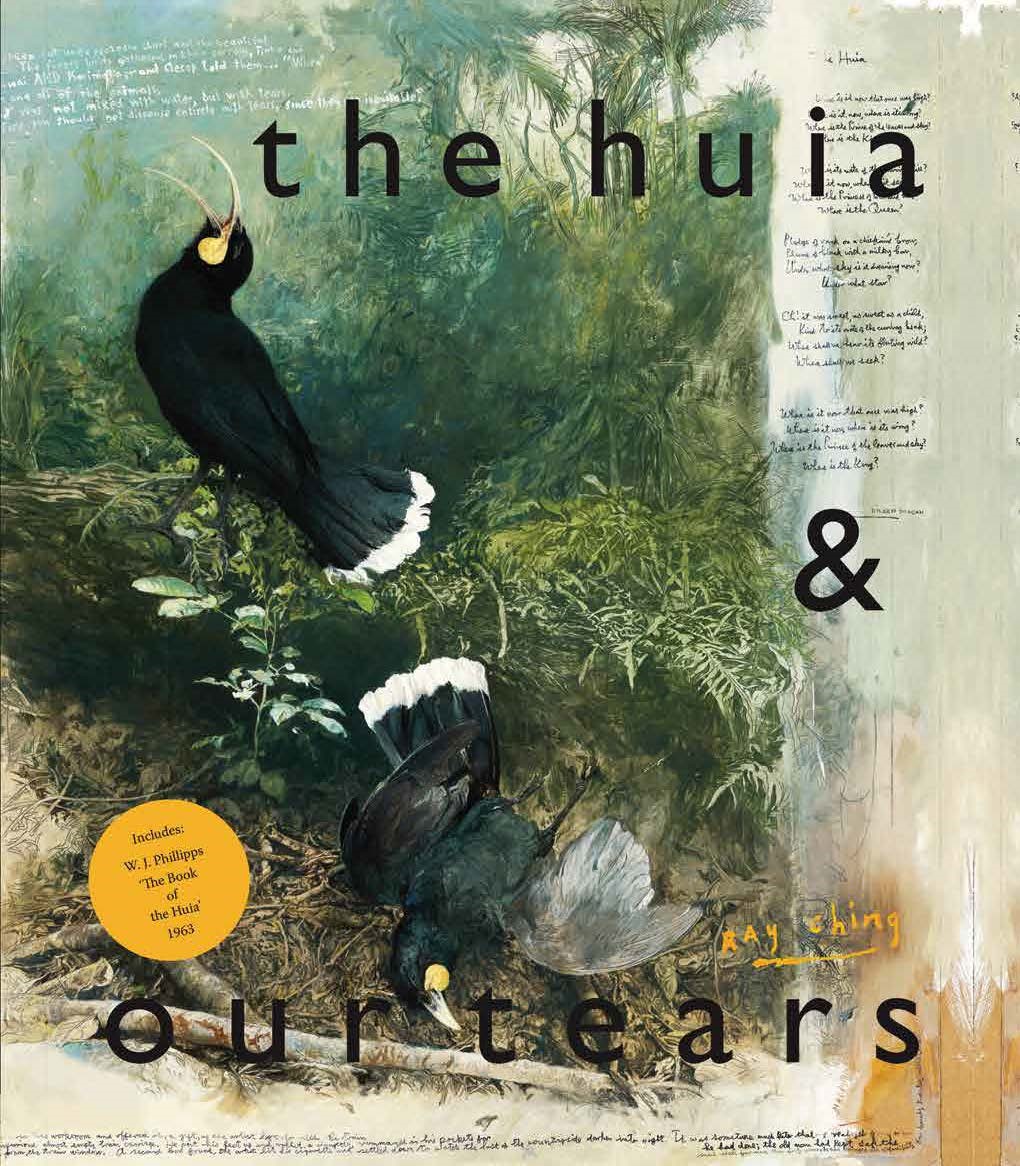
“The fables come always to the same end; this beautiful bird that touched all who met with them or heard their call from their forest places, is gone.” I include The Huia & Our Tears in my reviews of Aotearoa fiction as, although including what scant scientific knowledge there is about the huia, it is a wonderful anthology of legends, tales, and anecdotes about this iconic bird.
The huia’s beauty and restricted geographic range made wearing their feathers a mark of high rank among Tangata Whenua. When European collectors arrived, Māori guides would imitate the call of the huia to lure them. But the demand for specimens for taxidermy for museums, models for drawings in ornithological records, auction houses, and private collectors was insatiable.
“Charles Jamrach, an exotic bird dealer living in East London, refused to buy any more New Zealand skins” however “he would nonetheless be ready to take rarer birds such as Huia, should they be offered.” Many of the observations of huia related in the book are from specimen-collectors and taxidermists. Sadly, it appears that few of the specimens have been well-mounted or well-preserved. The number of extant ones internationally (mounted and skins) are few enough to be included in an Appendix.
Hunting pressures, habitat clearance, and the introduction of stoats to control rabbits drove the huia to extinction in the early 20th Century. Ching’s book is subtle in its conservation message, and more powerful for it. There is such irony in the desire to hunt the birds becoming more energised as it became clearer the huia was heading for extinction. One of the loveliest observations quoted in the book is from naturalist and specimen-collector Alfred Wallace, from his The Malay Archipelago (1869):
“… all living things were not made for man. Many of them have no relation to him. The cycle of their existence has gone on independently of his, and is disturbed or broken by every advance in man’s intellectual development; and their happiness and enjoyments, their loves and hates, their struggles for existence, their vigorous life and early death, would seem to be immediately related to their own well-being and perpetuation alone, limited only by the equal well-being and perpetuation of the numberless other organisms with which each is more or less intimately connected.”
The Huia & Our Tears is also a memoir of Ray Ching. He reminisces about his encounters with renowned literary figures and high-profile conservationists, with taxidermists and fellow enthusiasts. He writes of his various projects, many including the huia: “They are difficult because neither you nor I have ever seen these birds foraging about the forest floor with their beautiful ivory-coloured beaks, and can’t just exactly know of their movements.”
Ching makes a point of the fragile value of treasured artifacts, relating how once he had accidently tossed away an item that someone had kept for years, and gifted to Ching only hours before. He is often short of money and laments having to divest treasured specimens and books to make ends meet. He was not able to attend the book launch of The Book of British Birds, which he has worked on with Sir Peter Scott, as he didn’t have the £8 train fare.
The Huia & Our Tears includes wonderful descriptions not only of the huia but of the 19th century bush and birdlife from historical writings. There are quotes from the memoir of Laura Mair, Walter Buller’s sister-in-law, who drew significant sketches of huia from her observations in Buller’s aviary. She also had a pet Kākā until “he became very mischievous, biting pieces out of the chair backs, destroying antimacassars etc., and finally he bit the tail off my favourite cat. That was too much to overlook, so he was put in a pie with some wild pigeon!”
The book is lavishly illustrated with photographs, some very poignant. And of course it is full of Ching’s spirited artwork. There are also the works of such as Goldie and Lindauer. A bonus of this edition is the inclusion of W.J. Phillipps’ comprehensive 1963 work The Book of the Huia. All in all, The Huia & Our Tears is a moving and entertaining read, and once read a book to go back to time and again: “taking us as close as we ever can be to these beautiful birds now lost to us.”
 alysontheblog