
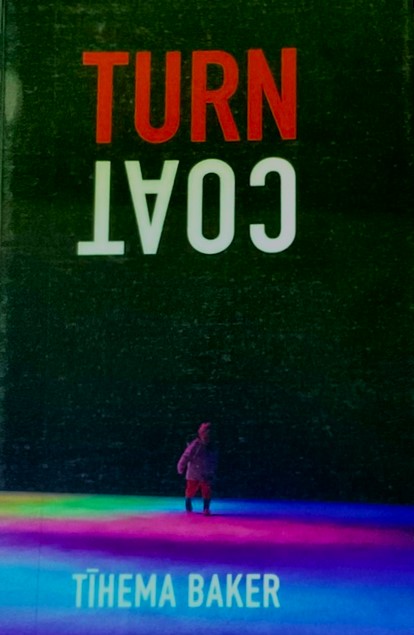
Kytoonoo 1 Daniel is an idealistic young man on Earth – a planet colonised by the Noor from Owteer, who have colonised many planets throughout the solar system. Daniel has decided he will help his people, Humans, from inside the bureaucracy of the Alien Hierarch. He will work hard to ensure the Covenant of Wellington, the document signed in the “birthplace of modern Earth”, is honoured.
Daniel is privileged among the oppressed, his mother is the Leader of New Zealand. Daniel sits with her in Parliament, imagining its former glory, when members were “engaging in intelligent and respectable discussion”. Now the parliament buildings are worse for wear, and Common Transfer, the Human language, is struggling to stay alive. Daniel is slowly learning to speak and write Common. It is a difficult task; Noor Transfer is mind to mind via brain implants. Some words, including Turncoat, have lost their original meaning over the years. It is a lovely touch that Human words are written in Comic Sans in the book.
Daniel is used to being patronised by Aliens, and their endless Aliensplaining, but he does get annoyed that the Aliens are always saying Human names are impossible to pronounce; he is forever being called Denial. But he finds some allies in his new job in The Chamber of Covenant Resolutions, where he will help with negotiations with the wronged countries of Earth. The countries have a wide variety of reactions to Alien colonisation, and they are burdened with always having to prove the status of their leaders, and their right to negotiate on behalf of the people in their ancestral homes.
Daniel is half-Noor himself, and he appears Alien. He strikes up a relationship with sympathetic-to-Human-concerns Neekor. And as the novel progresses their relationship highlights the difficulties with cross-species partnerships; two people from different cultures may love one another, but can they ever really understand one another? In contrast to Daniel’s struggles, are those of his friend Hayden. Hayden is a more representative example of how Humans are routinely discriminated against. He uses drugs, gets involved with the Mutt Pack, and is a constant worry for Daniel, and an impetus for him to succeed in his crusade.
Daniel is surrounded by tokenism in the bureaucracy, but he starts to rise in Rank – the only measure that matters to the Noor, with your status being incorporated into your name for all to see. Daniel is put in charge of the Irish problem, and he eventually becomes part of organising the “now-famous Road Trip” around Earth. It is designed to gain support for the establishment of yet another bureaucracy, and pitched as an open discussion, but it has a pre-determined agenda and outcome. Daniel has some major victories, but the reader knows bureaucracy won’t change easily, and what Daniel is up against is a mindless self-protecting machine.
It may sound as though Turncoat is a heavy read, and it does deal with serious and disturbing matters – but it is also laugh-out-loud funny, and I just loved it. The situations and problems depicted are prevalent all around the world, but there are references that make it especially relevant/funny for Aotearoa readers. For example, the re-branding of the Victorious University, the throwing of dildos at politicians, blowing on the pie, and Alien servants holding weekly anthem practices, singing God Save the King, with no comprehension of the words. And as for “New Zealand’s greatest icon”, well, you must read Turncoat to find out what that is.
“But perhaps holding on to what made us Human sometimes came at the expense of asking ourselves what parts were worth keeping.” Daniel is a wonderful character, and despite the allegorical presentation of his story, the other main characters are not mere cyphers. Turncoat is funny, tragic, moving, and disturbing: “I shouldn’t have to educate you about anything. It’s not my responsibility to educate you on what you took away from us.” Highly recommended!
 alysontheblog